



Samsung posts record profit led by chips
Apr 30, 2026, 10:10 am


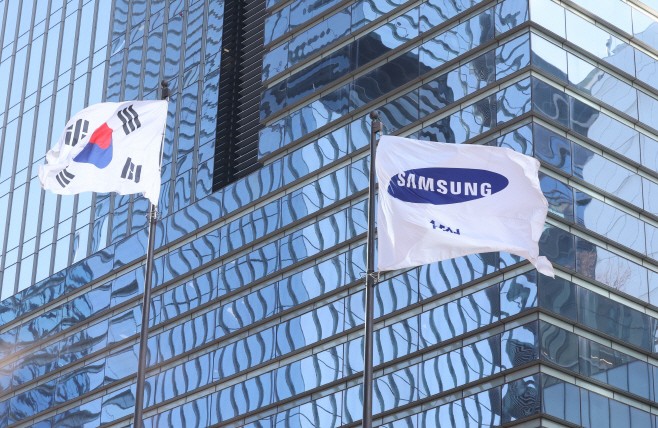 |
| The Seocho headquarters of Samsung Electronics. /Yonhap |
Samsung Electronics reported record-breaking quarterly results, driven by booming demand for AI-focused memory semiconductors.
The company announced on April 30 that it posted consolidated revenue of 133.87 trillion won and operating profit of 57.23 trillion won for the first quarter, marking the highest quarterly figures in its history. Revenue rose 69% year-on-year, while operating profit surged 756%.
The standout performer was Samsung’s Device Solutions (DS) division, which includes its semiconductor business. The division alone generated 53.7 trillion won in operating profit, accounting for the bulk of the company’s earnings. The DS division also recorded revenue of 81.7 trillion won, with an operating margin nearing 65.7%.
Samsung attributed the strong performance to increased sales of high-value memory products, including high-bandwidth memory (HBM), amid rising AI demand. Despite production constraints, the company maximized profitability by prioritizing premium products.
The company said it has begun mass production and sales of next-generation memory products, including HBM4 and SOCAMM2, while also developing PCIe Gen6 SSDs to maintain its leadership in the memory market.
In contrast, the Device Experience (DX) division posted weaker profitability. It recorded revenue of 52.7 trillion won and operating profit of 3 trillion won, with declines in key segments such as home appliances and mobile. Operating profit in the mobile experience (MX) division fell 35% year-on-year to 2.8 trillion won, while the home appliance segment dropped 33% to 200 billion won.
Samsung said the DX division was affected by reduced investments from telecom operators in its network business and rising costs and tariffs in its appliance segment, although premium smartphone and TV sales remained relatively solid.
Other businesses showed mixed results. Harman recorded revenue of 3.8 trillion won and operating profit of 200 billion won, impacted by memory supply constraints and seasonal demand in the audio market. The display segment posted revenue of 6.7 trillion won and operating profit of 400 billion won, with weaker demand for small and mid-sized panels but stable performance in large OLED displays for gaming monitors.
Samsung expects its semiconductor-driven growth to continue, citing sustained AI infrastructure investments and rising memory prices. However, it plans to improve efficiency in the DX division through structural cost optimization and a stronger focus on premium products.
The company also announced a quarterly dividend of 372 won per share, with total payouts amounting to approximately 2.45 trillion won, to be distributed on May 29.
#Samsung Electronics #semiconductor #DS division #AI memory #HBM
Copyright by Asiatoday
Most Read
-
1
Kia Sportage outperforms Mazda CX-5 in German auto..

-
2
Houthis launch successive attacks on Saudi airport..

-
3
Saudi Arabia, Iran hold first diplomatic talks to..

-
4
U.S. deploys carrier, 10,000 more troops to Middle..

-
5
Saudi airport in Riyadh struck again, leaving at l..

-
6
Putin's ally visits China on the 8th ahead of APEC..

-
7
Chinese military support and training center opens..

PEOPLE






HEADLINE NEWS

-
Address : In-Young Bldg., 34, Uisadang-daero 1-gil, Yeongdeungpo-gu, Seoul
Copyright by ASIATODAY CO., LTD. All rights resereved