



Fed keeps rates steady amid deep divide; Powell to stay on board
Apr 30, 2026, 09:01 am


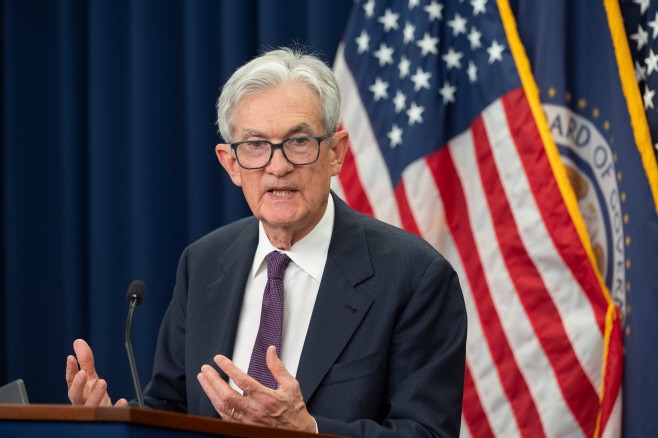 |
| Jerome Powell, Chair of the U.S. Federal Reserve, holds a press conference at the Fed headquarters in Washington, D.C., on April 29. /AP-Yonhap |
The Federal Reserve kept its benchmark interest rate unchanged at 3.50–3.75% on April 29, but revealed a sharply divided policy stance, with dissent reaching its highest level since 1992.
The decision by the Federal Open Market Committee (FOMC) came in an 8–4 vote, underscoring growing disagreement over the future direction of monetary policy as inflation risks resurface due to rising oil prices linked to geopolitical tensions.
Three dissenting members opposed the inclusion of language suggesting a potential easing bias, arguing it implicitly signals future rate cuts. Another member voted in favor of an immediate 0.25 percentage point rate cut.
Fed Chair Jerome Powell acknowledged the division, stating that the committee is “moving toward a more neutral stance,” but added that most members did not see the need to signal imminent policy changes.
The FOMC noted that economic activity continues at a “solid pace,” while highlighting persistent uncertainty driven by global energy prices and geopolitical risks.
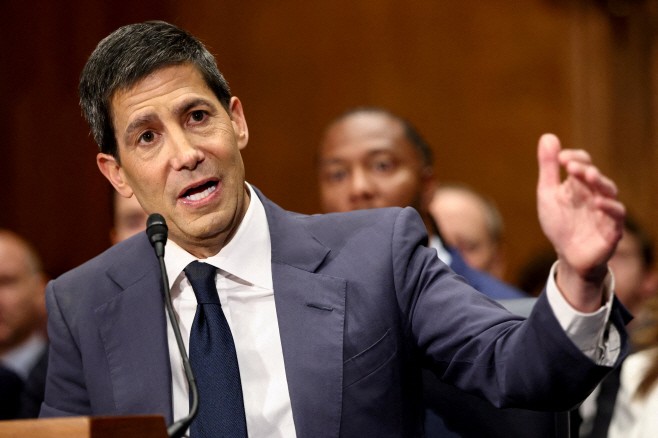 |
| Kevin Warsh, nominee for Chair of the U.S. Federal Reserve, testifies at a Senate Banking Committee confirmation hearing at the U.S. Capitol in Washington, D.C., on April 21. /Reuters-Yonhap |
The U.S. Senate Banking Committee approved the nomination of Kevin Warsh as the next Fed chair, setting the stage for leadership transition after May 15.
In a rare move, Powell said he intends to remain on the Fed’s Board of Governors for a period after his term as chair ends, citing concerns over institutional independence and ongoing legal scrutiny.
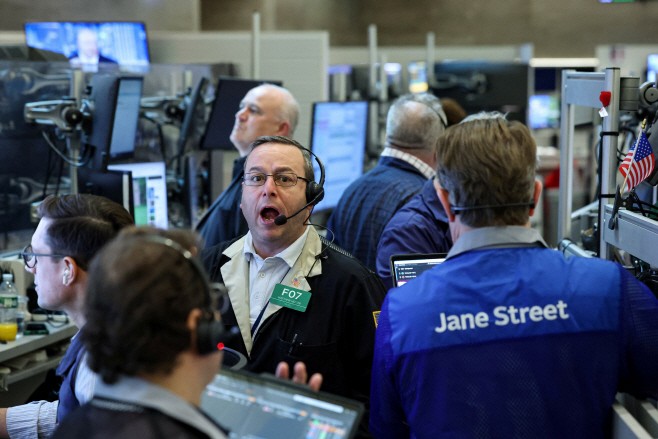 |
| Interior view of the New York Stock Exchange (NYSE) in New York on April 29. /Reuters-Yonhap |
He emphasized that he would not act as a “shadow chair,” pledging to maintain a low profile once his successor takes office.
Financial markets reacted by reducing expectations for rate cuts this year. U.S. Treasury yields surged, with the 2-year yield climbing to 3.95%, its highest level in a month.
Analysts now see the possibility that rates could remain unchanged through 2026, with some even pricing in a potential rate hike in 2027.
Economists cited uncertainty over the duration of geopolitical tensions and oil supply disruptions as key factors complicating inflation forecasts.
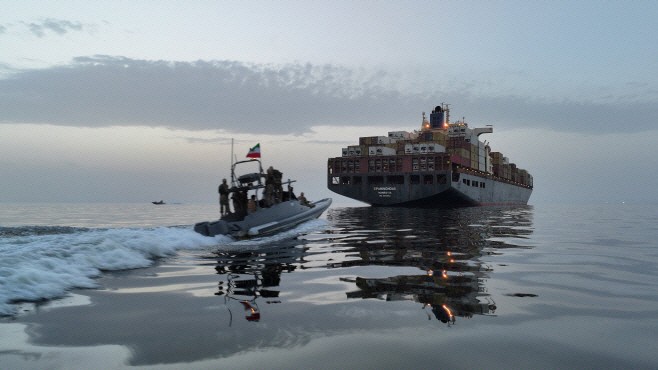 |
| A patrol boat of Iran’s Islamic Revolutionary Guard Corps (IRGC) seizes the Liberia-flagged vessel Epaminondas in the Strait of Hormuz on April 22. /Reuters-Yonhap |
Oil prices jumped sharply amid concerns over prolonged supply disruptions. West Texas Intermediate (WTI) crude rose 8.2% to $108.11 per barrel, while Brent crude briefly exceeded $119 intraday, reaching its highest level since mid-2022.
Despite the energy shock, major U.S. stock indices ended mixed, supported by expectations of strong earnings from major technology companies.
The combination of internal division, leadership transition, and persistent inflation risks suggests a more complex and uncertain policy outlook for the Federal Reserve.
Markets and policymakers alike are now closely watching whether the Fed will maintain its cautious stance—or pivot in response to evolving economic conditions.
#Federal Reserve #FOMC #interest rates #Jerome Powell #Kevin Warsh
Copyright by Asiatoday
Most Read
-
1
Trump shares map on social media labeling Strait o..

-
2
Kia Sportage outperforms Mazda CX-5 in German auto..

-
3
Houthis launch successive attacks on Saudi airport..

-
4
U.S. deploys carrier, 10,000 more troops to Middle..

-
5
Trump rejects Iran's offer to open Strait of Hormu..

-
6
N. Korea conducts first swarm attack drill with dr..

-
7
U.S.-China summit falls short on substance as Trum..

PEOPLE





HEADLINE NEWS
- Seoul dismisses Ukraine's claim of 'S. Korean support for Russia' as "inaccurate and inappropriate"
- S. Korea, Japan race to develop nuclear-powered submarines
- Henri Kagan, Kenso Soai win Nobel Prize in Chemistry for uncovering how mol..
- Vance says Alaska LNG cooperation will move forward with Seoul's current or..

-
Address : In-Young Bldg., 34, Uisadang-daero 1-gil, Yeongdeungpo-gu, Seoul
Copyright by ASIATODAY CO., LTD. All rights resereved