



BTS concert chaos leaves ticket holders locked out
Mar 21, 2026, 09:12 pm


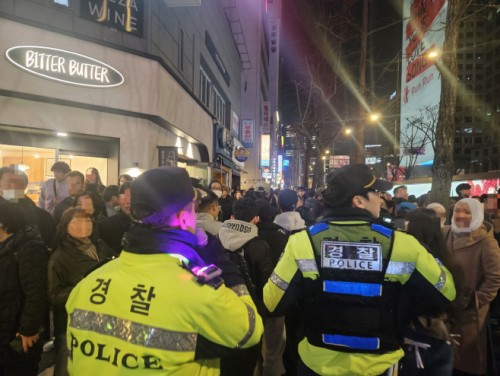 |
| Citizens protested to police after being unable to enter the BTS concert at Gwanghwamun Square in Seoul on March 21 despite holding tickets. / Reporter Kim Tae-hoon |
Confusion and frustration spread at Gwanghwamun Square on March 21 as some attendees were denied entry to BTS’s comeback concert despite holding valid tickets.
“I was told I couldn’t get in even though I had a ticket,” said a 41-year-old attendee who traveled from Goyang. He explained that after waiting about 40 minutes at a security checkpoint, the gates suddenly closed as the concert began.
Large crowds gathered around the venue, but unclear entry procedures and inconsistent control measures led to widespread confusion. Ticket holders and non-ticket holders were not clearly separated, resulting in some paying attendees being unable to enter.
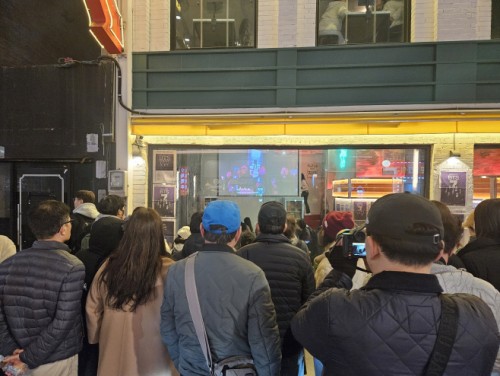 |
| People who failed to enter the venue watched the BTS performance through screens at nearby restaurants after gates were closed. / Reporter Kim Tae-hoon |
Foreign visitors also struggled with unclear instructions. A tourist from Russia and her group failed to understand police announcements in Korean and ultimately watched the concert from outside a nearby restaurant through window screens.
Heightened security checks caused additional inconvenience. A couple who had reserved a restaurant near Gwanghwamun reported waiting about 30 minutes at a checkpoint after being forced to reroute due to subway stations temporarily skipping stops.
Confusion intensified as instructions frequently changed. One attendee said he was redirected between gates multiple times and spent more than three hours trying to enter the venue.
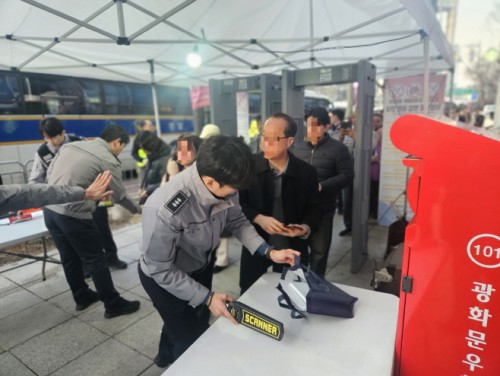 |
| Police conducted security checks on pedestrians heading toward Gwanghwamun Square near Jonggak Station on March 21. / Reporter Kim Tae-hoon |
Restrictions also affected ordinary pedestrians. A nursing home worker complained that her commute home was blocked, saying authorities should have ensured clear routes for non-attendees.
While waiting times increased due to bag checks and body inspections, some criticized the inconsistency of screenings. A visitor from Kazakhstan said, “If they only glance at bags for five seconds, I don’t understand why we had to wait in such long lines.”
Police defended the measures as necessary for safety. “Given the large crowd, these controls were unavoidable to prevent terrorism and maintain order,” an official said.
A total of about 15,500 personnel were deployed, including roughly 7,000 police officers, 4,800 staff from the event organizer HYBE, and 3,700 officials from local governments and emergency services. Most on-site inspections were conducted by female officers, reflecting the largely female fanbase known as ARMY.
Despite the excitement surrounding BTS’s return, the event highlighted challenges in managing massive crowds at large-scale public concerts.
#BTS #Gwanghwamun #ticket confusion #crowd control #security screening
Copyright by Asiatoday
Most Read
-
1
Trump demands rates fall below 1% as Fed hikes for..

-
2
Celltrion seeks rheumatoid arthritis indication ex..

-
3
Chinese e-commerce giants AliExpress, Temu and She..

-
4
Trump warns countries not helping U.S. must pay re..

-
5
Turkish Airlines named main club partner of Liverp..

-
6
China expels No. 2 military official Zhang Youxia..

-
7
Houthi rebels release video claiming downing of Sa..

PEOPLE






-
Address : In-Young Bldg., 34, Uisadang-daero 1-gil, Yeongdeungpo-gu, Seoul
Copyright by ASIATODAY CO., LTD. All rights resereved