



K-pop embraces house beats again
Mar 16, 2026, 10:07 am


 |
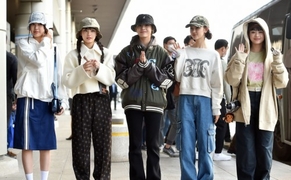
| K-pop group Hearts2Hearts. /SM Entertainment |
House music rhythms are reappearing across the K-pop charts, as multiple idol groups adopt the genre’s signature four-on-the-floor beat structure.
Songs such as KiiiKiii’s “404,” Hearts2Hearts’ “RUDE!,” XG’s “Hypnotize,” and LE SSERAFIM’s “Crazy” share a similar rhythmic foundation rooted in house music. The repeated beats and dance-friendly groove highlight a broader genre trend emerging in the K-pop industry.
House music originated in Chicago’s club scene in the early 1980s. DJ Frankie Knuckles played a key role in shaping the genre at the club The Warehouse, where he experimented with disco tracks using drum machines and synthesizers to create a new club sound. Music played at the venue became known as “Warehouse music,” which later evolved into the term house music.
The genre’s defining characteristic is the “four-on-the-floor” rhythm pattern, where a kick drum hits every beat in a 4/4 measure. Combined with basslines, percussion and synthesizers, the structure produces a steady groove ideal for dancing. The format also developed through DJs mixing tracks seamlessly in club settings.
In K-pop, the renewed popularity of house music reflects shifts in the music consumption environment.
Because house tracks rely on repetitive rhythms and clear grooves, they are easy for listeners to follow and suitable for repeated streaming. The structure also allows songs to fit naturally into playlists, a key factor in today’s streaming-focused market.
The genre also pairs well with the performance-driven nature of K-pop idol music. The consistent 4/4 rhythm provides a clear foundation for choreography, making it easier to design synchronized group performances and visually cohesive stage routines.
The rise of short-form platforms has further reinforced the trend. On platforms centered on brief video content, music that quickly delivers a clear rhythm or memorable dance move spreads more easily. House music’s repetitive beats and straightforward structure make it particularly suitable for dance challenges and performance clips.
Pop culture critic Park Song-a said the resurgence of house music in K-pop is closely tied to changes in music consumption patterns.
“House music has a clear rhythm and strong repetition, making it favorable for repeated listening in the streaming era,” Park said. “The stable four-on-the-floor beat also fits well with K-pop’s choreography-centered idol performances.”
She added that the growing influence of short-form platforms has created an environment where rhythm-driven songs can spread quickly, suggesting that the renewed interest in house music is not simply a passing trend but a result of evolving platform dynamics and production strategies.
#K-pop #house music #four-on-the-floor beat #Hearts2Hearts
Copyright by Asiatoday
Most Read
-
1
Kia Sportage outperforms Mazda CX-5 in German auto..

-
2
Houthis launch successive attacks on Saudi airport..

-
3
Saudi Arabia, Iran hold first diplomatic talks to..

-
4
U.S. deploys carrier, 10,000 more troops to Middle..

-
5
Saudi airport in Riyadh struck again, leaving at l..

-
6
Japan tracks Ukraine fiber-optic drones, bolsters..

-
7
Putin's ally visits China on the 8th ahead of APEC..

PEOPLE





HEADLINE NEWS
- Trump slams Nobel Peace Prize snub, claiming he is 'preventing war' between the two Koreas
- China makes tactical retreat following fierce pushback from EU
- Japan openly opposes U.S. sanctions on ICC, fueling tensions with Washingto..
- Military service exemptions for artists and athletes under scrutiny at parl..

-
Address : In-Young Bldg., 34, Uisadang-daero 1-gil, Yeongdeungpo-gu, Seoul
Copyright by ASIATODAY CO., LTD. All rights resereved