



Tanker bet by Korean shipping heir pays off amid war
Mar 16, 2026, 09:34 am


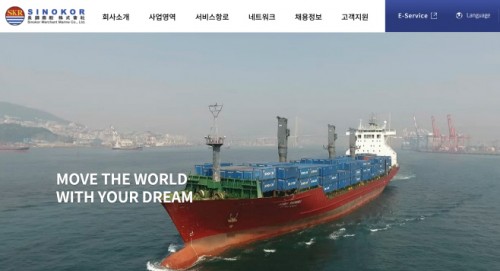 |
| A screenshot of the website of Korean shipping company Sinokor (Jang Geum Shipping). |
A large-scale bet on supertankers by a Korean shipping heir is paying off as the Iran conflict disrupts global energy markets, Bloomberg reported on March 14.
The strategy, led by Jung Ga-hyun, a director at Sinokor Petrochemical and the son of Jang Geum Shipping chairman Jung Tae-soon, involved acquiring or securing large numbers of crude oil tankers months before the outbreak of the conflict. Bloomberg described the move as an unprecedented bet that has now generated significant profits.
Weeks before the war began on Feb. 28, the Sinokor Group deployed at least six empty very large crude carriers (VLCCs) to the Persian Gulf on Jan. 29, positioning them to await cargo. When tensions escalated and traffic through the Strait of Hormuz was disrupted, tanker charter rates surged to record highs.
As crude exports through the strait slowed and storage facilities across the Middle East quickly filled up, demand for floating storage at sea rose sharply. According to Bloomberg, Sinokor is now leasing some of its tankers for storage at around $500,000 per day — about ten times last year’s average shipping rate.
Industry sources estimate that as of late February the company controlled roughly 150 VLCCs, accounting for about 40 percent of tankers not already tied up or under sanctions at the time.
Bloomberg noted that Jung remains a relatively little-known heir in Korea’s shipping industry. He is reportedly known for a military-style management approach and for challenging employees or business partners to arm-wrestling matches.
With the Iran conflict reshaping global oil transportation routes and forcing vessels to take longer detours, the tanker market has tightened significantly. Bloomberg said Sinokor’s aggressive tanker acquisition strategy has made it one of the biggest beneficiaries of the turmoil.
Earlier, The Wall Street Journal also identified Sinokor as a potential winner from the Strait of Hormuz crisis. The newspaper reported that the company had purchased dozens of oil tankers and positioned several vessels in the Gulf even before the war began.
According to the report, Sinokor has leased multiple tankers to the Abu Dhabi National Oil Company (ADNOC) to serve as floating storage, earning daily charter fees of up to $500,000.
As onshore storage facilities across the Gulf near capacity, oil producers have increasingly turned to tankers to store crude at sea. Drilling companies in Iraq and Kuwait have reportedly slowed production due to limited storage space.
The Wall Street Journal also cited Greek shipping magnate George Prokopiou as another beneficiary of the crisis, noting that his company Dynacom has sent at least five tankers to the Strait of Hormuz and is chartering them for up to $440,000 per day — about four times prewar rates.
#Sinokor #Jang Geum Shipping #VLCC #oil tankers #Iran war
Copyright by Asiatoday
Most Read
-
1
Kia Sportage outperforms Mazda CX-5 in German auto..

-
2
Houthis launch successive attacks on Saudi airport..

-
3
Saudi Arabia, Iran hold first diplomatic talks to..

-
4
U.S. deploys carrier, 10,000 more troops to Middle..

-
5
Saudi airport in Riyadh struck again, leaving at l..

-
6
Putin's ally visits China on the 8th ahead of APEC..

-
7
Chinese military support and training center opens..

PEOPLE






HEADLINE NEWS

-
Address : In-Young Bldg., 34, Uisadang-daero 1-gil, Yeongdeungpo-gu, Seoul
Copyright by ASIATODAY CO., LTD. All rights resereved