



Houthi attacks on Saudi oil refineries raise fears over Middle East energy supplies
Nov 27, 2026, 03:59 pm


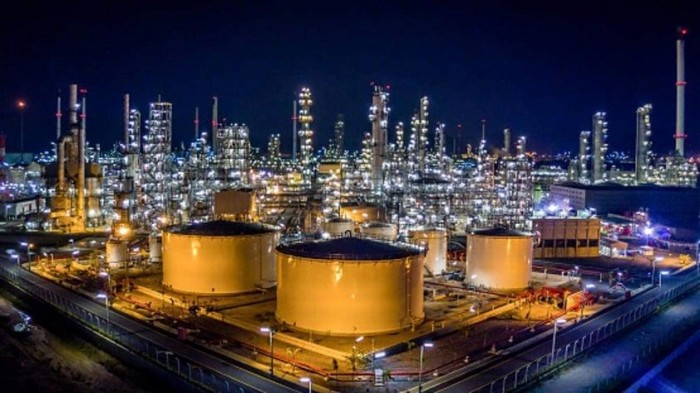 |
| A view of Ras Tanura, Saudi Arabia's largest oil refinery. NASA satellite imagery captured black smoke on November 26 (local time), while attacks on Red Sea ports and mounting military tensions extending to the Gulf of Aden and the Bab el-Mandeb Strait have heightened concerns. / Reuters-Yonhap News Agency |
A series of attacks by Yemen's Iran-backed Houthi rebels on major Saudi Arabian oil refineries has raised alarm over the Middle East's energy supply chain. With the Bab el-Mandeb Strait, the gateway to the Red Sea, coming under threat in addition to Iran's maritime pressure around the Strait of Hormuz, uncertainty surrounding international crude oil shipping routes is growing.
According to Reuters on November 27 (local time), Saudi Arabia's Ministry of Energy said the previous day that a projectile attack on a refinery operated by state-owned oil company Saudi Aramco in southwestern Jazan had forced a temporary suspension of some operations. One Nepalese worker was killed and several others were injured in the attack.
The latest attack came amid a series of Houthi strikes targeting key Saudi energy facilities. The Houthis previously claimed to have attacked Ras Tanura, Saudi Arabia's largest refinery in the east of the country, as well as the Red Sea ports of Jeddah and Jazan. Satellite imagery showed large plumes of smoke following the attack on Ras Tanura. The Saudi-led coalition said it had intercepted four drones over Ras Tanura.
Ras Tanura is a key Saudi energy facility with a refining capacity of 550,000 barrels per day and serves as a major crude oil export hub. The Jazan refinery can also process up to 400,000 barrels of crude oil per day. Both facilities play important roles in Saudi Arabia's energy production and exports.
Threats extend from Hormuz to Bab el-Mandeb
The repercussions of the latest developments extend beyond damage to individual refineries. Since seizing a strategic location along the Red Sea coast in September, the Houthis have expanded their presence toward the Bab el-Mandeb Strait. Located between the Arabian Peninsula and Africa, the strait is a strategic maritime chokepoint connecting the Red Sea and the Gulf of Aden.
With crude oil exports through the Strait of Hormuz already facing disruptions, threats to Red Sea shipping routes could further restrict export routes for Saudi Arabia and other Gulf oil-producing countries. Saudi Arabia uses its East-West Pipeline to transport crude oil to the Red Sea port of Yanbu, bypassing the Strait of Hormuz.
Reuters reported that Brent crude futures reached $96.61 per barrel that day. Brent had also gained approximately $2 the previous day, closing at its highest level since November 6. With U.S. markets closed for Thanksgiving, West Texas Intermediate (WTI) crude was trading at $85.78 per barrel, up 2.5 percent from the previous session's close.
Some market observers expect oil prices could exceed $100 per barrel if supply disruptions in the Middle East materialize. However, prices could decline next year if crude oil exports from the Gulf region recover and geopolitical risks ease, analysts say.
Saudi retaliation could determine whether conflict escalates further
How Saudi Arabia responds to the Houthi attacks will also be a key factor. The Saudi-led coalition said it had destroyed a ballistic missile launcher in the Yemeni port city of Hodeidah believed to have been used by the Houthis in the attack on the Jazan refinery. The coalition also vowed to respond firmly to attacks targeting civilians and civilian infrastructure.
The Houthi attacks come as the war between the U.S. and Israel on one side and Iran on the other spills over into neighboring countries. Should Saudi Arabia expand its military response, Yemen's civil war could intensify again, leading to further clashes over energy infrastructure and maritime transport networks in the Gulf region.
Cheon Hyun-bin
Most Read
-
1
China President Xi's Keynote Speech at the APEC C..

-
2
Iran resumes attacks after two months, targeting U..

-
3
Russian warship sinks in suspected drone attack at..

-
4
Inside Kylin Villa, the symbol of China's reform h..

-
5
Trump, Xi, Putin call for security cooperation at..

-
6
Trump, Putin, Zelenskyy may hold peace talks at G2..

-
7
Trump, Xi pledge cooperation on Hormuz, Iran nucle..

PEOPLE







-
Address : In-Young Bldg., 34, Uisadang-daero 1-gil, Yeongdeungpo-gu, Seoul
Copyright by ASIATODAY CO., LTD. All rights resereved