



Bitcoin rebounds above $60,000 but faces downside risks
Nov 27, 2026, 01:49 pm


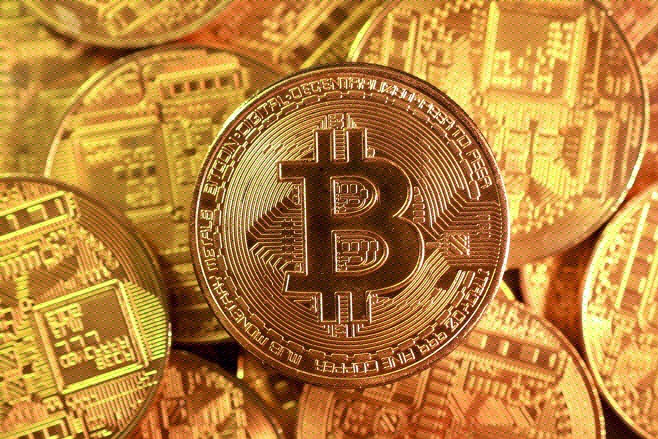 |
| An illustration of bitcoin. / Reuters-Yonhap News Agency |
Bitcoin (BTC) has reclaimed the $60,000 level, but whether it can sustain its upward momentum remains uncertain. Institutional investor demand has weakened amid record outflows from U.S. spot bitcoin exchange-traded funds (ETFs), while persistent inflationary pressures in the U.S. and concerns over monetary tightening by the Federal Reserve (Fed) have raised the possibility of further declines.
According to cryptocurrency market data platform CoinMarketCap, bitcoin was trading at $61,411 as of 1 p.m. on November 27, up 1.33 percent from 24 hours earlier. Bitcoin recently fell into the $57,000 range, slipping below the $60,000 mark, before recovering its losses. However, analysts say it remains to be seen whether the rebound following the sharp decline will develop into a sustained trend reversal.
U.S. inflation data and monetary policy uncertainty are cited as key factors behind market instability. According to the U.S. Department of Commerce's Bureau of Economic Analysis (BEA), the core personal consumption expenditures (PCE) price index rose 3.3 percent year on year in October, accelerating from 3.1 percent the previous month and exceeding market expectations of 3.2 percent. The core PCE price index is a key inflation gauge closely monitored by the Fed when making monetary policy decisions. With signs of persistent inflationary pressures, market participants are also focusing on the possibility of a Fed rate hike in December.
Institutional capital outflows have also continued. According to financial data provider SoSoValue, U.S. spot bitcoin ETFs recorded total net outflows of $5.39 billion between November 2 and 25. This marks the largest outflow since the products were launched in January 2024, surpassing the previous monthly record of $4.51 billion set in June. In particular, approximately $453.1 million flowed out on November 25 alone, marking the seventh consecutive trading day of net outflows. Given that institutional capital inflows through ETFs have supported bitcoin's price gains, large-scale outflows could weaken the market's buying base.
Experts are also warning of the possibility of further declines. Alex Thorn, head of research at Galaxy Digital, said in a recent report that he had withdrawn his previous assessment that bitcoin's bear market had ended at its June low. He said that if bitcoin's daily closing price fell below $58,525, it could decline further and break below its previous low. He also explained that institutional buying support had weakened, with U.S. spot bitcoin exchange-traded products (ETPs) recording approximately $4.95 billion in net outflows since October 4.
However, the possibility of a rebound has not entirely disappeared. Dan Khus, chief analyst at LVRG Research, said that greater clarity on the Fed's policy direction, easing inflation or a return to net ETF inflows could revive institutional investor demand and set the stage for a rebound. In the short term, whether bitcoin can hold above the $58,525 level is seen as a key factor in determining whether it will fall further. Over the medium to long term, U.S. monetary policy and ETF fund flows are expected to determine bitcoin's direction.
Meanwhile, the Crypto Fear & Greed Index compiled by cryptocurrency data provider Alternative.me stood at 10 on November 27, remaining in the “Extreme Fear” territory. The closer the index is to zero, the greater the fear in the market, while readings closer to 100 indicate greater investor greed.
Kim Yoon-hee
Most Read
-
1
China President Xi's Keynote Speech at the APEC C..

-
2
Iran resumes attacks after two months, targeting U..

-
3
Russian warship sinks in suspected drone attack at..

-
4
Inside Kylin Villa, the symbol of China's reform h..

-
5
Trump, Xi, Putin call for security cooperation at..

-
6
Trump, Putin, Zelenskyy may hold peace talks at G2..

-
7
Trump, Xi pledge cooperation on Hormuz, Iran nucle..

PEOPLE







-
Address : In-Young Bldg., 34, Uisadang-daero 1-gil, Yeongdeungpo-gu, Seoul
Copyright by ASIATODAY CO., LTD. All rights resereved