



KNOC faces year-end crunch to secure 1.55 million barrels of crude for reserves
Nov 27, 2026, 10:49 am


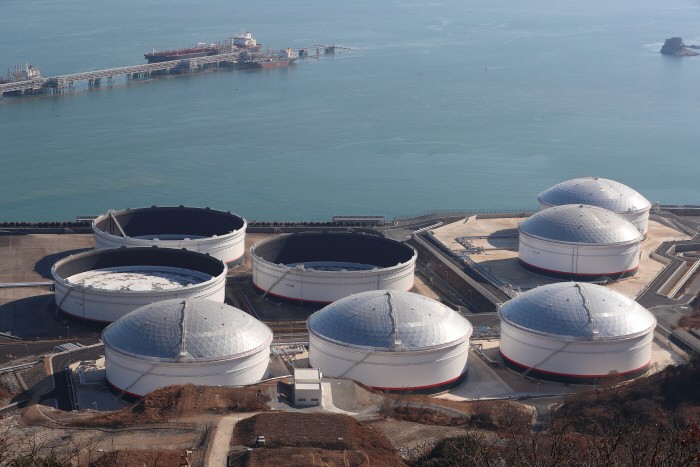 |
| Korea National Oil Corporation's Yeosu oil stockpiling base. / Korea National Oil Corporation |
Korea National Oil Corporation (KNOC) faces the challenge of securing an additional 1.55 million barrels of crude oil as the year-end approaches.
According to energy industry sources on November 26, the Ministry of Trade, Industry and Resources released the “Key Provisions of the 2026 Oil Stockpiling Plan” the previous day, announcing plans to secure an additional 1.545 million barrels of crude oil this year.
The increase in oil stockpiles is intended to address oil supply and demand uncertainties stemming from the war in the Middle East. After the U.S. attack on Iran in late February heightened uncertainty over crude oil supply and demand, the government secured funding through a supplementary budget in April, increasing KNOC's budget for oil stockpile purchases 6.9-fold from the original 26.3 billion won to 181.7 billion won.
However, the annual oil stockpiling plan was not released until more than seven months after the supplementary budget was drawn up. This is unusual given that annual oil stockpiling plans over the past five years were officially announced as early as March and no later than June. According to the National Assembly Budget Office (NABO), the oil stockpile purchase plan had yet to be finalized and no purchases had been made as of its budget analysis in October.
KNOC now faces the burden of securing a large volume of crude oil at reasonable prices by year-end. According to the company's sustainability report, its oil trading volume totaled 19.67 million barrels in 2024, averaging 1.64 million barrels per month. This year's additional stockpiling target is equivalent to 94.2 percent of its average monthly trading volume. In effect, KNOC must secure additional oil reserves equivalent to nearly a full month's usual trading volume by year-end.
The target is also substantial compared with the company's stockpiling volumes in previous years. KNOC added 480,000 barrels to its oil stockpiles in 2023, 920,000 barrels in 2024 and 900,000 barrels last year. This year's target is twice the average annual volume added over the past three years.
The reduced time available to adjust the timing of oil purchases poses another challenge. KNOC has less flexibility to determine the optimal time to purchase crude oil based on international oil prices and supply and demand conditions. Should military tensions in the Middle East escalate again, the company could face not only higher prices but also difficulties procuring crude oil.
KNOC, however, explained that securing the required volume was not impossible. Shipping crude oil from the Middle East to South Korea takes approximately 20 days, and depending on the terms of the transaction, the oil can be recognized as part of the company's inventory from the time of shipment.
“We have been consulting with the ministry on oil stockpile purchases, taking into account international oil prices and market conditions,” a KNOC official said.
Kim Deok-ho
Most Read
-
1
China President Xi's Keynote Speech at the APEC C..

-
2
Iran resumes attacks after two months, targeting U..

-
3
Russian warship sinks in suspected drone attack at..

-
4
Inside Kylin Villa, the symbol of China's reform h..

-
5
Trump, Xi, Putin call for security cooperation at..

-
6
Trump, Putin, Zelenskyy may hold peace talks at G2..

-
7
Trump, Xi pledge cooperation on Hormuz, Iran nucle..

PEOPLE







-
Address : In-Young Bldg., 34, Uisadang-daero 1-gil, Yeongdeungpo-gu, Seoul
Copyright by ASIATODAY CO., LTD. All rights resereved