



Nations wage war on high-tech exam cheating
Nov 18, 2026, 10:14 am


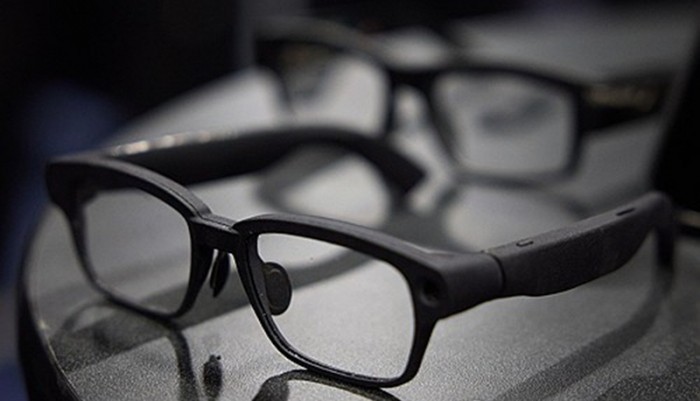 |
| New smart glasses from Mustard Glasses are displayed at CES Unveiled Las Vegas at the Mandalay Bay hotel in Las Vegas, Nevada, on Jan. 5, 2025 (local time). /EPA-Yonhap News Agency |
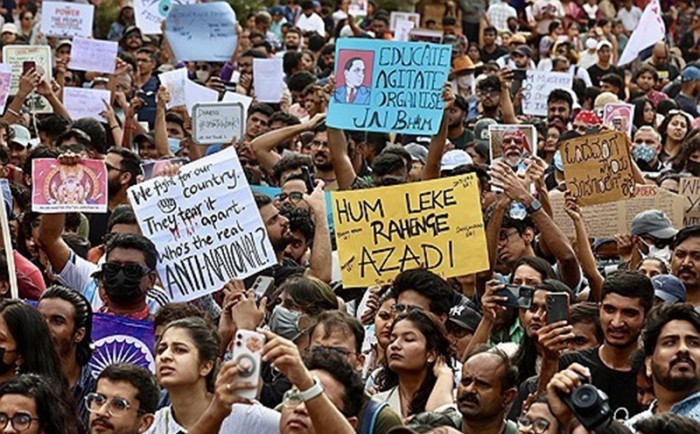 |
| People protest against the NEET-UG question paper leak scandal in Bangalore, India, on July 25 (local time). /EPA-Yonhap News Agency |
In Japan, regulations have been tightened following an actual case of cheating on a university entrance exam using smart glasses.
Japanese media outlets, including ITmedia NEWS, reported that candidates taking Waseda University's entrance exam in February 2024 were caught allegedly using smart glasses to photograph exam questions, sending the images to people outside the test center via smartphones and asking them to provide answers.
Waseda University said the candidates had deliberately and meticulously planned the offense with malicious intent. The university explained that it had filed a criminal complaint with the police, citing the possibility of similar cheating occurring in entrance exams at other universities.
Following the incident, the National Center for University Entrance Examinations explicitly added smart glasses to the list of prohibited electronic devices in its examination guidelines for the first time.
The College Board, which administers the SAT in the United States, also added wearable devices such as smart glasses to its list of prohibited items in September. It also revised its regulations to allow proctors to inspect suspicious equipment, among other measures.
During China's national college entrance examination, known as the Gaokao, held on June 7 and 8, authorities temporarily disabled answer-related functions on AI platforms during exam hours and cracked down on the use of smart devices such as AI glasses.
Ahead of the exam, China's Ministry of Education announced measures on its website on June 3 to prevent and detect cheating involving AI and other advanced devices.
"We will have local authorities strengthen education for candidates on exam integrity and further reinforce human, physical and technological safeguards," the ministry said. "We will upgrade intelligent security screening gates to improve the detection rates of prohibited items such as mobile phones and smart glasses."
It added, "We will strengthen security screening upon entry, exam supervision and patrols, while actively promoting the introduction of intelligent patrol systems to build a comprehensive examination security network."
Authorities announced that bringing communication devices such as mobile phones and smartwatches into test centers would constitute cheating and that candidates found doing so would face penalties including the invalidation of their exam results and bans on taking the Gaokao for one to three years.
According to China Central Television (CCTV), rules for candidates posted inside test centers explicitly prohibited smart glasses. Detailed inspection guidelines were also established to prevent their use.
However, authorities have not disclosed whether any cases of cheating involving advanced equipment were detected during this year's Gaokao.
"Smart glasses are relatively easy to identify with the naked eye," said Zhou Chuanzhang, principal of Beijing No. 2 Middle School and head of a test center. "They have thick frames, and you can see that they are equipped with cameras. In some cases, images are also displayed on the lenses."
"Advanced equipment, particularly smart wearable devices, has been developing rapidly in recent years," said Lin Liheng, head of the Gaokao division at the Guangzhou Municipal Admissions and Examination Committee Office. "When used to cheat on exams, these devices can be concealed extremely well, allowing candidates to cheat without making noticeable hand movements."
Kim Hyun-min
Most Read
-
1
AMD's Lisa Su floated as potential Nvidia successo..

-
2
Iran resumes attacks after two months, targeting U..

-
3
Alice Huang, affair partner of Jensen Huang, repor..

-
4
Xi secures fourth term as China reshuffles next-ge..

-
5
Hegseth rejects calls for impeachment over Iran wa..

-
6
Democrats flip U.S. Congress in historic midterm s..

-
7
Nvidia executive Kimberly Powell at center of Jens..

PEOPLE






-
Address : In-Young Bldg., 34, Uisadang-daero 1-gil, Yeongdeungpo-gu, Seoul
Copyright by ASIATODAY CO., LTD. All rights resereved