



MIT economist warns of Chinese AI, auto onslaught on U.S., Europe
Nov 17, 2026, 01:52 pm


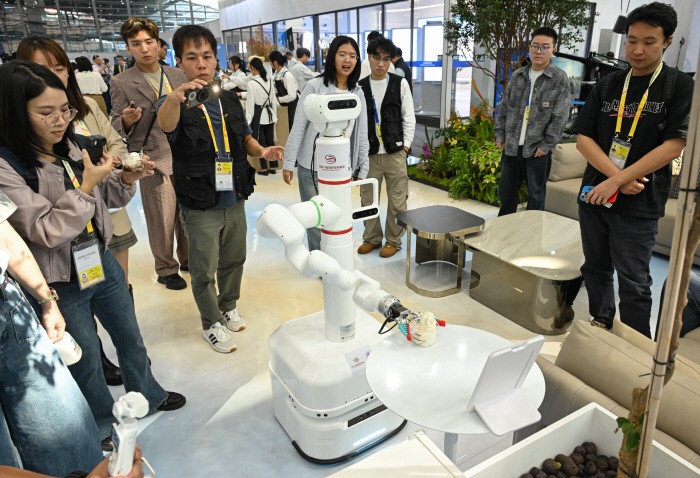 |
| A robot delivers a cup of ice cream at the media center for the Asia-Pacific Economic Cooperation (APEC) summit in Shenzhen, Guangdong Province, China, on Nov. 16. Applications of technologies from emerging industries, including artificial intelligence (AI) and robotics, were showcased to the media at the center. /Xinhua-Yonhap News Agency |
[Article summary]
1. U.S. economist David Autor warned that the new China shock poses risks to innovation-driven strategic industries such as AI and automobiles, as well as the defense of allies.
2. Research published by Autor and his colleagues found that rising Chinese imports eliminated more than 1.5 million U.S. manufacturing jobs between 1990 and 2007.
3. Jörg Wuttke, former president of the European Union Chamber of Commerce in China, said China's industrial policies have produced both formidable manufacturing capabilities and overcapacity and low profitability.
4. A China expert said Chinese private enterprises account for 60% of the country's gross domestic product (GDP) and 80% of urban employment and are expanding overseas.
A new "China shock 2.0" has hit the United States and Europe as industrial competition with China shifts from textiles, toys, clothing and footwear to key strategic industries such as artificial intelligence (AI) and automobiles, Bloomberg reported on Nov. 16 (local time).
David Autor, an economics professor at the Massachusetts Institute of Technology (MIT), said the current competition over advanced industries where innovation takes place presents a greater challenge than the previous shock from Chinese imports. As Chinese companies expand overseas on the strength of their manufacturing base, problems involving overcapacity and geopolitical risks are also emerging.
MIT economist Autor warns China shock 2.0 threatens U.S., European advanced industries and defense of allies
In a study published in 2013 with David Dorn and Gordon Hanson, Autor found that a surge in Chinese imports between 1990 and 2007 had eliminated more than 1.5 million U.S. manufacturing jobs. Some regions experienced sharp increases in unemployment and applications for disability benefits, while subsequent studies also identified political polarization and a decline in the likelihood of young men getting married.
Autor said the United States had suffered losses in the textile, toy, clothing and footwear industries at the time, describing them as unfortunate for workers who lost their jobs but not as strategic losses. However, he pointed out that the current competition centers on advanced strategic industries that drive innovation. Citing the importance of Apple and Boeing, he expressed concern that losing all U.S. automakers would deal a blow to innovation.
Autor said the gap between civilian and military technologies has narrowed more than ever before, citing the example of hobby drones being converted into military weapons. He warned that the United States could face serious risks if it was not prepared to defend itself and its allies. "We are in fierce competition for the 21st century, and we are rapidly falling behind on far too many fronts," he said.
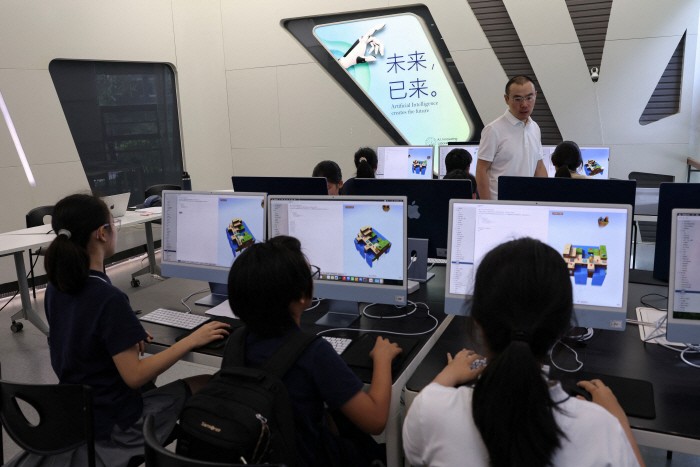 |
| Chinese elementary school students take a coding test at Beijing New Talent Academy (BNTA) in Beijing on June 26. /Reuters-Yonhap News Agency |
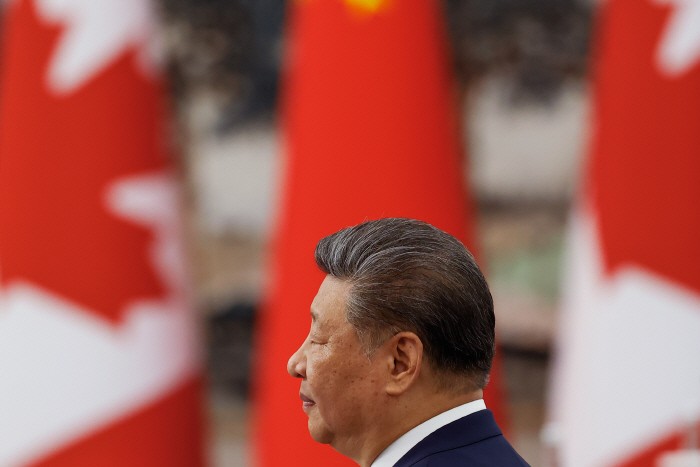 |
| Chinese President Xi Jinping holds bilateral talks with Canadian Prime Minister Mark Carney on the sidelines of the Asia-Pacific Economic Cooperation (APEC) summit in Shenzhen, China, on Nov. 17 (local time). /EPA-Yonhap News Agency |
Former EU Chamber president Wuttke says Chinese automakers rival European leaders
The process through which Chinese manufacturing acquired its formidable competitiveness is also reflected in the experience of Jörg Wuttke, former president of the European Union Chamber of Commerce in China. He served as the chief representative of German chemical company BASF in China for 27 years and headed the chamber on three separate occasions. He moved to Beijing in 1988 and witnessed in Shanghai in 1993 how development plans for Pudong materialized ahead of schedule.
Wuttke said Europe had underestimated the growth of China's automotive industry. Chinese talent had spent decades learning from foreign companies before launching their own businesses and beginning to compete with global leaders, he explained. In particular, by creating "mobile phones on wheels" that combine batteries with digital technology, Chinese automakers had put European companies in a position where they needed to relearn how to manufacture cars.
Wuttke recalled that Li Rongrong, who headed China's agency overseeing state-owned enterprises, had identified industrial policy as the cause of China's overcapacity. Once the central government selects an industry, financing and subsidies are concentrated in that sector, while local governments compete to nurture companies. Even companies with little prospect of profitability remain in business to preserve employment. "Everyone produces. Nobody makes money," he said.
While this structure can undermine the profitability of individual Chinese companies, it creates formidable competitors for other countries, Wuttke said. This is because China has suppliers competing for contracts, an abundance of engineers and a vast domestic market. He said companies capable of competing in China would be prepared to compete in other markets as well.
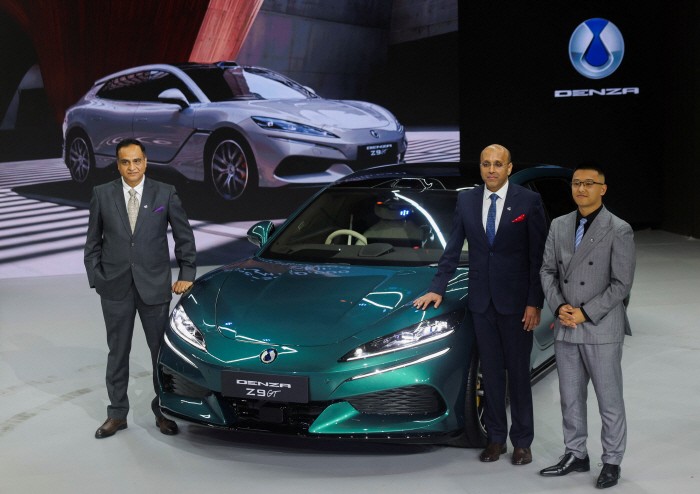 |
| From left, Rajeev Chauhan, vice president of BYD India's Electric Passenger Vehicles (EPV) business; Shrirang Joshi, vice president of sales and national sales head; and Luo Shuwei, head of marketing for BYD's Asia-Pacific auto sales division, pose at the launch event for the Denza Z9 GT in Mumbai, India, on Nov. 13 (local time). /Reuters-Yonhap News Agency |
Wuttke says China's growth has passed its peak
Despite China's manufacturing competitiveness, Wuttke pointed out that its growth model was reaching its limits. The boom in property and infrastructure construction was over, he said, and additional investment in roads, railways, housing and factories was generating diminishing returns in terms of growth. He noted that China continued to favor production over consumption even as its population aged rapidly.
Wuttke said that when he left China in August 2024 after spending nearly 40 years there, he had the impression that the country's growth had passed its peak. However, he stressed that this did not mean China was finished. As a manufacturing powerhouse with vast infrastructure, an extensive industrial base and competitive companies, China would remain a country the world would have to contend with for a long time. He said, however, that the strong optimism he had once experienced was gone.
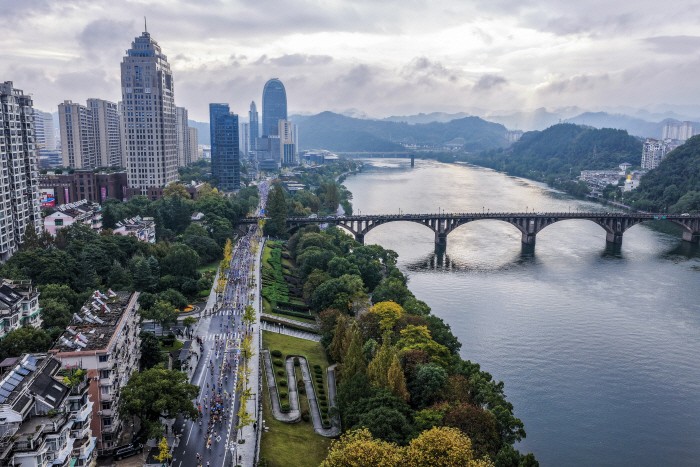 |
| Participants in the 2026 Jiande Marathon run along a course beside the Xin'an River in Jiande, east China's Zhejiang Province, on Nov. 15 (local time). /Xinhua-Yonhap News Agency |
Most Read
-
1
AMD's Lisa Su floated as potential Nvidia successo..

-
2
Iran resumes attacks after two months, targeting U..

-
3
Alice Huang, affair partner of Jensen Huang, repor..

-
4
Hegseth rejects calls for impeachment over Iran wa..

-
5
Xi secures fourth term as China reshuffles next-ge..

-
6
Democrats flip U.S. Congress in historic midterm s..

-
7
Nvidia executive Kimberly Powell at center of Jens..

PEOPLE







-
Address : In-Young Bldg., 34, Uisadang-daero 1-gil, Yeongdeungpo-gu, Seoul
Copyright by ASIATODAY CO., LTD. All rights resereved