



Malaysia braces for heavy monsoon floods
Nov 05, 2026, 09:34 am


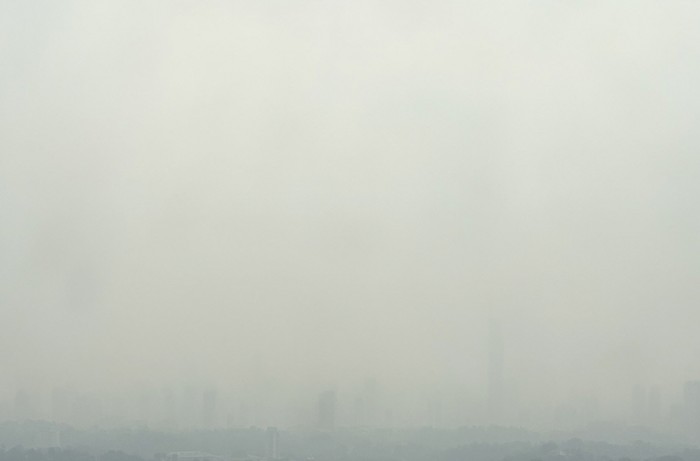 |
| Haze blankets the skyline of downtown Kuala Lumpur, Malaysia, on Sept. 17. /Photo by Hong Seong-a, Kuala Lumpur correspondent |
Not long after haze from Indonesia blanketed parts of Malaysia, the country is now bracing for floods forecast during the northeast monsoon season. Authorities are stepping up preventive measures and deploying emergency response personnel and relief supplies.
According to local daily The Star and other media outlets on Tuesday, Malaysia's Johor state has identified 337 flood-prone locations in preparation for the northeast monsoon.
Of these, 105 are concentrated in just three districts — Batu Pahat, Kota Tinggi and Segamat — while 67 roads have also been identified as being at high risk of flooding. These areas have experienced repeated flooding in the past.
The Malaysian Meteorological Department forecast that the northeast monsoon, which began on Oct. 27, would continue through March next year. Heavy rainfall is expected to be particularly intense between this month and January next year, increasing the risk of flooding, especially in low-lying and riverside areas.
A monsoon is a seasonal phenomenon in which wind direction changes. In Malaysia, the northeast monsoon frequently brings heavy rainfall and flooding.
With the onset of the northeast monsoon changing wind patterns, haze conditions across Malaysia are expected to improve.
The Malaysian Meteorological Department said the northeast monsoon had reduced the inflow of haze into Malaysia from neighboring countries, including Indonesia.
Although the haze has subsided, the country must now prepare for flooding. Weather authorities have identified 3,045 areas nationwide at high risk of flooding this year.
The figure is lower than last year's 3,682, but heavy rainfall and flooding remain possible across the country, including in the capital Kuala Lumpur and the states of Sarawak and Sabah, requiring particular caution.
According to a report by Malaysia's central bank, floods have accounted for 85% of natural disasters in the country since 2000. Economic losses caused by flooding have also averaged around 0.13% of gross domestic product (GDP) annually.
The government has activated a nationwide disaster response system in preparation for the monsoon season. It has deployed 101,901 emergency response personnel and prepared 8,321 temporary evacuation centers capable of accommodating up to 1.91 million people.
Authorities have also secured 60,000 emergency food relief kits and 170,000 ready-to-eat meals (MREs). Of these, 29,900 food kits and 94,510 MREs have already been distributed in the first round, with the remaining supplies to be allocated according to the number of flood victims in each region.
The flood monitoring system has also been strengthened. Authorities are using 614 evacuation sirens and 197 surveillance cameras to monitor flood conditions around the clock. They are also monitoring 36 river basins nationwide 24 hours a day using weather forecasting models.
Malaysian Prime Minister Anwar Ibrahim visited Sungai Buloh, a flood-prone area in the greater Kuala Lumpur region, on Nov. 3 and ordered flood prevention projects to be expedited.
The government plans to accelerate the projects by disbursing 500 million ringgit (about 165.1 billion won) first out of a total project budget of 700 million ringgit (about 231.1 billion won).
Hong Seong-a
Most Read
-
1
AMD's Lisa Su floated as potential Nvidia successo..

-
2
Iran resumes attacks after two months, targeting U..

-
3
Alice Huang, affair partner of Jensen Huang, repor..

-
4
Hegseth rejects calls for impeachment over Iran wa..

-
5
Xi secures fourth term as China reshuffles next-ge..

-
6
Democrats flip U.S. Congress in historic midterm s..

-
7
Nvidia executive Kimberly Powell at center of Jens..

PEOPLE







-
Address : In-Young Bldg., 34, Uisadang-daero 1-gil, Yeongdeungpo-gu, Seoul
Copyright by ASIATODAY CO., LTD. All rights resereved