



Egg-freezing wait times reach two years in France amid surging demand
Nov 04, 2026, 04:02 pm


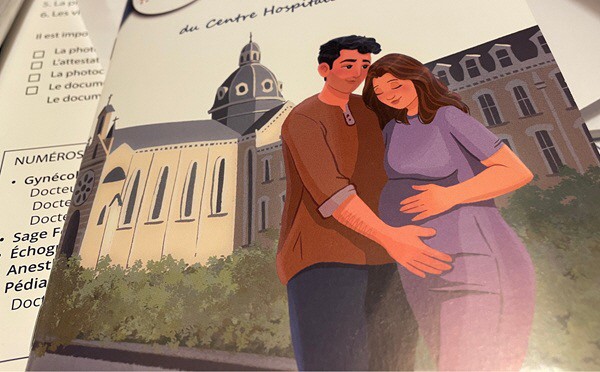 |
| A pregnancy guide from a general hospital in Pays de la Loire, France. /Photo by Lim Yu-jeong, Paris correspondent |
With more than 3 million people affected by infertility in France, the government has stepped up measures to address the issue, including a major expansion of medical facilities offering egg freezing. Applications for egg freezing surged 30% last year, but medical services have struggled to keep pace with demand, with patients in some regions facing waits of nearly two years for the procedure.
Local media outlet Franceinfo reported Tuesday that Health Minister Stéphanie Rist had launched an infertility awareness campaign based on a report submitted by the committee monitoring the country's infertility action plan.
According to the report, more than 3 million people in France are currently affected by infertility, accounting for 15% to 25% of couples of reproductive age. A shortage of medical infrastructure has become particularly apparent as the number of women seeking to freeze their eggs for nonmedical reasons has risen rapidly.
About 20,000 women applied to have their eggs frozen and stored last year, up 30% from the previous year. However, as medical facilities have struggled to keep up with demand, waiting times between application and the actual procedure have reached 14 to 24 months, depending on the region.
The French government has therefore decided to expand the number of medical facilities offering egg freezing to 70 by 2028. It also plans to establish a national infrastructure for managing egg, sperm and embryo donations and strengthen early diagnosis and treatment of endometriosis and polycystic ovary syndrome.
One notable measure is the decision to send information letters on fertility and infertility directly to citizens turning 29. The letters, scheduled to be sent from the middle of this month, will explain that fertility begins to decline at age 30 for women and 40 for men, and that infertility can be influenced not only by medical factors but also by diet, smoking and other lifestyle habits.
Rist explained that the letters were not intended to tell people to have children simply because they had turned 29, but rather to emphasize the importance of contraception for those who do not want children and provide necessary information to those who do.
The government also plans to strengthen prevention and early intervention by establishing a website offering scientifically verified information on infertility, linked to a public health information website.
The measures come amid a prolonged decline in France's birth rate. According to the French National Institute of Statistics and Economic Studies (INSEE), the country's total fertility rate has continued to fall since 2014, reaching 1.56 children per woman last year, excluding the overseas territory of Mayotte.
Lim Yu-jeong
Most Read
-
1
U.S., Israel plan to resume strikes on Iran after..

-
2
Ukraine halts strikes on Russian oil refineries un..

-
3
China's fifth plenum to conclude amid expectations..

-
4
ASEAN to discuss Myanmar's return next month

-
5
AI-discovered PHP flaw triggers global cybersecuri..

-
6
Southeast Asian auto parts makers hit hard by Chin..

-
7
UK court orders worldwide asset freeze on Vietnam'..

PEOPLE







-
Address : In-Young Bldg., 34, Uisadang-daero 1-gil, Yeongdeungpo-gu, Seoul
Copyright by ASIATODAY CO., LTD. All rights resereved