



Democrats capture 50 Senate seats in U.S. midterms, on verge of majority
Nov 04, 2026, 01:55 pm


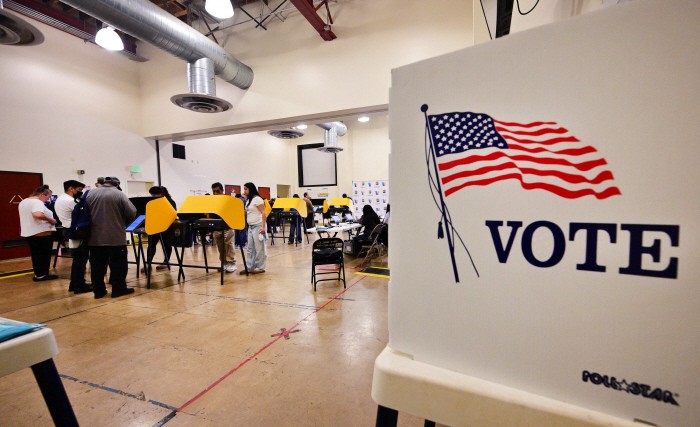 |
| Voters cast their ballots at a polling station set up at Boyle Heights City Hall in Los Angeles, California, on Nov. 3, Election Day for the U.S. midterm elections. /AFP-Yonhap |
As vote counting continues in the U.S. midterm elections, Democrats had secured 50 seats in the Senate as of 11:27 p.m. Eastern Time on Tuesday, moving close to a majority.
Democrats need just one more seat to secure a Senate majority.
In the early stages of vote counting, the opposition Democratic Party led in the number of seats secured and vote shares in key battleground states.
According to data compiled by election analysis website Decision Desk HQ (DDHQ), Democrats had secured 90 seats in the 435-member House of Representatives, compared with 66 for Republicans.
Based on current trends, DDHQ projected a 100% probability that Democrats would regain control of the House.
For the Senate, DDHQ projected a 72% chance that Democrats would retain or regain a 51-seat majority, compared with a 28% chance of a Republican victory.
Democratic candidates were also leading in the early vote counts in seven key battleground states expected to determine control of the Senate.
Democrats were ahead in the early counts in Ohio, Texas, Kansas, Michigan and Maine.
Democrats were also leading in South Carolina, where pre-election polls had favored Republicans.
With the party winning at least four of the seven Senate battleground states set to secure a majority in the chamber, whether the current trends continue is considered a key factor in determining the outcome for both parties, even excluding Iowa and Alaska, where vote counting had yet to begin.
However, analysts cautioned that early tallies often reflect mail-in and early votes first, which tend to have a higher proportion of Democratic supporters, making it difficult to draw definitive conclusions about the final results.
Lee Jeong-eun
Most Read
-
1
U.S., Israel plan to resume strikes on Iran after..

-
2
Ukraine halts strikes on Russian oil refineries un..

-
3
China's fifth plenum to conclude amid expectations..

-
4
ASEAN to discuss Myanmar's return next month

-
5
AI-discovered PHP flaw triggers global cybersecuri..

-
6
Southeast Asian auto parts makers hit hard by Chin..

-
7
UK court orders worldwide asset freeze on Vietnam'..

PEOPLE







-
Address : In-Young Bldg., 34, Uisadang-daero 1-gil, Yeongdeungpo-gu, Seoul
Copyright by ASIATODAY CO., LTD. All rights resereved