



S. Korea seeks legal change to allow seizure of collateral on retirement pension loans
Nov 04, 2026, 11:23 am


 |
| /Yonhap |
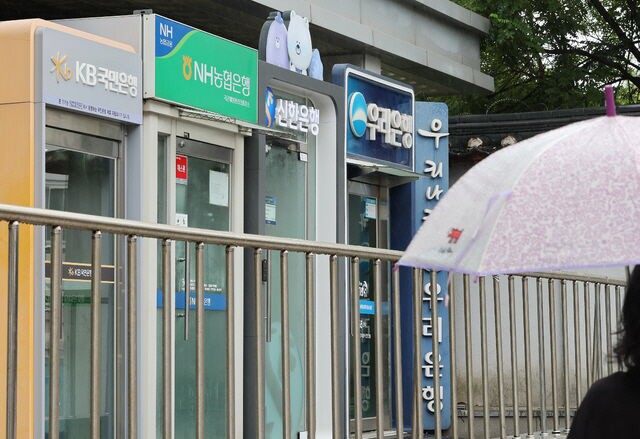
The government is seeking to amend the law to raise the limit on loans secured by retirement pensions from 50% to 70% of accumulated pension funds and allow banks to seize pledged retirement pension assets if borrowers fail to repay their loans. The move aims to address banks' reluctance to offer such loans over concerns about potential losses. It is also intended to give retirement pension plan participants who urgently need funds greater access to borrowing instead of withdrawing their retirement savings. Attention is now turning to whether retirement pension-backed loans, currently offered only by NH NongHyup Bank, will become available at other banks.
According to financial industry sources on Tuesday, the government is pursuing measures to promote retirement pension-backed lending. Banks say allowing the seizure of pledged assets could give them room to expand such loan offerings. However, they maintain that seizing collateral and actually recovering outstanding loans are separate matters, and that specific recovery procedures must be established.
NH NongHyup Bank currently offers loans secured by retirement pensions for purposes including home purchases and jeonse rental deposits for people who do not own homes, as well as medical expenses arising from illness or injury. Participants in defined benefit (DB) pension plans can also use the service if their employers have signed loan agreements with NH NongHyup Bank. However, as other banks have not expanded into this market, the options available to pension plan participants remain limited.
The problem arises when borrowers fail to repay their loans. The right to receive retirement pension benefits is protected from seizure because these funds are intended to support workers in retirement. As a result, banks have found it difficult to dispose of pledged assets to recover their loans, even when they hold them as collateral.
In 2020, the government also introduced a legal basis for early withdrawals to repay loan principal and interest in an effort to expand retirement pension-backed lending. At the time, banks expressed concerns that it would be difficult to enforce repayment if pension plan participants refused to make early withdrawals. Critics argued that allowing early withdrawals alone would do little to ease banks' burden of recovering loans.
The latest measures differ from previous efforts in that they would allow banks to seize retirement pension assets pledged as collateral. "If banks previously avoided offering these loans because it was difficult to secure their claims, a legal amendment by the government to address this issue would give banks an incentive to offer them," a banking industry official said. "If measures are introduced concerning security interests in retirement pension assets, retirement pension-backed lending could become more active, as the needs of customers and banks would align."
Pension plan participants could also avoid having to sell retirement pension assets to raise urgently needed funds. Participants in defined contribution (DC) pension plans may have to sell funds and other investment products held in their accounts to make early withdrawals. Even if those investments are at a loss, they may have no choice but to sell them when they urgently need a lump sum. With a secured loan, participants could continue managing their accumulated pension funds while borrowing the money they need and repaying it later.
"From the customer's perspective, obtaining temporary financing is also more advantageous than terminating a retirement pension plan," an official at a commercial bank said. "In some cases, making an early withdrawal requires selling investment products currently held in the account." The official added, "Customers could use loans to obtain funds for the time being and repay them later."
Actual demand is expected to depend on interest rates. Since borrowers would pay interest rather than make early withdrawals from their retirement pensions, relatively low borrowing costs would be necessary to attract more users. "Given that interest rates are currently high, demand would be strong if these loans were introduced at relatively low rates," a financial industry official said.
Lee Bo-ra
Most Read
-
1
U.S., Israel plan to resume strikes on Iran after..

-
2
Ukraine halts strikes on Russian oil refineries un..

-
3
China's fifth plenum to conclude amid expectations..

-
4
ASEAN to discuss Myanmar's return next month

-
5
AI-discovered PHP flaw triggers global cybersecuri..

-
6
UK court orders worldwide asset freeze on Vietnam'..

-
7
Southeast Asian auto parts makers hit hard by Chin..

PEOPLE







-
Address : In-Young Bldg., 34, Uisadang-daero 1-gil, Yeongdeungpo-gu, Seoul
Copyright by ASIATODAY CO., LTD. All rights resereved