



N. Korea vows continued nuclear buildup, escalating threats against Seoul
Nov 02, 2026, 09:29 am


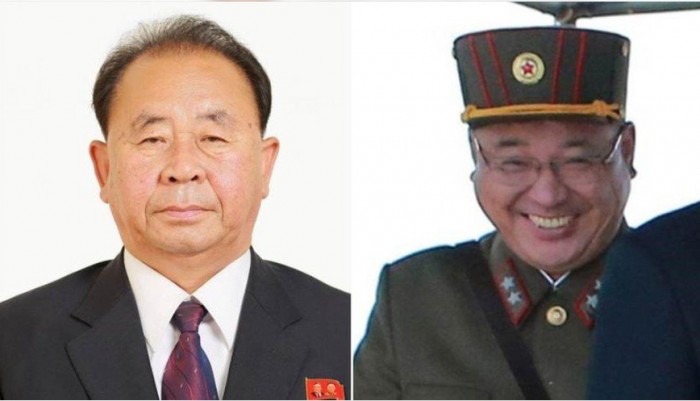 |
| Kim Jong-sik, first vice department director of the Central Committee of the Workers' Party of Korea and a member of the party's Central Military Commission, who holds the rank of general, has played a leading role in North Korea's nuclear and missile development. In a statement on Nov. 2, Kim criticized the South Korea-U.S. nuclear-conventional integration exercise "Iron Mace," saying, "Our defense policy of further accelerating the strengthening of our nuclear war deterrent will not change in the slightest." The photos show Kim in a suit (left) and in military uniform. / Yonhap News Agency, file photos from Korean News Agency (KNA) |
In a statement released through the Korean Central News Agency (KCNA) on Nov. 2, Kim claimed that Iron Mace, a South Korea-U.S. nuclear-conventional integration (CNI) tabletop exercise conducted from Sept. 29 to Oct. 2, was aimed at launching a nuclear attack against North Korea.
He also cited South Korea's Hoguk exercise, the South Korea-U.S. combined air exercise Freedom Flag and the U.S.-Japan joint exercise Keen Sword, stressing that North Korea must "restrain and control its enemies with more powerful nuclear means."
He added, "Our defense policy of further accelerating the strengthening of our nuclear war deterrent will not change in the slightest."
What deserves attention is Kim's standing within North Korea's power structure. Kim is a member of the Workers' Party's Central Military Commission and first vice department director of its Munitions Industry Department. He has assisted Kim Jong-un in the country's nuclear and missile development programs for many years. Although his exact rank in North Korea's overall power hierarchy has not been confirmed, he is regarded as a key official who wields considerable influence over the development and production of strategic weapons.
In particular, Kim accompanied Kim Jong-un during his on-site inspections of major munitions factories on June 6. At the time, Kim Jong-un received a briefing on plans to expand ballistic and cruise missile production capacity and emphasized the need to increase that capacity 2.5-fold during the upcoming five-year plan period. This is why Kim Jong-sik's latest remarks on strengthening nuclear forces are difficult to regard as merely propaganda aimed at South Korea.
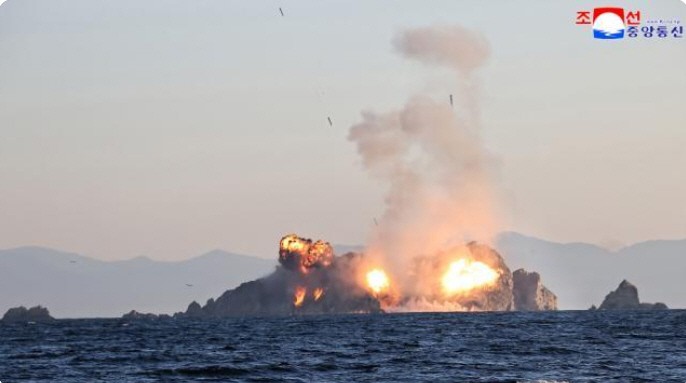 |
| A scene from North Korea's test to assess the destructive power of a dispersal warhead for a tactical ballistic missile on Oct. 31. Multiple explosions occur simultaneously across an island target at sea following the missile launch. North Korea claimed that its "Type 2 standard dispersal warhead" could devastate a target area of approximately 12 to 13 hectares. The test was supervised by Kim Jong-sik, first vice department director of the Central Committee of the Workers' Party of Korea. / Korean Central News Agency, Yonhap News Agency |
North Korea also announced that it had conducted a test to assess the destructive power of a dispersal warhead for a tactical ballistic missile on Oct. 31 under Kim Jong-sik's supervision. North Korea claimed that its Type 2 standard dispersal warhead could devastate a target area of approximately 12 to 13 hectares. However, its actual destructive power and whether it has been deployed for operational use have not been verified.
From a military perspective, the statement is closer to a policy warning intended to justify the continued buildup of nuclear and missile forces than to a warning of an imminent nuclear attack. This is because it did not specify any targets, timing or conditions for the use of nuclear weapons.
However, the fact that a key figure responsible for nuclear weapons development directly took issue with South Korea-U.S. joint military exercises and declared an expansion of nuclear forces cannot be taken lightly. If North Korea expands its operational capabilities involving nuclear weapons and tactical ballistic missiles, the military threat to major South Korean military bases and assembly areas for reinforcement forces could increase.
Ultimately, the essence of the statement lies not so much in an immediate threat of nuclear attack as in North Korea's intention to continue developing its nuclear forces as a key means of military deterrence and pressure against South Korea. For the South Korean military, the challenge is to distinguish North Korea's political rhetoric from actual weapons development trends while strengthening its nuclear and missile detection and interception capabilities and the effectiveness of South Korea-U.S. extended deterrence.
Koo Pil-hyun
Most Read
-
1
U.S., Israel plan to resume strikes on Iran after..

-
2
Ukraine halts strikes on Russian oil refineries un..

-
3
China's fifth plenum to conclude amid expectations..

-
4
ASEAN to discuss Myanmar's return next month

-
5
AI-discovered PHP flaw triggers global cybersecuri..

-
6
UK court orders worldwide asset freeze on Vietnam'..

-
7
Southeast Asian auto parts makers hit hard by Chin..

PEOPLE







-
Address : In-Young Bldg., 34, Uisadang-daero 1-gil, Yeongdeungpo-gu, Seoul
Copyright by ASIATODAY CO., LTD. All rights resereved