



French industry pushes back against expansion of sugar tax
Oct 23, 2026, 09:56 am


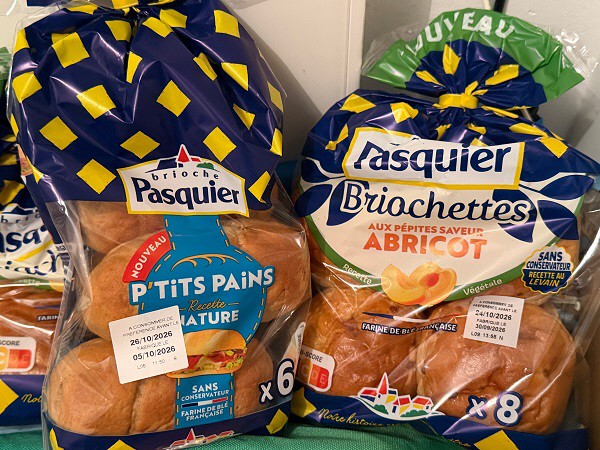 |
| France's parliament is reportedly discussing legislation to expand the country's "sugar tax," prompting protests from affected industries. The photo shows products made by Pasquier, one of France's leading bakery and confectionery companies. / Photo by Lim Yu-jung, Paris correspondent |
Industries affected by France's so-called "sugar tax" are protesting against government plans to expand the tax, currently imposed only on carbonated beverages, to all foods containing sugar.
France's parliament will discuss the proposed expansion of the sugar tax during deliberations on the national health insurance budget that began on Oct. 20 (local time), French media outlet franceinfo reported that day.
France has imposed a tax on carbonated beverages since 2011 to combat obesity and diabetes, which place a financial burden on the country's health insurance system.
During the current budget deliberations, lawmakers will discuss legislation to expand the scope of the sugar tax to all foods containing sugar, including factory-produced bread and confectionery products.
The agricultural and food manufacturing industries have protested against the proposed expansion, expressing concerns about an increased tax burden.
This year's sugar beet harvest, used for sugar production, is expected to decline by approximately 30% from a year earlier due to drought. Farmers who have suffered financial losses from the poor harvest argue that the sugar tax would impose an additional burden.
"Now is not the time to pass such a tax expansion proposal. It is time to provide financial support to farmers who have been unable to harvest their sugar beets properly this year," said Franck Sander, president of the General Confederation of Sugar Beet Growers (CGB) in France.
"The government is thinking only about the budget, with no regard for future sugar beet production," he criticized.
The sugar manufacturing industry also expressed concerns about the potential adverse effects of expanding the sugar tax on the market.
"Imposing a tax indiscriminately on foods containing sugar is by no means a responsible policy, and education about eating habits is more important," said Christian Spiegeleer, secretary-general of the French Sugar Manufacturers' Association.
Although the tax would be paid by the food industry rather than directly by consumers, some of the burden could be passed on to consumers through higher prices.
"Over the past several years, whenever the prices of sugar or flour have risen, consumers have ultimately borne the burden," said Louis Delfour, who operates an artisanal confectionery shop in the Lot department of southwestern France.
"Consumers whose purchasing power has already weakened due to inflation will face an even greater financial burden from the tax expansion," he warned.
Some have also questioned the effectiveness of the sugar tax, which is intended to combat obesity and diabetes, in improving public health.
"Despite the introduction of the sugar tax, consumption of the products has not fallen dramatically, and consumers are still buying and drinking carbonated beverages," said Mathieu Plenne, an economist at the French Institute for Economic Research (IFE).
According to France's Ministry of Agriculture, average annual sugar consumption per person in France stood at approximately 28 kilograms last year, remaining at a similar level for more than 30 years.
Lim Yu-jung
Most Read
-
1
U.S., Israel plan to resume strikes on Iran after..

-
2
Ukraine halts strikes on Russian oil refineries un..

-
3
China's fifth plenum to conclude amid expectations..

-
4
ASEAN to discuss Myanmar's return next month

-
5
AI-discovered PHP flaw triggers global cybersecuri..

-
6
Southeast Asian auto parts makers hit hard by Chin..

-
7
UK court orders worldwide asset freeze on Vietnam'..

PEOPLE







-
Address : In-Young Bldg., 34, Uisadang-daero 1-gil, Yeongdeungpo-gu, Seoul
Copyright by ASIATODAY CO., LTD. All rights resereved