



Lone Star loses tax refund lawsuit against S. Korean government, Seoul
Oct 22, 2026, 01:08 pm


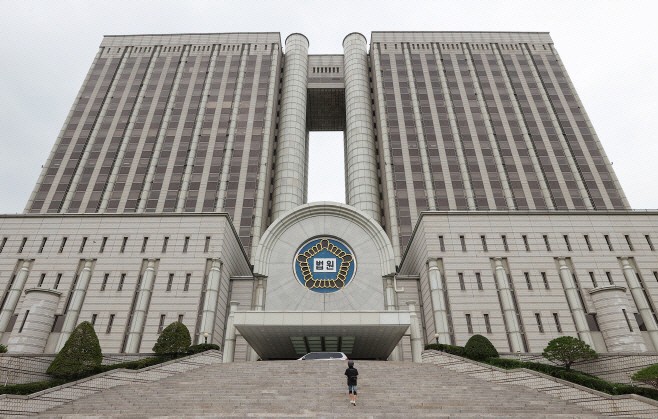 |
| A view of the Seoul Central District Court and Seoul High Court buildings. / Yonhap |
U.S. private equity firm Lone Star has lost a retrial following a Supreme Court remand in its lawsuit seeking a refund of more than 168 billion won in taxes from the South Korean government and the Seoul Metropolitan Government. Although the first- and second-instance courts ruled that the government and Seoul should refund the taxes to Lone Star, the Supreme Court overturned those rulings and sent the case back. The appeals court has now also rejected Lone Star's claims.
The Seoul High Court's Civil Division 16-1 on Oct. 22 dismissed all claims filed by nine Lone Star-affiliated entities against the Republic of Korea, the Seoul Metropolitan Government and others in a lawsuit seeking the return of unjust enrichment, following the Supreme Court's remand.
In the case against the Republic of Korea, the court overturned the portion of the first-instance ruling that had gone against the state and dismissed Lone Star's primary claim concerning that portion. It also rejected an alternative claim added during the appeals proceedings. In the case against the Seoul Metropolitan Government, the court likewise overturned the portion of the first-instance ruling against the city and dismissed Lone Star's claim. The court ordered the plaintiffs to bear all litigation costs.
The lawsuit stemmed from Lone Star's claim that it had not received refunds for some of the taxes imposed on income generated from its investments in South Korean companies, including Korea Exchange Bank. Lone Star acquired a stake in Korea Exchange Bank in 2003 and later sold its shares, making capital gains worth several trillion won. Tax authorities imposed corporate income tax and other taxes on Lone Star, determining that its entities were the beneficial owners of dividend income and capital gains generated in South Korea.
Lone Star challenged the taxation in court, arguing that it was unjust. In 2017, the Supreme Court finalized a ruling canceling the corporate income tax assessments on the grounds that imposing such taxes on foreign corporations without permanent establishments in South Korea was unlawful. Lone Star subsequently filed a separate unjust enrichment lawsuit against the government and Seoul, claiming that some of the canceled taxes had not been refunded. It sought approximately 153 billion won in corporate income tax from the central government and about 15.2 billion won in local income tax from Seoul.
In 2023, the first-instance court ruled that the government should refund approximately 153 billion won in corporate income tax and Seoul should return about 15.2 billion won in local income tax. The appeals court upheld a ruling partially in favor of the plaintiffs in 2024. The government then appealed to the Supreme Court, which overturned the lower court's ruling in April 2025 and remanded the case to the Seoul High Court. In the latest proceedings following the Supreme Court's decision, the earlier rulings in Lone Star's favor were reversed, bringing the domestic tax refund litigation to a close with a victory for the government and Seoul.
The case forms part of a longstanding tax dispute surrounding Lone Star's investment in and sale of Korea Exchange Bank. However, the domestic tax refund lawsuit is a separate proceeding from the investor-state dispute settlement (ISDS) case. It is distinct from the international arbitration proceedings concerning whether the South Korean government's actions during the sale of Korea Exchange Bank violated international law.
Cheon Hyun-bin
Most Read
-
1
Celltrion nears additional contract with major U.S..

-
2
Putin proposes trilateral U.S.-China-Russia summit..

-
3
U.S. weighs dropping MOAB, world's most powerful n..

-
4
"Aren't those foreigners on welfare?": M..

-
5
Houthis launch successive attacks on Saudi airport..

-
6
Saudi Arabia, Iran hold first diplomatic talks to..

-
7
Attention centers on APEC for possible Trump-Xi-Pu..

PEOPLE






-
Address : In-Young Bldg., 34, Uisadang-daero 1-gil, Yeongdeungpo-gu, Seoul
Copyright by ASIATODAY CO., LTD. All rights resereved