



K-defense global expansion put to test amid sanction risks
Oct 22, 2026, 09:10 am


 |
| /Yonhap |
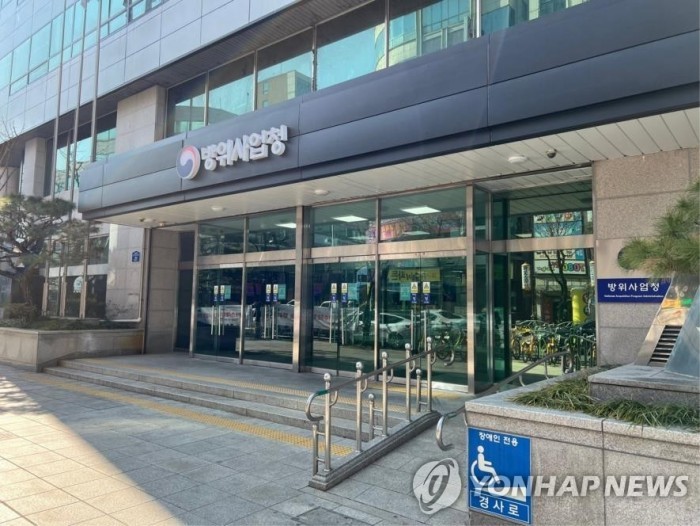
As the Defense Acquisition Program Administration (DAPA) voted to restrict LIG Defense & Aerospace (LIG D&A) from participating in bids for two years, the potential impact on military force deployment and K-defense export drives has emerged as a key issue. With Hanwha Aerospace also facing possible sanctions over a serious workplace disaster at its Daejeon plant, concerns are mounting that business participation by South Korea's flagship defense contractors could be restricted simultaneously.
A defense industry expert and former DAPA official who currently serves as an advisor to a law firm said on the 21st, "In the past, there were cases where sanctions were decided following court rulings," adding, "Recently, I understand that the system operates in a way that allows administrative sanctions even prior to criminal rulings to ensure transparency in defense procurement and prevent the recurrence of corruption."
Critics point out that because DAPA officials were implicated in this case, the agency's internal management and supervisory responsibility must also be examined. The argument is that internal control mechanisms—such as the selection of evaluation committee members, prevention of conflicts of interest, and verification of evaluation scores—must be scrutinized to see whether they operated properly.
DAPA's decision regarding the serious industrial accident at Hanwha Aerospace's Daejeon plant is also drawing keen attention. An explosion in June claimed the lives of five workers, and a special inspection by the Ministry of Employment and Labor uncovered numerous violations of industrial safety laws.
If simultaneous sanctions against the two companies materialize, they could impact the development and production of domestic weapons systems. LIG D&A is a pivotal player in precision-guided munitions such as the Cheongung-II, while Hanwha Aerospace manufactures systems like the K9 self-propelled howitzer and the Chunmoo multiple launch rocket system.
The fallout for exports is more likely to appear in new orders and follow-on programs rather than existing contracts. Analysts note that this could also impact the bidding competitiveness of K-defense as it seeks to expand beyond the Middle East and Europe into the U.S. market.
Voices within the defense sector suggest that while enterprises must be held strictly accountable for unlawful acts, measures must simultaneously be taken to ensure the continuity of military capability deployment and export programs.
Koo Pil-hyun
Most Read
-
1
Celltrion nears additional contract with major U.S..

-
2
Putin proposes trilateral U.S.-China-Russia summit..

-
3
U.S. weighs dropping MOAB, world's most powerful n..

-
4
"Aren't those foreigners on welfare?": M..

-
5
Houthis launch successive attacks on Saudi airport..

-
6
Saudi Arabia, Iran hold first diplomatic talks to..

-
7
Attention centers on APEC for possible Trump-Xi-Pu..

PEOPLE







-
Address : In-Young Bldg., 34, Uisadang-daero 1-gil, Yeongdeungpo-gu, Seoul
Copyright by ASIATODAY CO., LTD. All rights resereved