



Job shortages and rising debt fuel fears of youth 'exodus' from Australia's Victoria
Oct 20, 2026, 09:55 am


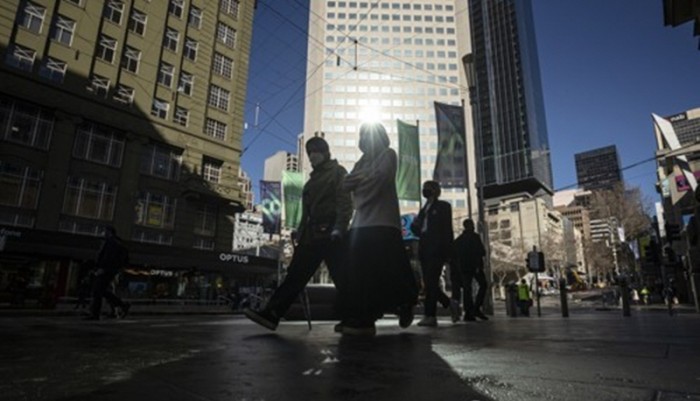 |
| People walk along Bourke Street Mall in Melbourne, Victoria, Australia. / EPA, Yonhap |
Survey findings reveal that concerns over an accelerating exodus of young people from Victoria, Australia's second-largest economy, are deepening.
Australia's 7News reported on the 18th, citing a recent poll of 1,500 Victoria residents, that a majority of residents aged 18 to 44 are considering moving to other states, with 54% of respondents aged 18 to 29 showing a high likelihood of leaving the state.
The survey was conducted by polling firm Amplify commissioned by the Herald Sun, a prominent Melbourne-based daily newspaper, with 321 respondents aged 18 to 29. Among respondents who said they were considering relocating, roughly one in three went beyond mere contemplation and was found to be seriously preparing for action with concrete relocation plans.
The "Victorian exodus" of young people was corroborated by official data from the Australian Bureau of Statistics (ABS). Over the past year, approximately 36,000 Victoria residents aged 20 to 34 moved interstate.
This figure accounts for roughly 48% of Victoria's total net interstate departures, meaning key personnel serving as the backbone of economic activity are leaving en masse.
Economic hardship and bleak future prospects are cited as primary factors behind this issue. Victoria's youth unemployment rate last month, released by the ABS on the 15th, stood at around 13%, significantly outpacing the national average of about 10.9%.
Coupled with sharply escalating housing costs, elevated inflation, and an insecure employment landscape, analysis suggests that young people's sense of deprivation and frustration regarding the future have reached their limits.
The state government's massive public debt, which the younger generation will have to bear down the road, is another source of instability. As of June 30 this year, Victoria's net debt stood at 160.7 billion Australian dollars (approx. 145 trillion won).
According to the state budget, the debt volume is projected to approach 200 billion Australian dollars (approx. 180 trillion won) by 2029–2030. Snowballing fiscal debt will inevitably translate into excessive tax and fiscal burdens passed onto the youth, who represent the state's future taxpayers.
Experts forecast that the outflow of young people will intensify amid a shortage of quality jobs alongside mounting concerns over public safety and surging crime rates.
As countermeasures, the Victorian state government stated that it would achieve an operating surplus of 2.4 billion Australian dollars (approx. 2.2 trillion won) for the 2025–2026 fiscal year and create 35,000 jobs by June next year, but public opinion largely views this as insufficient to resolve the multifaceted crisis.
Lee Dae-won
Most Read
-
1
Celltrion nears additional contract with major U.S..

-
2
U.S. weighs dropping MOAB, world's most powerful n..

-
3
"Aren't those foreigners on welfare?": M..

-
4
Putin proposes trilateral U.S.-China-Russia summit..

-
5
Houthis launch successive attacks on Saudi airport..

-
6
Saudi Arabia, Iran hold first diplomatic talks to..

-
7
Saudi airport in Riyadh struck again, leaving at l..

PEOPLE






HEADLINE NEWS

-
Address : In-Young Bldg., 34, Uisadang-daero 1-gil, Yeongdeungpo-gu, Seoul
Copyright by ASIATODAY CO., LTD. All rights resereved