



China goes all in on anti-corruption drive, pursuing even retired officials to the end
Oct 15, 2026, 10:44 am


China is aggressively intensifying its anti-corruption drive targeting high-ranking officials across the party, government, and military ahead of the fifth plenary session of the Communist Party's 20th National Congress (the party congress held every five years), or the 20th Fifth Plenum, which will run for four days starting on the 26th.
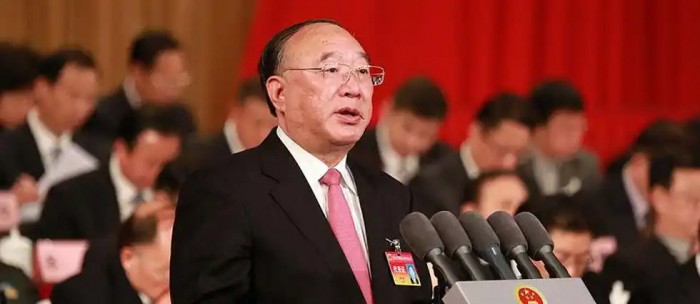 |
| Former Chongqing Mayor Huang Qifan during his time in office. Purged a full eight years after retirement, his misfortune seems to illustrate China's relentless commitment to its anti-corruption drive. / Global Times |
Moreover, this appears all the more apparent given the astonishingly deep-seated practices of senior officials across the party, government, and military, who have long held a notorious reputation when it comes to corruption. The recent harsh treatment meted out to both incumbent and retired figures can be seen as reflecting the Chinese anti-graft authorities' resolve to chase down and punish those tied to wrongdoing to the ends of the earth.
Whether this is truly the case becomes clear when considering that a number of retired veterans—including Huang Qifan (74), former deputy party secretary and mayor of Chongqing who retired long ago—have been hit with severe penalties over various corrupt practices. Examining former Mayor Huang's case is particularly instructive. According to Beijing sources well-versed in Chinese party and government affairs on the 15th, after serving nearly 20 years in senior posts in Chongqing, Huang retired in March 2018 following his tenure as vice chair of the National People's Congress (NPC) Financial and Economic Affairs Committee.
Given that he was a member of the party's Central Committee, which had a quota of 205 members at the time, his departure could well be termed an honorable retirement. Yet nearly a decade later, he was disgraced after it was abruptly confirmed that he is under investigation for serious violations of discipline and law, without specific charges being disclosed. Judging by the prevailing atmosphere, he is expected to face heavy punishment.
Ding Yexian (66), former deputy party secretary of the Tibet Autonomous Region, also warrants mention. While he appeared to step down honorably in January 2023 as deputy secretary of the NPC Standing Committee, he was recently ensnared by anti-graft authorities. Aside from a four-year period beginning in 1985 while attending university, he spent almost all of his 50-year public career in Tibet, only to be branded a corrupt cadre in the twilight of his life.
In addition, Lian Ji (71), former president of the Chinese National Academy of Arts (vice-ministerial rank); Luo Weiqi (69), former secretary and director-general of the Guangdong Provincial Department of Education (vice-ministerial rank); and Gao Zhixing (64), former vice president of China Mobile's Guangdong branch (bureau-level rank), have all recently faced misfortune over illicit acts committed while in office. Among them, Gao is known to have been brought down over misconduct dating back some 20 years, an episode he himself likely barely recalls. This underscores the genuine determination and unwavering will of Chinese anti-corruption authorities to hold even long-retired cadres accountable if wrongdoing occurred.
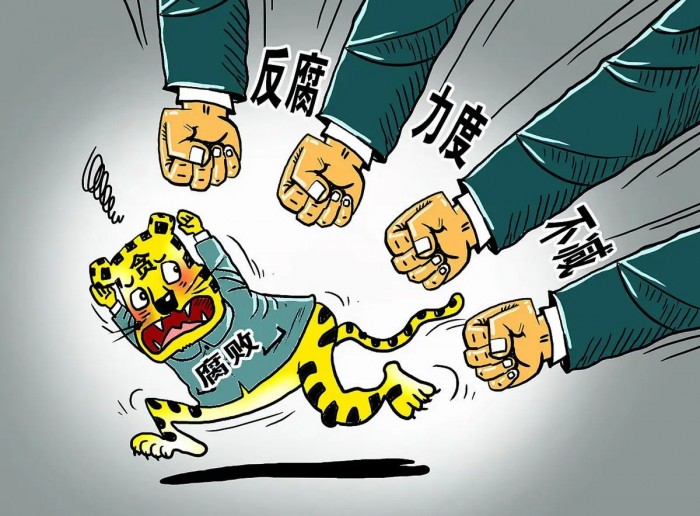 |
| An editorial cartoon from a media outlet illustrating China's increasingly aggressive anti-corruption campaign. / The Beijing News |
In addition to these figures, numerous retired party and government veterans have recently faced punishment for corrupt acts committed during their tenures. That number is likely to grow even further moving forward. As such, the scrutiny facing incumbent officials goes without saying. Indeed, an extraordinary number of cases are reportedly being uncovered nationwide ahead of the 20th Fifth Plenum. Considering that General Secretary and President Xi Jinping requires an intense anti-corruption drive to highlight his achievements and justify his prolonged rule, this reality comes as little surprise.
Hong Soon-do
Most Read
-
1
Celltrion nears additional contract with major U.S..

-
2
Putin proposes trilateral U.S.-China-Russia summit..

-
3
U.S. weighs dropping MOAB, world's most powerful n..

-
4
"Aren't those foreigners on welfare?": M..

-
5
Houthis launch successive attacks on Saudi airport..

-
6
Saudi Arabia, Iran hold first diplomatic talks to..

-
7
Saudi airport in Riyadh struck again, leaving at l..

PEOPLE





HEADLINE NEWS

-
Address : In-Young Bldg., 34, Uisadang-daero 1-gil, Yeongdeungpo-gu, Seoul
Copyright by ASIATODAY CO., LTD. All rights resereved