



China offers no comment on N. Korea's ballistic missile launch
Oct 13, 2026, 10:04 am


The Chinese Foreign Ministry offered no substantial comment regarding North Korea's launch of multiple ballistic missiles into the East Sea on the 12th, maintaining a stance virtually unchanged from its previous posture.
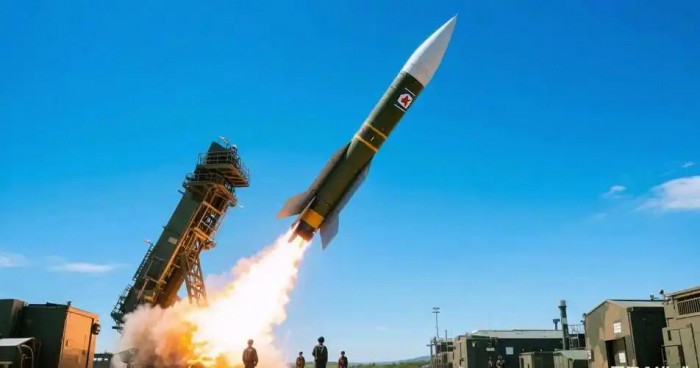 |
| North Korea's missile launch. / Global Times (Huanqiu Shibao) |
According to diplomatic sources in Beijing on the 13th, Chinese Foreign Ministry spokesperson Mao Ning merely stated, "We have noted the reports" and "We have no new comments," when asked about the launch during a regular press briefing the previous day. This response reflects a characteristic posture from Beijing, which has consistently skirted direct criticism and avoided addressing whether North Korea’s ballistic missile tests violate UN Security Council resolutions, despite being a permanent member of the council.
Sources noted that North Korea's ballistic missile launches and any projectile launches employing ballistic missile technology are explicitly prohibited under UN Security Council Resolutions 1718 and 1874, among others. Passing such resolutions requires that none of the five permanent members—the United States, France, the United Kingdom, Russia, and China—exercise their veto power.
Yet while Beijing voted in favor of these resolutions when they were adopted, it has refrained from directly addressing Pyongyang's subsequent violations. Notably, when North Korea launched ballistic missiles on May 26, Beijing at least added nuance while reiterating that it had "no new comments," stating that it "notes the divergent views among the parties concerned." Since then, however, China's official statements have grown even more terse.
Some observers point to Chinese President and General Secretary Xi Jinping’s visit to North Korea on June 8–9 as a pivotal turning point behind Beijing's shifting demeanor. This has sparked speculation that China may have pivoted toward turning a blind eye to North Korea's provocations altogether. Indeed, when North Korea fired some 10 ballistic missiles into the East Sea on August 21, Foreign Ministry spokesperson Lin Jian offered an identical response, stating only, "We have noted relevant reports," and "We have no new comments on this."
According to sources, North Korea fired several ballistic missiles toward the East Sea from the Pyongyang area at around 9:20 a.m. the previous day. The missiles flew for more than 900 kilometers, with detailed flight telemetry currently being analyzed by South Korean and U.S. intelligence authorities. Prior to this, Pyongyang also launched a suspected hypersonic ballistic missile toward the East Sea from around Wonsan, Gangwon Province, at roughly 6:30 a.m. on the 3rd. While the circumstances would warrant an explicit stance from China as a permanent UN Security Council member, reality continues to head in the opposite direction.
Hong Soon-do
Most Read
-
1
Celltrion nears additional contract with major U.S..

-
2
"Aren't those foreigners on welfare?": M..

-
3
U.S. weighs dropping MOAB, world's most powerful n..

-
4
Houthis launch successive attacks on Saudi airport..

-
5
Saudi Arabia, Iran hold first diplomatic talks to..

-
6
Saudi airport in Riyadh struck again, leaving at l..

-
7
Five ASEAN countries welcome Myanmar coup leader

PEOPLE






HEADLINE NEWS

-
Address : In-Young Bldg., 34, Uisadang-daero 1-gil, Yeongdeungpo-gu, Seoul
Copyright by ASIATODAY CO., LTD. All rights resereved