



Trump says he struck deal with Putin for Russian diesel supplies, temporarily eases sanctions on Moscow
Oct 12, 2026, 09:56 am


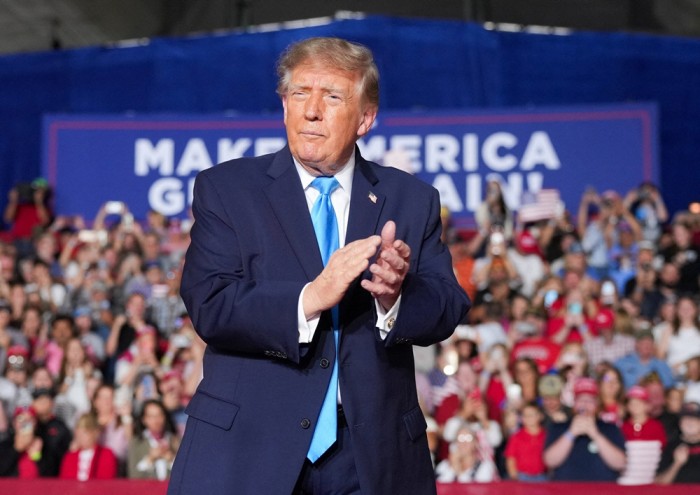 |
| U.S. President Donald Trump applauds at a midterm election campaign rally held at the Pinnacle Bank Expo Center in Grand Island, Nebraska, on the 5th (local time). / Reuters, Yonhap |
U.S. President Donald Trump announced on the 9th (local time) that he reached an agreement with Russian President Vladimir Putin to supply large volumes of Russian diesel to the U.S. and global markets. In response, the U.S. Department of the Treasury enacted an extraordinary measure temporarily authorizing the importation of Russian diesel. The decision is viewed as an unavoidable stopgap intended to curb voter backlash over soaring domestic energy prices ahead of the upcoming November midterm elections.
Writing on his social media platform Truth Social, President Trump stated, "I have just completed a very successful discussion with President Putin. Russia has agreed to immediately supply over 300,000 tons of diesel fuel to the U.S. and world markets, followed by an additional 500,000 tons in November, and 1,000,000 tons shortly thereafter." He added, "Russia will subsequently supply an additional 3,000,000 tons of diesel fuel in the short term, contingent on the operational status of its refineries." Under the agreement, the total volume of secured diesel reaches 4.8 million tons.
President Trump stressed that this influx of supply would swiftly normalize diesel prices, remarking, "Lowering prices for Americans, especially our great farmers, ranchers, and truckers, is my top priority. This is a very major and important announcement." He also directed a firm warning toward Iran, underscoring that "Iran must clearly understand that it will never be permitted to possess nuclear weapons."
In tandem with the announcement, the U.S. Treasury Department's Office of Foreign Assets Control (OFAC) announced the issuance of a temporary general license authorizing the sale, delivery, offloading, and domestic import transactions of Russian diesel. The authorization under this measure remains valid until 12:01 a.m. Eastern Time on April 7 of next year. While Washington had maintained stringent energy sanctions—including a total embargo on Russian energy imports following the 2022 invasion of Ukraine—it carved out an exception as domestic diesel prices surged roughly 70% amid fallout from the conflict with Iran, driving up living costs for households.
Shim Jun-bo
Most Read
-
1
Celltrion nears additional contract with major U.S..

-
2
"Aren't those foreigners on welfare?": M..

-
3
U.S. weighs dropping MOAB, world's most powerful n..

-
4
Houthis launch successive attacks on Saudi airport..

-
5
Saudi Arabia, Iran hold first diplomatic talks to..

-
6
Saudi airport in Riyadh struck again, leaving at l..

-
7
Five ASEAN countries welcome Myanmar coup leader

PEOPLE






HEADLINE NEWS

-
Address : In-Young Bldg., 34, Uisadang-daero 1-gil, Yeongdeungpo-gu, Seoul
Copyright by ASIATODAY CO., LTD. All rights resereved