



'K-Food Festa' successfully concludes in Beijing, China
Oct 12, 2026, 09:24 am


The "K-Food Festa," aimed at introducing Korean cuisine to foreigners, wrapped up successfully after running for three days from the 9th in the Koreatown district of Wangjing, Chaoyang District, Beijing, China.
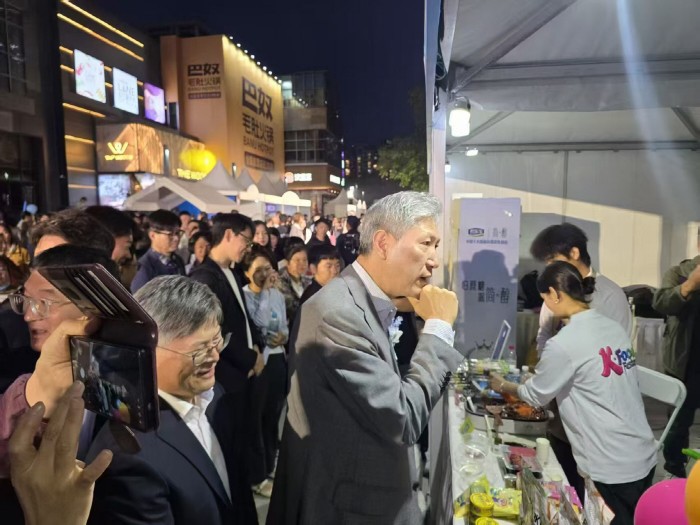 |
| Ambassador Roh Jae-heon inspects an event booth. / Embassy of the Republic of Korea in China |
The Embassy of the Republic of Korea in China stated on the 11th, "The '2026 K-Food Festa,' held over the past three days starting from the 9th at the plaza in front of Kirin Place (Qilinshe) in Wangjing, concluded successfully amid high interest from Chinese consumers," adding, "A total of 250,000 people visited during the event period. Strong interest continued to the point where prepared products and ingredients at major food and Korean dining booths sold out early."
Marking its seventh edition this year, the K-Food Festa was co-hosted by the South Korean Embassy in China alongside the Korea Agro-Fisheries & Food Trade Corp. (aT), the Beijing Korean Restaurant Association, the National Federation of Fisheries Cooperatives (Suhyup), and the Korea Tourism Organization. Its core purpose was to provide Chinese consumers with opportunities to taste and experience Korean food products and cuisine firsthand. In addition, the event aimed to expand the presence of Korean food products in the Chinese market while enhancing mutual affinity between the peoples of South Korea and China through food and culture.
According to an embassy official, approximately 50 promotional and sales booths were set up at the venue. Nearly all South Korean food enterprises operating in the Chinese market—including CJ, Pulmuone, HiteJinro, Kooksoondang, CheongKwanJang, Binggrae, No Brand, Lotte Chilsung, and OKF—actively took part in the event. Naturally, a diverse array of Korean food products, including ramyeon, seaweed, confectionery, and alcoholic beverages, was showcased.
The most popular spot was the exhibition and experiential zone themed around Korean ramyeon. Visitors first took commemorative photos in front of a "Ramyeon Wall" designed to display various Korean ramyeon brands sold in China in one place. They then experienced "Hangang Ramyeon," cooking and eating instant noodles on the spot.
Countless visitors also flocked to the Korean food tasting corner, featuring participation from around 20 Korean restaurants operating in Beijing, centered on the Beijing Korean Restaurant Association, which was newly relaunched this year. These restaurants presented 31 diverse Korean dishes, ranging from familiar street foods such as gimbap and tteokbokki to kimchi pancake, yukgaejang (spicy beef soup), jokbal (braised pig's trotters), and galbijjim (braised short ribs).
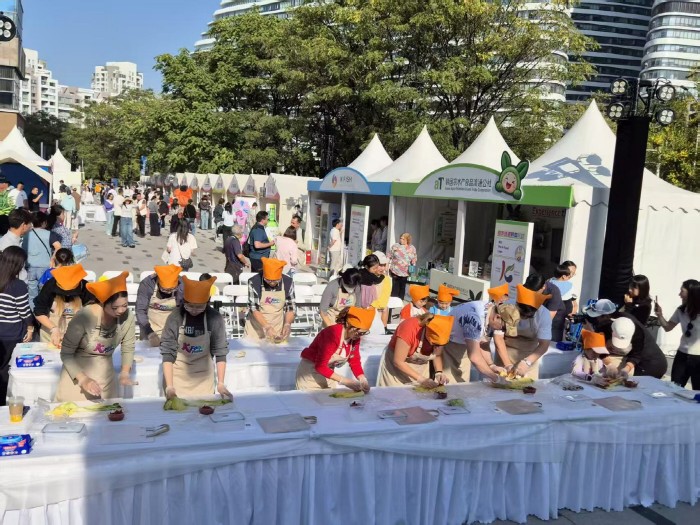 |
| Scenes from the kimchi-making experiential event. / Embassy of the Republic of Korea in China |
On the main stage of the venue, diverse cultural events including K-pop dance and taekwondo performances took place throughout the three days. Hands-on participatory programs, such as kimchi making and crafting traditional Korean desserts, were also offered.
Regarding the event, South Korean Ambassador to China Roh Jae-heon shared his thoughts, stating, "The large turnout of Chinese citizens who visited the venue to enjoy Korean food and culture demonstrates the high level of interest Chinese people hold toward Korea." He added, "To ensure that this interest leads to greater consumption of Korean food and expanded exchanges between the peoples of South Korea and China, we will broaden opportunities to experience Korean food and culture not only in Beijing but also across other regions in China." It was a remark true to form for Ambassador Roh, whose hands-on, proactive drive regarding his duties stands out among predecessors.
Hong Soon-do
Most Read
-
1
Celltrion nears additional contract with major U.S..

-
2
"Aren't those foreigners on welfare?": M..

-
3
U.S. weighs dropping MOAB, world's most powerful n..

-
4
Houthis launch successive attacks on Saudi airport..

-
5
Saudi Arabia, Iran hold first diplomatic talks to..

-
6
Saudi airport in Riyadh struck again, leaving at l..

-
7
Five ASEAN countries welcome Myanmar coup leader

PEOPLE






HEADLINE NEWS

-
Address : In-Young Bldg., 34, Uisadang-daero 1-gil, Yeongdeungpo-gu, Seoul
Copyright by ASIATODAY CO., LTD. All rights resereved