



China becomes a graveyard for Japanese companies, showing growing rift between the two
Oct 07, 2026, 09:36 am


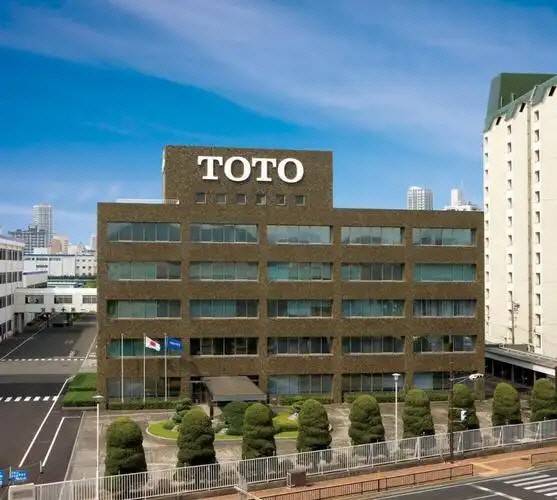 |
| The building of a Japanese company that recently shifted its investment destination from Beijing to Southeast Asia, a move that starkly illustrates the widening rift between China and Japan. / Jingji Ribao |
Relations between China and Japan are showing signs of deepening strain. Far from cooperating in politics as well as economics, the reality appears to have reached a point where reconciliation is virtually out of reach.
The gravity of the situation is most clearly reflected in the direct clash taking place on the political front. According to diplomatic sources in Beijing on the 6th, relations were not at their absolute worst until about a year ago, with high-level exchanges between politicians continuing reasonably well.
However, the climate shifted abruptly after Prime Minister Sanae Takaichi made unexpected remarks in parliament on November 6 of last year regarding intervention in the event of a Taiwan contingency. Furiously condemning the comments as a violation of the "One China" principle, Beijing effectively severed all political exchanges. A deep freeze in relations was inevitable. Recently, matters have escalated to the point where spokespersons for China's Ministry of Foreign Affairs refer to Prime Minister Takaichi by name alone, omitting her official title.
Against this backdrop, bilateral economic exchanges and cooperation are also freezing over rapidly. Above all, this reality is vividly illustrated by the wave of Japanese companies pulling out of China. According to recent reports across outlets such as the Jingji Ribao (Economic Daily), the number of Japanese firms operating in China stood at around 13,000 as recently as June of last year, before Prime Minister Takaichi's remarks sparked controversy.
Yet by June of this year, as the bilateral rift deepened in earnest, that number fell to roughly 10,000—a sharp drop of nearly 30 percent compared to the same month last year. This marked the lowest level recorded since statistics were first compiled in 2010. The core issue lies in the high likelihood that bilateral ties will deteriorate even further, naturally fueling projections that the number of Japanese companies weighing an exit from China could surge dramatically.
Indeed, widespread analysis across both business communities suggests that the number of Japanese companies in China will easily fall below 10,000 within the year. Some Japanese business associations even offer extreme projections suggesting that, in a worst-case scenario, the figure could plunge into the low 9,000s. Given that Japanese automotive and electronics firms—sectors known for considerable competitiveness—are currently racing to exit China in a manner reminiscent of an exodus, such concerns hardly seem overblown.
In truth, holding out in the Chinese market has become exceedingly difficult for Japanese firms amid fierce competition from an abundance of homegrown companies wielding extreme cost-effectiveness. Using strained bilateral relations as justification to carry out a clean withdrawal and pivot toward new markets such as Taiwan may prove far more advantageous for companies whose paramount objective is profit maximization. Moreover, economic cooperation between Japan and Taiwan is currently reaching record highs—highlighted by TSMC's massive investments in Kumamoto—meaning Japanese enterprises have little reason to remain tied to China.
Judging from the current climate, Sino-Japanese relations have virtually no prospect of reaching a dramatic turning point needed for a reversal. It is safe to say there is no guarantee the operating conditions confronting Japanese companies will suddenly improve. One could readily assert that China is turning into a graveyard for Japanese companies contemplating an exit. All indications suggest bilateral ties are destined to drift further apart.
Hong Soon-do
Most Read
-
1
Celltrion nears additional contract with major U.S..

-
2
"Aren't those foreigners on welfare?": M..

-
3
U.S. weighs dropping MOAB, world's most powerful n..

-
4
Houthis launch successive attacks on Saudi airport..

-
5
Saudi Arabia, Iran hold first diplomatic talks to..

-
6
Saudi airport in Riyadh struck again, leaving at l..

-
7
Five ASEAN countries welcome Myanmar coup leader

PEOPLE






HEADLINE NEWS

-
Address : In-Young Bldg., 34, Uisadang-daero 1-gil, Yeongdeungpo-gu, Seoul
Copyright by ASIATODAY CO., LTD. All rights resereved