



S. Korea, U.S. differ on Alaska LNG as Seoul stresses commercial viability
Oct 02, 2026, 09:49 am


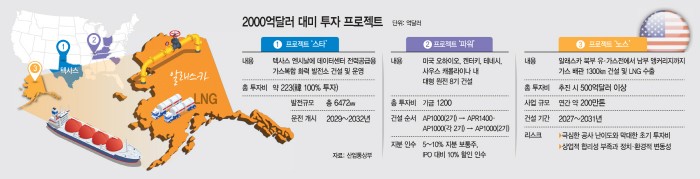 |
Among the 200 billion dollar strategic investment programs in the U.S., growing controversy is surfacing around the Alaska liquefied natural gas (LNG) project due to differing stances between South Korea and the U.S. While the South Korean government maintains that it will decide whether to invest only after evaluating economic feasibility on the premise of "commercial rationality" and compliance with domestic legal requirements, the U.S. government has effectively treated South Korea's participation as a foregone conclusion. The South Korean government conveyed strong regret to the U.S. side and made clear that project execution will not proceed unless commercial rationality is established.
Kim Jung-kwan, Minister of Trade, Industry and Resources, met with reporters at the Government Complex Sejong on the 1st following the release of the joint fact sheet on bilateral strategic investment projects, stating, "I lodged a strong objection to Secretary Lutnick regarding reports (published in the U.S. this morning) that went beyond what both nations had agreed upon." He also emphasized, "What the two countries agreed to (in the fact sheet) consists of just three sentences," adding, "The Alaska project will be pursued strictly on the premise that commercial rationality exists."
Minister Kim stated, "(Secretary Lutnick) responded that he understood South Korea's concerns and would do his utmost to ensure things are handled properly." The government's position is that the 54 billion dollar investment figure unilaterally cited by the White House has not been finalized.
The Alaska LNG venture is a mega-project that transports natural gas produced at North Slope in northern Alaska through an approximately 1,300-kilometer pipeline to the south, where it is liquefied and exported. Constructing a long-distance pipeline through severe weather conditions requires massive capital, with regulatory permits and labor procurement posing primary operational hurdles.
Minister Kim also noted, "Permitting across the 1,300-kilometer route presents the steepest challenge and acts as an obstacle to labor supply. Such factors likely drove past cost overruns."
Additionally, Alaska's harsh climate and poor infrastructure are elements that could drive up construction costs and extend project timelines. In past attempts to advance the project, cost estimates repeatedly fluctuated.
While the U.S. side initially proposed a project cost of 67 billion dollars, that figure was recently lowered to the 54 billion dollar range, and Secretary Lutnick mentioned an investment scale in the low 50 billion dollar range on the same day. Minister Kim explained, "At present, I believe the U.S. announced broad, approximate outlines rather than results from rigorous analysis."
In fact, Alaska LNG has repeatedly hit roadblocks over feasibility concerns in the past. Global U.S. energy majors, including ExxonMobil, BP, and ConocoPhillips, joined the initiative to kick off development in earnest in 2014, but ultimately withdrew due to massive project costs and economic feasibility issues.
Later in 2017, China's Sinopec, China Investment Corporation (CIC), and Bank of China pursued development and financing cooperation worth up to 43 billion dollars, but this effort also failed to materialize into actual investment. Japan, which finalized its U.S. investment projects ahead of South Korea, likewise refrained from including Alaska LNG in its investment scope, keeping its involvement limited to reviewing potential LNG off-take purchases.
Experts also cite Alaska's unique operating environment and potential policy shifts over prolonged periods as investment risk factors. Kim Tae-hwang, professor of international trade at Myongji University, pointed out, "While domestic firms have built up plant engineering experience in regions like the Middle East since the 1970s, my understanding is that they lack experience in extreme environments like Russia. Should U.S. environmental regulations tighten in the future, additional costs could arise during permitting and construction, or project schedules could lengthen."
Nevertheless, the government has kept the door open to participation because of the strategic imperative to diversify energy supply chains. Alaska LNG targets an annual production capacity of around 20 million tons, with substantial volumes already committed to buyers via letters of intent (LOI), leaving roughly 5 million tons uncommitted. Minister Kim added, "There is a strategic benefit in terms of diversifying the gas supply our nation can secure. Off-take agreements are settled for a significant portion, and multiple countries are expressing intent to purchase."
LNG price competitiveness is another hurdle to clear. Because the project is structured to transport natural gas produced in Alaska across a 1,300-kilometer pipeline, liquefy it, and ship it to Asia, initial capital expenditure alongside transportation and liquefaction costs run high. Unless it secures cost competitiveness against rival LNG projects underway in regions such as the U.S. Gulf Coast and Canada, retaining long-term off-takers could prove challenging.
The government plans to verify commercial feasibility through on-site due diligence once it receives detailed project data from the U.S. side.
Kim Jeong-kyu
Kim So-young
Most Read
-
1
Alteogen secures European patent for Keytruda SC,..

-
2
Trump shares map on social media labeling Strait o..

-
3
Celltrion seeks rheumatoid arthritis indication ex..

-
4
Kia Sportage outperforms Mazda CX-5 in German auto..

-
5
Chinese e-commerce giants AliExpress, Temu and She..

-
6
China expels No. 2 military official Zhang Youxia..

-
7
Houthi rebels release video claiming downing of Sa..

PEOPLE







-
Address : In-Young Bldg., 34, Uisadang-daero 1-gil, Yeongdeungpo-gu, Seoul
Copyright by ASIATODAY CO., LTD. All rights resereved