



Police hold vast power as 78-year prosecution era closes
Oct 02, 2026, 09:05 am


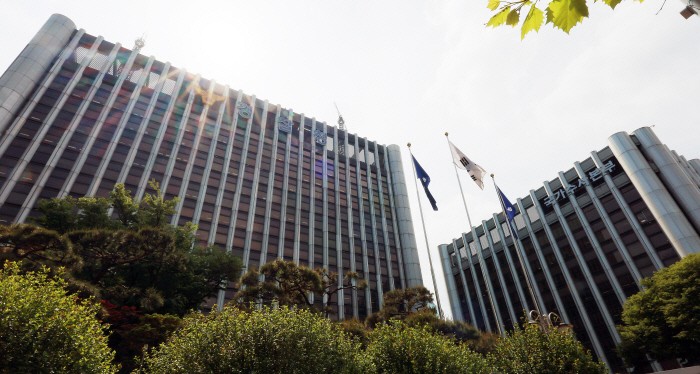 |
| National Police Agency. / Asia Today DB |
On the 2nd, with the launch of the Serious Crime Investigation Agency and the abolition of the Prosecution Service, the police are reborn as a power institution holding investigative authority, intelligence, national security, and public policing all in one hand. Such concentration of authority is unprecedented, surpassing even the past powers of the prosecution and the National Intelligence Service (NIS), which both faced sweeping reforms after drawing criticism for wielding unchecked authority. Concerns are mounting that unless effective checks and balances are established over the newly ascendant police, the country risks falling into a vicious cycle where efforts to correct past abuses merely spawn even greater collateral damage.
According to legal circles and police authorities on the 1st, under the amended Criminal Procedure Act taking effect on the 2nd, the police will establish themselves as the primary investigative body fully handling the vast majority of criminal cases from initiation through conclusion. With the prosecution's direct investigative powers and supplementary investigation demands eliminated, the police now hold exclusive jurisdiction across the entire arc of criminal procedures, ranging from receiving complaints and accusations to applying for warrants, collecting evidence, and determining criminal charges.
Previously, after the NIS was stripped of its domestic intelligence-gathering remit in 2020, the police became virtually the only institution authorized to gather intelligence on various domestic affairs. Earlier this year, the police also moved to expand their intelligence capabilities by reviving intelligence divisions across frontline police stations and introducing relative performance evaluations for intelligence officers.
The police have also seized the initiative in national security investigations. The Defense Counterintelligence Command, which previously shared national security investigations alongside the police, transferred a portion of its caseload—including violations of the Military Secret Protection Act—to the police upon its disbandment in August. The NIS has also been limited to merely supporting police-led counterintelligence probes since its anti-communist investigative powers were abolished in 2024. Amid these shifts, the revised espionage clause under Article 98-2 of the Criminal Act took effect on the 13th of last month, penalizing acts such as detecting or collecting state secrets on behalf of foreign governments or foreign intelligence entities. This marked the first expansion of espionage targets in 73 years since the Criminal Act was enacted in 1953, widening the scope from "enemy state" to "foreign nations and equivalent entities." The police remain the only standing organization capable of directly conducting counterintelligence investigations.
A role profile that combines blanket investigative authority with intelligence networks, national security investigations, and boots-on-the-ground policing power is without precedent. Neither the past NIS, which held both intelligence gathering and investigative remits, nor the prosecution, which monopolized investigation and indictment powers, ever wielded authority encompassing investigation, intelligence, security, and public order all at once as the police do today.
Compounding these worries is the fact that the police represent a massive organization boasting 140,000 personnel. An anonymous legal insider remarked, "Given that the police have exposed various systemic problems in the past—ranging from local collusions and investigative cover-ups to passive probes into figures of power—it is questionable whether they can properly handle such concentrated power. Any authority lacking an effective check mechanism is bound to produce severe side effects."
Ahead of the enforcement of the amended Criminal Procedure Act, the police have introduced self-directed measures such as strengthening punishments for grave investigative misconduct and tightening internal inspections. However, external mechanisms to keep this concentrated power in check remain virtually nonexistent. A host of chronic institutional challenges also remain unresolved, including making the autonomous local police system, the National Police Commission, and investigative review panels genuinely substantive.
Experts warn that concentrating various independent powers within an organization endowed with massive physical force carries a high risk of slipping outside democratic control. Lee Yoon-ho, professor emeritus of police administration at Dongguk University, emphasized, "Structurally, the police are bound to be swayed by the political establishment because politicians hold personnel authorities such as promotions. While the political establishment feels confident in controlling the police on these grounds, if misused, an organization of 140,000 police officers could turn into a behemoth far larger than the prosecution ever was. Rather than leaning solely on the banner of police reform, concrete statutory mechanisms must be established through legislation."
Lim Jun-tae, professor of police administration at Dongguk University, observed, "As the duties and responsibilities of the police expand, priority must be given to creating an environment where they can discharge these duties properly. The police must be insulated from political influence. The appointment process for the heads of the National Police Agency and the National Investigation Headquarters needs to be made far more independent and objective than it is now. The independence of leadership translates directly into the independence of the organization, and only when independence is firmly secured will the police, now armed with expanded authority, be able to function as intended."
Choi Min-jun
Most Read
-
1
Alteogen secures European patent for Keytruda SC,..

-
2
Trump shares map on social media labeling Strait o..

-
3
Celltrion seeks rheumatoid arthritis indication ex..

-
4
Kia Sportage outperforms Mazda CX-5 in German auto..

-
5
Chinese e-commerce giants AliExpress, Temu and She..

-
6
China expels No. 2 military official Zhang Youxia..

-
7
Houthi rebels release video claiming downing of Sa..

PEOPLE







-
Address : In-Young Bldg., 34, Uisadang-daero 1-gil, Yeongdeungpo-gu, Seoul
Copyright by ASIATODAY CO., LTD. All rights resereved