



N. Korea reiterates status as nuclear weapons state
Sep 18, 2026, 09:49 am


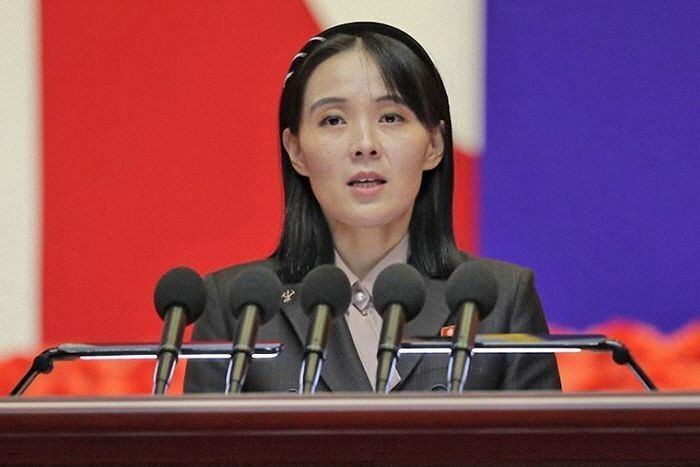 |
| Kim Yo-jong, head of the General Affairs Department of North Korea's Workers' Party of Korea. / Yonhap News |
North Korea lashed out at the international community's discussions on its denuclearization with harsh rhetoric, asserting that its status as a nuclear weapons state is an absolute reality that cannot be reversed by anything. Analysts suggest the move is intended to win international recognition of its nuclear status while setting the agenda ahead of potential direct talks with the U.S.
According to the Korean Central News Agency on the 17th, Kim Yo-jong, director of the General Affairs Department of the ruling Workers' Party, issued a statement condemning the recent 70th International Atomic Energy Agency (IAEA) General Conference, which flagged North Korea's violations of UN Security Council resolutions and urged denuclearization. Kim dismissed the call as familiar gibberish, describing it as an unsurprising, unoriginal noise blaring around the clock like an answering machine every year around this time. She emphasized that the reality of the DPRK's nuclear status being permanently established both physically and legally cannot be altered in the slightest.
While North Korea has routinely protested the IAEA General Conference's denuclearization discussions and relevant resolution adoptions through official statements, this marks the first time Kim has directly issued a condemnation statement herself.
Meeting with reporters on the same day, a Ministry of Unification official noted that North Korea elevated the protocol level to Director Kim Yo-jong to emphasize the irreversibility of its nuclear status, adding that the ministry is paying close attention to this reaction as President Donald Trump indicates a willingness to pursue U.S.-North Korea dialogue. The move is seen as North Korea expressing a firmer stance that it will not put denuclearization on the negotiating table in anticipated talks with Washington.
Pyongyang has been responding point by point to recent international discussions on denuclearization, U.S.-led bilateral defense coordination with South Korea, and trilateral security cooperation among South Korea, the U.S., and Japan. Kim has recently issued statements concerning the ASEAN Regional Forum (ARF) chairman's statement discussing denuclearization and the U.S. position on North Korean denuclearization. She and other authorities have also issued statements addressing South Korea-U.S. and trilateral military exercises, South Korea's pursuit of nuclear-powered submarines, and Japan's defense buildup.
The Ministry of Unification interpreted North Korea's repeated positions as agenda-setting maneuvers effectively aimed at direct talks with the U.S.
Attending an academic conference titled "Three Blueprints for Peaceful Coexistence on the Korean Peninsula" on the same day, Vice Unification Minister Kim Nam-jung analyzed that North Korea and the U.S. are engaging in indirect dialogue and effectively proposing agendas for direct negotiations. He added that the agenda Kim has raised boils down to two main points: recognition of North Korea as a nuclear state and the cessation of hostile policies.
Vice Minister Kim continued that both Washington and Pyongyang appear intent on securing the upper hand on the agenda before coming to the table, adding that the South Korean government considers the initiation of U.S.-North Korea talks itself critical and will make every effort to foster favorable conditions and shape the agenda.
Earlier on the night of the 16th, a spokesman for the North Korean Ministry of National Defense also released a statement regarding recent South Korea-U.S. defense talks under the Counter-WMD Committee, where both sides discussed bolstering responses against North Korean weapons of mass destruction. The spokesman threatened that the meeting was premised on the use of military force against the DPRK and could be regarded as a grave security challenge requiring the invocation of relevant clauses in the law on state nuclear forces policy.
According to the Ministry of Unification, this marks the first time North Korea has protested the South Korea-U.S. Counter-WMD Committee since its inception in 2017, with officials characterizing North Korea's reaction to a director-general-level consultative body as unusual. A Unification Ministry official analyzed that this represents an extension of Pyongyang's varied levels of criticism against ongoing bilateral and trilateral military cooperation, intended to pressure policy shifts from Washington, including the withdrawal of hostile policies toward North Korea.
Mok Yong-jae
Most Read
-
1
Celltrion’s Omlyclo gains ground in major European..

-
2
Trump demands rates fall below 1% as Fed hikes for..

-
3
Hyundai Motor Group breaks ground on integrated st..

-
4
U.S. strikes 3 Iranian oil tankers, Iran vows reta..

-
5
Trump makes $1 trillion bet ahead of midterm elect..

-
6
Iran resumes ballistic missile production, assembl..

-
7
Samsung Electronics, Mistral AI to jointly develop..

PEOPLE







-
Address : In-Young Bldg., 34, Uisadang-daero 1-gil, Yeongdeungpo-gu, Seoul
Copyright by ASIATODAY CO., LTD. All rights resereved