



U.S., China advance tariff talks ahead of summit, coordinate cuts on agriculture and energy
Sep 16, 2026, 02:43 pm


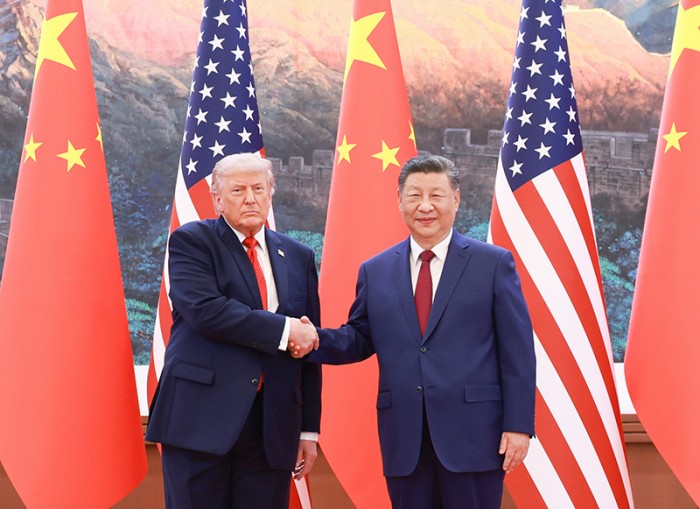 |
| U.S. President Donald Trump and Chinese President Xi Jinping, who is also General Secretary of the Chinese Communist Party, during their summit at the Great Hall of the People in Beijing on May 14. The encounter comes 10 days ahead of their second summit of the year, scheduled to take place in Washington, U.S. / Xinhua |
Ahead of the upcoming summit between U.S. President Donald Trump and Chinese President Xi Jinping on the 24th local time, both countries are fine-tuning specific plans for China to lower tariffs on select U.S. energy and agricultural products, with the potential accompaniment of Chinese state-owned food trader Cofco and several corporate chief executive officers also being discussed, Bloomberg reported on the 15th, citing people familiar with the matter.
Multiple sources explained that ahead of the expiration of the U.S.-China trade truce on November 10, discussions are highly likely to focus on extending the arrangement or easing policies including tariffs and export curbs, with both sides anticipated to conduct negotiations based on a plan for reciprocal tariff reductions worth approximately $30 billion (around 41 trillion won) each.
Representatives from Chinese state-owned food trading enterprise Cofco are likely to accompany President Xi on his visit to the U.S. for the summit. While no final decision has been made, chief executive officers from more than a dozen Chinese enterprises are being considered for inclusion in the delegation. This is viewed as a signal of intent to extend the one-year tariff truce agreed upon in October 2025.
The White House stated in May that, beyond soybean purchases, China pledged to buy at least an additional $17 billion (about 23 trillion won) worth of U.S. agricultural products annually, noting that targets for 2026 would be calculated proportionately for that year.
China has consistently fulfilled its commitment to purchase 25 million metric tons of U.S. soybeans annually through 2028, having already achieved more than half of this year's target volume. Bilateral trade between the two countries exceeded $400 billion (approximately 549 trillion won) through August, a milestone also evaluated as a positive indicator for bilateral trade ties.
Bloomberg assessed that the trade negotiations at the summit illustrate how both nations can preserve room for cooperation without remaining confined strictly to agricultural and energy tariff issues, even amid escalating frictions over artificial intelligence, export controls, and Taiwan. The outlet added that this suggests the "Board of Trade," agreed upon during President Trump's visit to China in May, may yield concrete results.
In fact, U.S. Trade Representative Jamieson Greer explained, "We expect announcements during President Xi's visit on easing agricultural tariffs and non-tariff barriers," adding, "We also anticipate further announcements regarding toys, games, and fireworks to protect them from future tariffs or other trade measures through the Board of Trade."
Park Jin-sook
Most Read
-
1
U.S. Treasury Secretary Bessent publicly warns ove..

-
2
Celltrion’s Omlyclo gains ground in major European..

-
3
Hyundai Motor Group breaks ground on integrated st..

-
4
Russia faces warning signs over prolonged war econ..

-
5
U.S. strikes 3 Iranian oil tankers, Iran vows reta..

-
6
S. Korea seeks redemption from World Cup setback w..

-
7
Trump makes $1 trillion bet ahead of midterm elect..

PEOPLE







-
Address : In-Young Bldg., 34, Uisadang-daero 1-gil, Yeongdeungpo-gu, Seoul
Copyright by ASIATODAY CO., LTD. All rights resereved