



Money moves ahead of regulation as competition heats up for won-pegged stablecoins
Sep 09, 2026, 10:04 am


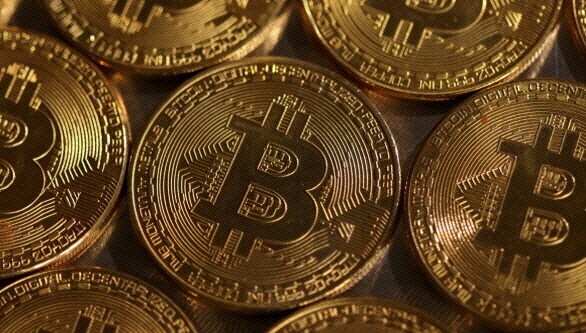 |
| Bitcoin's image/ Yonhap News |
Even as legislation for won-pegged stablecoins faces delays, virtual asset service providers, fintechs, and Big Tech players are accelerating behind-the-scenes preparations. Ahead of the scheduled implementation of the security token framework on February 4, 2027, the Financial Services Commission is establishing issuance, distribution, and settlement infrastructure. Industry insiders widely expect security tokens, stablecoins, and virtual asset trading systems to form the core pillars of the future digital asset market. Consequently, cross-industry alliances connecting the infrastructures of virtual asset exchanges, traditional financial institutions, and simple payment providers are gaining significant momentum.
According to industry sources on the 8th, one of the most prominent moves centers on equity investments and business collaborations between financial and platform enterprises surrounding Dunamu. Naver Financial resolved to conduct a comprehensive stock swap with Dunamu in November last year, which is scheduled to take place on December 31 following an upcoming shareholder meeting on November 19. Furthermore, strategic equity investments in Dunamu by Hana Financial Group and Samsung Group affiliates have deepened the bridges between traditional banking and the exchange operator. In May, Hana Bank decided to acquire a 6.55% stake in Dunamu for roughly 1.0032 trillion won. That same month, Samsung Securities, Samsung SDS, and Samsung Card agreed to acquire a combined 4% stake for 612.8 billion won, subsequently completing the transaction. Analysts forecast that integrating these affiliates' existing businesses with Dunamu's trading and blockchain infrastructure will allow them to scale operations from stablecoin issuance and distribution down to settlement and financial product integration. Notably, Samsung Securities previously announced plans to collaborate with Dunamu on security token issuance, circulation, and virtual asset services, while Samsung Card signaled that it would support digital asset payments on Monimo, Samsung Financial Networks' integrated platform, once won-pegged stablecoins are introduced.
Amid Dunamu's expanding ties with financial and platform heavyweights, Kakao Group has opted for direct collaboration with a global stablecoin issuer. In July, Kakao, Kakao Pay, and KakaoBank entered into a strategic business agreement with Circle, the issuer of the U.S. dollar-pegged stablecoin USDC. The two sides agreed to cooperate in blockchain-based settlement infrastructure and digital asset technologies, exploring joint opportunities in payment, settlement, and digital asset integration tailored to domestic regulatory and market conditions. They also agreed to jointly examine the commercial feasibility of won-pegged digital assets and tokenized financial services. Kakao's primary edge lies in combining KakaoTalk's massive user base with Kakao Pay's payment rails and KakaoBank's financial capabilities. Tying this ecosystem to Circle's global payment infrastructure could enable Kakao to extend its reach beyond domestic payments into cross-border remittances, international settlements, and merchant clearing.
Digital X, formerly known as Korbit, has also been integrated into Mirae Asset Group. In July, Mirae Asset Consulting acquired a 97.15% stake in the virtual asset exchange, later rebranding the corporate entity as Digital X in August. While the exchange service retained the trade name Korbit at the time, the group aims to develop Digital X into Mirae Asset's global comprehensive investment platform.
Nevertheless, these market participants have yet to form a unified won stablecoin consortium or finalize concrete issuance blueprints. For now, the push is largely focused on securing business foundations to merge exchange trading rails, platform user and payment networks, and bank infrastructure. With formal legislation stalled, comparing the operational readiness among individual enterprises remains challenging. While some companies remain at the stage of evaluating commercial viability through non-binding memoranda of understanding, institutions such as KB Financial Group and Woori Bank have conducted real-world proofs of concept covering clearing, settlement, remittance, and on- and off-ramp functionalities. Similarly, while combinations like Naver Financial and Dunamu represent tie-ups between exchanges and major platforms, players like Kakao are focusing on cross-border payment and remittance infrastructure alongside global stablecoin issuers. Ultimately, because core regulatory requirements—such as eligible issuance entities, bank equity participation thresholds, and reserve asset custody mandates—will be determined through legislation, current business models are subject to adjustments.
This regulatory uncertainty underscores growing calls for a clear legal and institutional foundation ahead of market expansion. According to presentation materials from a 2026 Second-Half Legislative Outlook seminar hosted by the Digital Asset eXchange Alliance (DAXA) for visiting South Korean lawmakers, establishing clear standards under supervisory authorities offers vital predictability and lowers long-term compliance costs through well-defined transition periods. The alliance emphasized the urgent need to enact legislation governing stablecoins as payment and settlement rails, alongside regulatory frameworks to establish a domestic virtual asset-based derivatives market.
Kim Yoon-hee
Most Read
-
1
U.S. Treasury Secretary Bessent publicly warns ove..

-
2
China overhauls National Defense Mobilization Law..

-
3
U.S. strikes Iran after a month, hits IRGC rocket..

-
4
Hyundai Motor Group breaks ground on integrated st..

-
5
Russia faces warning signs over prolonged war econ..

-
6
CIA director visits Russia, warns Moscow not to at..

-
7
Anti-Western solidarity strengthens amid Trump's e..

PEOPLE






HEADLINE NEWS
- U.S. strikes Iranian tanker again, retaliating for attack on American warships
- Canada enacts retaliatory tariffs up to 50% on U.S., deepening trade confli..
- 'Super El Niño' looms over Latin America, threatening food security and put..
- S. Korea and France sign 16 agreements and MOUs on defense, advanced tech

-
Address : In-Young Bldg., 34, Uisadang-daero 1-gil, Yeongdeungpo-gu, Seoul
Copyright by ASIATODAY CO., LTD. All rights resereved