



'Super El Niño' looms over Latin America, threatening food security and putting up to 16 million at risk
Sep 09, 2026, 10:24 am


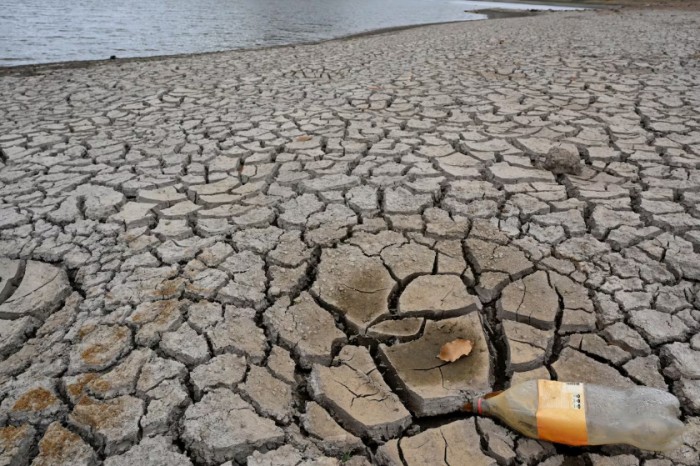 |
| The cracked bed of the Los Laureles Dam, a key drinking water source for the Honduran capital of Tegucigalpa, lies parched by drought. / AFP, Yonhap |
Amid forecasts that a powerful "super El Niño" could emerge between September this year and March next year—spanning spring to winter in South America—the UN World Food Programme (WFP) has warned that the climate phenomenon could threaten food security across Latin America.
According to the Latin American edition of the Spanish-language news outlet Infobae on the 7th (local time), the WFP stated that the warming of sea surface temperatures under El Niño is intensifying, creating expectations of severe water shortages and crop damage. Consequently, the agency noted that up to 16 million people in Latin America could face a food security crisis.
Experts forecast that the super El Niño anticipated this year could prove to be the most severe in the past four decades.The climate shifts triggered by El Niño manifest differently depending on the country or region. While severe droughts can cause acute water scarcity, other areas may experience rainfall far exceeding typical seasonal averages.According to South American media reports, droughts are forecast in Venezuela, Colombia, Honduras, El Salvador, and parts of Brazil, whereas higher-than-average rainfall is projected for parts of Argentina, Chile, and Ecuador.
Despite taking different forms, both extremes pose severe threats to food production. Honduras is among the Latin American nations facing the most severe drought damage from El Niño. As drought conditions worsened, Honduras declared an El Niño alert across roughly 80 percent of its territory in August.
El Salvador and Panama have also declared states of emergency. Lena Savelli, WFP Regional Director for Latin America and the Caribbean, visited Honduras to assess drought damage and expressed concern: "The scope of El Niño's impact already being felt is substantial, and concerns are heightened because this event is poised to be a powerful super El Niño. If water shortages and crop damage materialize, the repercussions could persist into next year."
Damages are also being reported in El Salvador. Ramon Garcia (72), who runs a farm in the country, invested approximately 3,000 dollars this year to cultivate corn across 28,000 square meters of land, but the drought has left around 21,000 square meters completely withered.
Preoccupied with finding ways to mitigate his losses rather than anticipating a harvest, Garcia lamented, "Last year's corn crop was good, yielding 230 sacks, so I increased my investment this year, only to be hit hard by El Niño. At this rate, I expect this year's harvest will barely reach around 10 sacks."
Local media reported that corn and bean yields in El Salvador this year are projected to fall by an average of 20 percent compared to the previous year.
Alarm bells are also ringing louder in agricultural powerhouse Argentina. Local media noted that El Niño is expected to bring unusually frequent torrential downpours that could deliver a direct blow to wheat and corn production, prompting provincial authorities to activate monitoring networks and organize emergency response systems to prepare countermeasures.
Son Young-sik
Most Read
-
1
U.S. Treasury Secretary Bessent publicly warns ove..

-
2
China overhauls National Defense Mobilization Law..

-
3
U.S. strikes Iran after a month, hits IRGC rocket..

-
4
Hyundai Motor Group breaks ground on integrated st..

-
5
Russia faces warning signs over prolonged war econ..

-
6
CIA director visits Russia, warns Moscow not to at..

-
7
Anti-Western solidarity strengthens amid Trump's e..

PEOPLE






HEADLINE NEWS
- U.S. strikes Iranian tanker again, retaliating for attack on American warships
- Canada enacts retaliatory tariffs up to 50% on U.S., deepening trade confli..
- 'Super El Niño' looms over Latin America, threatening food security and put..
- S. Korea and France sign 16 agreements and MOUs on defense, advanced tech

-
Address : In-Young Bldg., 34, Uisadang-daero 1-gil, Yeongdeungpo-gu, Seoul
Copyright by ASIATODAY CO., LTD. All rights resereved