



[Exclusive] KEPCO KDN suffers failed venture in India, losing 7.3 billion won in pursuit of 100 million won profit
Sep 04, 2026, 09:35 am


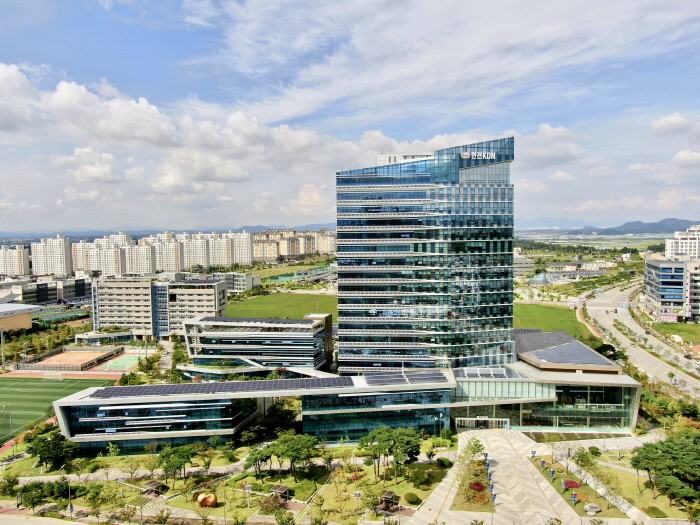 |
| KEPCO KDN headquarters |
KEPCO KDN incurred losses exceeding 23% of its total contract value in a 30 billion won power infrastructure project won in India. Due to cost estimations that failed to properly reflect local conditions and expenses, the largest overseas project in the company's history turned into a deep deficit.
According to industry sources on the 3rd, KEPCO KDN recorded 7.3 billion won in losses from the Restructured Accelerated Power Development and Reforms Programme (R-APDRP) and subsequent maintenance projects awarded by the Kerala State Electricity Board (KSEB) in 2012 and 2017. This figure represents 23.4% of the 31.2 billion won combined contract value of the two deals.
The Indian government commissioned the undertaking to overhaul its aging power infrastructure and curb power loss rates. KEPCO KDN was tasked with establishing around 10 IT systems essential for utility operations, including an energy auditing system (EA), a meter data acquisition system (MDAS), and a web self-service portal (WSS).
At the initial bidding stage, KEPCO KDN pegged the project cost at 60 billion won, making it its largest single overseas venture. However, following the client's unilateral project suspension and rebidding, the final signed contracts across both undertakings shrank to 31.2 billion won.
KEPCO KDN had projected a modest profit of around 100 million won from the project. The strategy was to secure a long-term overseas revenue base through follow-up maintenance and system upgrade contracts, despite the slim initial margins.
In execution, however, the project suffered around 6 billion won in operating losses. Compounding the shortfall, the company absorbed an additional 1.3 billion won in costs arising from disputes with local subcontractors.
Critics point out that this was the result of a lax feasibility assessment during the initial bidding phase. Despite the sprawling project area and the local client's limited project-management capabilities, these factors were not adequately factored into the project schedule and cost projections.
Indeed, internal company records show that KSEB lacked even a rudimentary IT organization capable of driving a large-scale IT deployment. Furthermore, as the client's decision-making stalled and payments for completed milestones were indefinitely delayed, the implementation timeframe stretched from an initial 18 months to 55 months.
The shortcomings of the Indian venture had also come under scrutiny in past audits by the Board of Audit and Inspection (BAI). In a 2015 audit, the BAI pointed out that KEPCO KDN omitted software licensing fees, withholding taxes, and hardware supply losses, projecting that incorporating these costs would lead to estimated losses of 4.1 billion to 6 billion won.
KEPCO KDN plans to maintain its local operational footprint and recover a portion of the losses by securing follow-up maintenance deals. Currently, it is executing an additional maintenance contract valued in the 9 billion won range, secured from KSEB in 2021.
Prospects for further contract wins, however, are viewed as dim. An IT infrastructure revamp for data centers and disaster recovery (DR) centers tendered last year went to an Indian vendor. For this year's tender covering facility management services (FMS) and annual maintenance contracts (AMC) for data centers, DR facilities, and wide area networks, bidding was restricted to local Indian firms, barring KEPCO KDN from participating.
A KEPCO KDN official explained, "Losses occurred due to flawed cost estimations, and the personnel involved in concluding the contract at the time have since left the company. Terminating a project that had already been awarded could have widened the losses further, leaving us no choice but to carry it through to completion."
Kim Deok-ho
Most Read
-
1
U.S. Treasury Secretary Bessent publicly warns ove..

-
2
China overhauls National Defense Mobilization Law..

-
3
U.S. strikes Iran after a month, hits IRGC rocket..

-
4
Hyundai Motor Group breaks ground on integrated st..

-
5
Russia faces warning signs over prolonged war econ..

-
6
CIA director visits Russia, warns Moscow not to at..

-
7
Anti-Western solidarity strengthens amid Trump's e..

PEOPLE






HEADLINE NEWS
- U.S. strikes Iranian tanker again, retaliating for attack on American warships
- Canada enacts retaliatory tariffs up to 50% on U.S., deepening trade confli..
- 'Super El Niño' looms over Latin America, threatening food security and put..
- S. Korea and France sign 16 agreements and MOUs on defense, advanced tech

-
Address : In-Young Bldg., 34, Uisadang-daero 1-gil, Yeongdeungpo-gu, Seoul
Copyright by ASIATODAY CO., LTD. All rights resereved