



Solitary deaths among men 5.3 times higher than women
Sep 04, 2026, 09:25 am


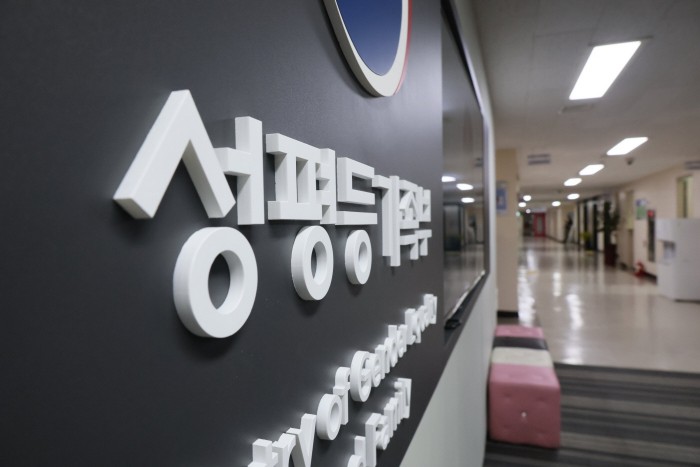 |
| Ministry of Gender Equality and Family at the Seoul Government Complex / Reporter Kim Bo-young |
The gender gap in labor and caregiving narrowed as the female employment rate and economic participation rate rose, while the proportion of men taking parental leave hit a record high of 36.5%. However, the career disruption rate among women with children aged six or younger remained high at 31.7%, indicating that child-rearing continues to pose a heavy burden on women maintaining their careers.
Marking Gender Equality Week, the Ministry of Gender Equality and Family released the "2026 Women and Men's Lives Through Statistics" on the 3rd, which analyzed 48 indicators across nine sectors including population and households, the labor market, and work-life balance.
According to the data, female employment and economic participation rates increased and the male share of parental leave reached an all-time high of 36.5%, easing gender disparities in labor and caregiving to some extent. On the other hand, career disruptions among women with young children and men's vulnerability to solitary deaths and fragile social safety nets remained evident challenges.
Last year, the employment rate for women in their 20s stood at 68.2% and for those in their 30s at 73.1%, compared to 74.5% and 87.6% for men in the respective age groups. Compared with 2015, the female rate rose by 10.2 percentage points for those in their 20s and 16.2 percentage points for those in their 30s, whereas the male rate declined by 1.2 percentage points for those in their 20s and 3.3 percentage points for those in their 30s, narrowing the gender gap.
A similar trajectory emerged in the economic participation rate among those aged 15 and older. The rate for women climbed from 51.9% in 2015 to 56.9% last year, while the rate for men fell from 74.1% to 72.7% over the same period, steadily reducing the gender divide.
Indicators for work-life balance also showed improvement. Recipients of parental leave allowances reached 184,329 last year, more than doubling from 2015, while the male proportion hit an all-time high of 36.5%, surging more than sixfold from 5.6% in 2015. Recipients of reduced working hours allowances during child-rearing stood at 39,400 last year, up 48.0% year-on-year. Female recipients rose 47.6% to 34,465, while male recipients grew 50.9% to 4,935.
Shifts in household structures persisted as well. The proportion of dual-income households with children under age 18 reached 60.4% last year, up 13.2 percentage points from 2015, while single-person households totaled 8,244,000, a 58.4% surge from 2015. In particular, elderly single-person households aged 65 and older increased for both men and women.
Elderly female single-person households totaled 1,655,000, accounting for 40.1% of all female single-person households, while elderly male single-person households totaled 801,000, making up 19.4% of all male single-person households.
In social isolation, vulnerabilities among men were conspicuous. Last year, 26.5% of men responded that they had no one to ask for help with household chores when sick, higher than 23.2% of women. The share of respondents who said they had no one to confide in when feeling discouraged or depressed was also higher among men at 24.6%, compared to 17.8% among women.
 |
| Source: Ministry of Gender Equality and Family |
In addition, solitary deaths in 2024 totaled 3,205 among men and 605 among women, with male deaths outnumbering female deaths by about 5.3 times and concentrating heavily among men in their 50s and 60s. On the other hand, subjective satisfaction with life rose by 5.3 percentage points and 5.2 percentage points year-on-year to 45.0% for women and 45.7% for men, respectively.
Minister of Gender Equality Won Min-kyung said, "While there are positive shifts, such as higher subjective life satisfaction and an increase in recipients of parental leave benefits for both women and men, career disruptions among women due to childcare persist, and a higher proportion of men reported having no one to turn to for help. We will carefully examine respective policy demands and circumstances to pursue policies that offer practical support to both women and men."
Kim Bo-young
Most Read
-
1
Celltrion nears additional contract with major U.S..

-
2
Putin proposes trilateral U.S.-China-Russia summit..

-
3
"Aren't those foreigners on welfare?": M..

-
4
U.S. weighs dropping MOAB, world's most powerful n..

-
5
Houthis launch successive attacks on Saudi airport..

-
6
Saudi Arabia, Iran hold first diplomatic talks to..

-
7
Saudi airport in Riyadh struck again, leaving at l..

PEOPLE





HEADLINE NEWS
- [Exclusive] U.S. military steel frame work at Gwangju Airport casts cloud over planned semiconductor industrial complex
- Momentum grows for mid-next month U.S.-China-Russia summit with mounting is..
- Elon Musk formalizes review of SpaceX-Tesla merger
- [Exclusive] 10 SNUs pledged, but three regional universities take half the..

-
Address : In-Young Bldg., 34, Uisadang-daero 1-gil, Yeongdeungpo-gu, Seoul
Copyright by ASIATODAY CO., LTD. All rights resereved