



ETF market expands to 500 trillion won, but small ETFs failing to attract capital face wave of delistings
Sep 02, 2026, 09:47 am


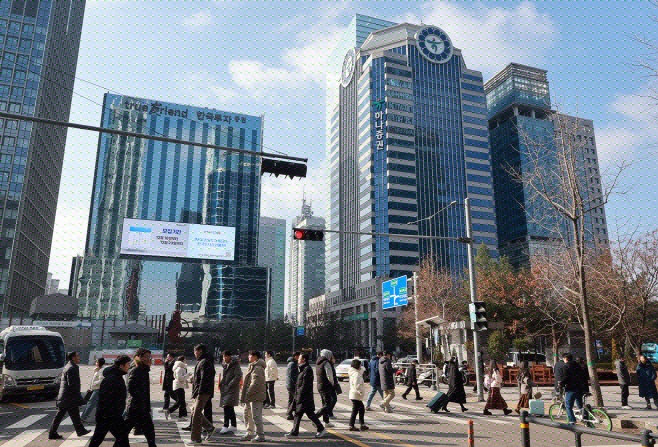 |
| Panoramic view of the Yeouido financial district in Yeongdeungpo-gu, Seoul. / Yonhap News |
Although South Korea's exchange-traded fund (ETF) market has grown to 500 trillion won in net assets, the delisting of small-scale ETFs that failed to secure investor capital continues unabated. Asset management companies are seen actively weeding out underperforming funds, aggressively rolling out new products in line with market expansion while clearing out existing ETFs that struggle with sluggish capital inflows.
According to the Korea Exchange on the 1st, a total of 22 ETFs were delisted between January 2 of this year and this date. Among them, small-scale ETFs terminated because their trust principal or total net assets failed to meet regulatory thresholds for a specified period after inception accounted for 14, or 63.6% of the total.
The overall size of the ETF market has expanded rapidly, with net assets surpassing 500 trillion won for the first time at the end of May. During the January-May period this year alone, 81 new ETFs were listed, an increase of 17 compared to 64 in the same period last year. In May, as single-stock leveraged products and other vehicles launched en masse, 32 new ETFs debuted in a single month, setting an all-time monthly record.
However, the expansion of total market volume does not mean capital flows evenly into every ETF. Under current regulations, an investment trust may be terminated if its trust principal remains below 5 billion won continuously for one month after one year from inception. Consequently, even if a fund's theme or short-term returns are solid, it can still face delisting if it fails to attract a baseline scale of investor capital.
A case in point is Kiwoom Asset Management, which listed 11 new ETFs this year while simultaneously delisting or preparing to delist 8 products. Seven were delisted due to trust principal falling below 5 billion won, while the remaining one, KIWOOM 26-09 Corporate Bond (AA- or Higher) Active ETF, reached the end of its maturity term.
In March, Kiwoom Asset Management delisted four small-scale ETFs: KIWOOM Global Future Mobility, KIWOOM U.S. ETF Industry STOXX, KIWOOM China A50 Connect MSCI, and KIWOOM Fn Genetic Innovation Technology. On the 28th of this month, the firm will wind down three more funds: KIWOOM China Domestic Consumption TOP CSI, KIWOOM K-Semiconductor North America Supply Chain, and KIWOOM K-Secondary Battery North America Supply Chain.
In particular, although the K-Secondary Battery North America Supply Chain ETF recently saw a rebound in returns and net assets backed by a rally in rechargeable battery shares, the delisting process will proceed as scheduled. This is because the criterion for determining delisting is trust principal rather than net assets at a specific point in time.
Korea Investment Management also announced the delisting of three ETFs on the 26th of last month: ACE MSCI Philippines (Synthetic), ACE U.S. IT Internet (Synthetic H), and ACE U.S. Big Tech TOP7 Plus Inverse (Synthetic). These funds are also undergoing delisting procedures after failing to secure sufficient investor capital.
This cleanup of small-scale ETFs goes beyond simply removing sluggish products, aligning closely with asset managers' broader restructuring of product strategies. An industry official stated, "Firms are reorganizing products with small asset sizes or low operational efficiency by altering fund names or underlying index methodologies, while delisting uncompetitive products," adding, "Recently, product strategies targeting stable long-term investments and pension investment demand have also been gaining significant momentum."
Kim So-ra
Most Read
-
1
Celltrion nears additional contract with major U.S..

-
2
Putin proposes trilateral U.S.-China-Russia summit..

-
3
U.S. weighs dropping MOAB, world's most powerful n..

-
4
"Aren't those foreigners on welfare?": M..

-
5
Attention centers on APEC for possible Trump-Xi-Pu..

-
6
Saudi Arabia, Iran hold first diplomatic talks to..

-
7
Saudi airport in Riyadh struck again, leaving at l..

PEOPLE






-
Address : In-Young Bldg., 34, Uisadang-daero 1-gil, Yeongdeungpo-gu, Seoul
Copyright by ASIATODAY CO., LTD. All rights resereved