



Consumer prices rose 3.1% in August
Sep 02, 2026, 09:35 am


 |
| / Yonhap |
Consumer price growth recorded 3.1% last month, rebounding to the 3% range after just two months. The rise is seen as reflecting a base effect from SK Telecom discounting mobile phone bills by 50% last year.
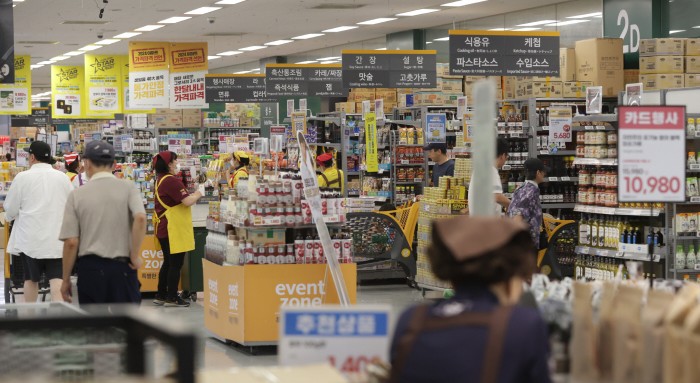
According to the "August Consumer Price Trends" released by the National Data Agency on the 2nd, consumer prices last month rose 3.1% compared to a year earlier. The consumer price inflation rate, which stood at 3.1% in May and 3.2% in June, slowed to 2.8% in July before climbing back into the 3% range last month.
A key factor pushing inflation back to the 3% range was a sharp 26.7% surge in mobile phone bills. This was driven by a base effect from last year, when mobile phone charges plummeted 21.0% after SK Telecom cut telecom bills by 50% for one month for all its more than 20 million subscribers to counter customer departures following a hacking incident. The impact of that rate reduction has now manifested as an upward factor in price indices one year later.
Kang Ki-ryong, Deputy Minister for Economic Affairs at the Ministry of Economy and Finance, noted during a price-related ministries meeting and the 1st interagency joint response team meeting on livelihood violations held that day: "The temporary half-price mobile phone bill discount implemented for the month of August last year acted as a major base effect this year, resulting in August prices rising 3.1% year-on-year."
Petroleum products also jumped 14.2% from a year earlier, driving up overall inflation by 0.54 percentage points. Diesel and gasoline increased by 19.6% and 11.5%, respectively. However, the pace of growth moderated compared to July (15.5%).
In contrast, agricultural, livestock, and fishery products dropped 2.6%. Prices of cabbage (-26.2%), tomatoes (-24.8%), watermelons (-17.5%), and peaches (-14.3%) fell. On the other hand, items such as rice (6.2%), imported beef (7.4%), eggs (5.2%), and mackerel (6.5%) advanced.
The living necessities price index, which tracks frequently purchased everyday items, rose 3.2% from the same month last year. The fresh food index, characterized by price volatility linked to weather conditions, declined 6.7%. The index excluding food and energy—the OECD standard core inflation measure—rose 3.4%.
Lee Ji-hoon
Most Read
-
1
Celltrion nears additional contract with major U.S..

-
2
Putin proposes trilateral U.S.-China-Russia summit..

-
3
U.S. weighs dropping MOAB, world's most powerful n..

-
4
"Aren't those foreigners on welfare?": M..

-
5
Attention centers on APEC for possible Trump-Xi-Pu..

-
6
Saudi Arabia, Iran hold first diplomatic talks to..

-
7
Saudi airport in Riyadh struck again, leaving at l..

PEOPLE







-
Address : In-Young Bldg., 34, Uisadang-daero 1-gil, Yeongdeungpo-gu, Seoul
Copyright by ASIATODAY CO., LTD. All rights resereved