



Russia's large-scale mobilization imminent
Aug 25, 2026, 10:14 am


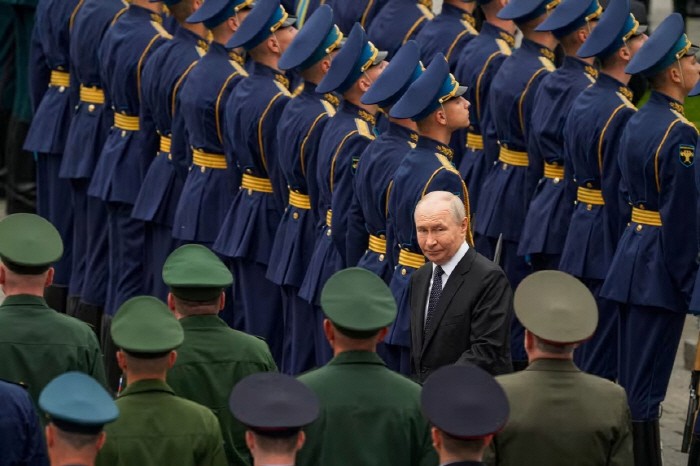 |
| Russian President Vladimir Putin arrives at a wreath-laying ceremony held at the Tomb of the Unknown Soldier in Moscow, Russia, on June 22 (local time). / Reuters, Yonhap |
Observations are mounting that Russia may initiate a large-scale additional troop mobilization following the general elections in September to deploy reinforcements to the Ukrainian frontline.
According to Reuters and CNN on the 23rd (local time), Ukrainian President Volodymyr Zelenskyy stated that Russia plans to conscript approximately 300,000 additional troops immediately after the parliamentary elections scheduled for September 18–20.
President Zelenskyy noted that to avoid public backlash in major metropolitan areas such as Moscow, Russia would focus conscription on residents of peripheral regions, adding that in the long term, Moscow may aim to recruit a total of 500,000 personnel through 2027.
The Wall Street Journal (WSJ) reported that Western intelligence authorities observed Russian military leadership recently visiting Kaliningrad, an exclave situated between Poland and Lithuania, to conduct exercises testing the housing, supply, and arming procedures for local conscripts. Intelligence officials explained that these drills were part of a nationwide inspection underway to prepare for the potential issuance of a mobilization decree.
However, the WSJ reported that Russia does not yet appear to have made a final decision on whether it will actually issue a mobilization order.
Nonetheless, analysis suggests that voluntary enlistment has reached its limits due to surging battlefield casualties caused by Ukraine's advanced drone capabilities, leaving Russian President Vladimir Putin with few alternatives other than mobilization.
Anxiety inside Russia has been escalating amid recent rumors of an imminent mobilization order. Men are searching online for ways to leave the country in an emergency, and the Moscow Customs Service stated that daily traffic between Russia and Georgia through the Verkhny Lars border checkpoint exceeded 20,000 people last week.
Indeed, when President Putin ordered a mobilization in September 2022, hundreds of thousands of men fled Russia, triggering a rush on airline tickets and long lines at borders to cross into Georgia and Kazakhstan.
Military experts projected that if a mobilization order is issued in late autumn of this year, its effects would influence military operations in 2027 rather than the immediate winter combat situation.
Lee Jung-eun
Most Read
-
1
Celltrion nears additional contract with major U.S..

-
2
Putin proposes trilateral U.S.-China-Russia summit..

-
3
U.S. weighs dropping MOAB, world's most powerful n..

-
4
"Aren't those foreigners on welfare?": M..

-
5
Attention centers on APEC for possible Trump-Xi-Pu..

-
6
Saudi Arabia, Iran hold first diplomatic talks to..

-
7
China tightens grip on boosting domestic demand an..

PEOPLE






-
Address : In-Young Bldg., 34, Uisadang-daero 1-gil, Yeongdeungpo-gu, Seoul
Copyright by ASIATODAY CO., LTD. All rights resereved