



Transformed Chinese auto industry reshapes global market
Aug 24, 2026, 10:13 am


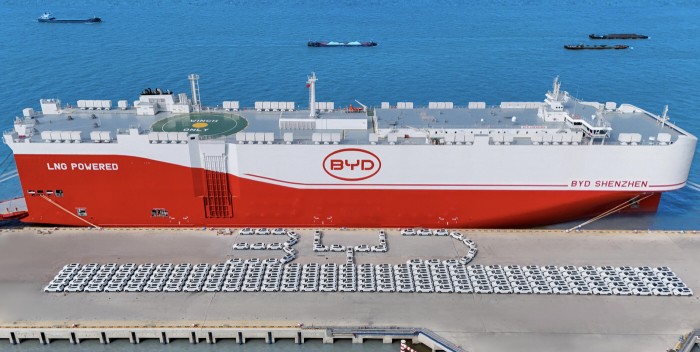 |
| A port scene in Shenzhen, Guangdong Province, showing BYD vehicles about to be shipped for export to Europe — a scene that seems more than enough to illustrate just how thoroughly China's auto industry has been transformed. / Jingji Ribao |
Chinese automakers, once ranked among the world's worst as recently as the early 2000s, have undergone a stunning transformation in recent years, arming themselves with formidable competitiveness and posting overwhelming sales performance both at home and abroad. As a result, the global market itself is undergoing a sweeping shift, with Chinese firms increasingly calling the shots in a way rarely seen before — a shift that seems certain to continue for a considerable time to come.
According to Beijing sources familiar with the auto industry on the 23rd, it's fair to say China's auto industry was in nearly hopeless condition through the end of the last century. Even Chinese people, who tend to take considerable pride in their own country, once had a self-deprecating saying: "Riding a Xiali [a mass-market Chinese car brand from the last century] is genuinely embarrassing — you'd be better off riding a bicycle." Enough said about how dire things were. Breaking into global markets at the time was practically unthinkable.
But as China's manufacturing technology rapidly advanced and simple-manufacturing electric vehicles emerged as the industry's mainstream, the situation shifted dramatically. Once China's AI technology — an area where it boasts extreme competitiveness — was layered on top, the atmosphere transformed entirely. Today, it's not uncommon to hear Chinese people ask whether they ever really had reason to lament their own auto industry, now that it has rapidly approached world-class standards.
Global market share — which genuinely reflects product quality and price competitiveness — tells the story well. According to statistics from Chinese economic authorities, China first became the world's largest auto exporter in 2023, selling 4.91 million vehicles for a 5.2% share, and has maintained that position ever since. This year, sales are estimated to exceed 10 million vehicles, with global market share projected at around 10%.
Chinese automakers' aggressive push into the European market — the very cradle of the automobile industry and a source of great pride for the region — is also worth noting. Having easily surpassed 10% market share last year, projections now suggest China could break through 20% within just a few years. It's no idle grumbling that rival auto-producing nations like Germany are raising trade barriers, including tariffs. This is the same context behind Volkswagen's plan to cut up to 100,000 jobs over the coming years to properly respond to intensifying competition from Chinese automakers — not to mention the fact that it's reportedly considering closing four factories within Germany.
Given this backdrop, it's hardly surprising that Chinese companies like BYD, which aspires to global dominance in electric vehicles, have recently achieved meaningful gains in Southeast Asia — traditionally Japan's own backyard market. BYD's remarkable rise deserves the closest look. In July alone, it sold 6,569 vehicles in Indonesia, putting real pressure on Toyota and Daihatsu, which posted 21,642 and 14,125 units, respectively.
Chinese automakers' advance is also particularly striking in Malaysia, one of Southeast Asia's largest markets. According to recent reports from Chinese outlets including Jingji Ribao, four Chinese companies, including BYD, have made it into the country's top 10 best-selling brands — an impressive feat that suggests it's only a matter of time before they stand shoulder to shoulder with Japanese automakers.
That's not all. Factor in Chinese firms also stepping up their push into Vietnam, backed by local production, and it becomes clear there's nothing remotely exaggerated about describing China's auto industry as having undergone a complete transformation. It seems fair to say the sweeping transformation of the global auto market — one where Chinese automakers will only grow more formidable — has now become an undeniable reality.
Hong Soon-do
Most Read
-
1
Celltrion nears additional contract with major U.S..

-
2
Putin proposes trilateral U.S.-China-Russia summit..

-
3
U.S. weighs dropping MOAB, world's most powerful n..

-
4
"Aren't those foreigners on welfare?": M..

-
5
Attention centers on APEC for possible Trump-Xi-Pu..

-
6
Saudi Arabia, Iran hold first diplomatic talks to..

-
7
China tightens grip on boosting domestic demand an..

PEOPLE







-
Address : In-Young Bldg., 34, Uisadang-daero 1-gil, Yeongdeungpo-gu, Seoul
Copyright by ASIATODAY CO., LTD. All rights resereved