



Police to add 2,788 investigators amid 76,000 supplementary investigation requests
Aug 20, 2026, 10:23 am


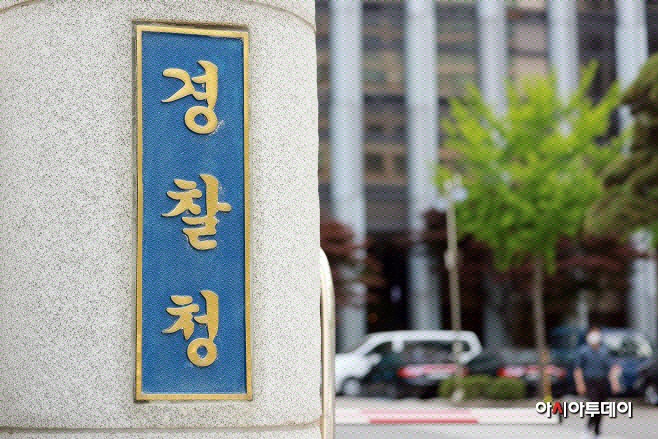 |
| National Police Agency. / Reporter Park Seong-il |
Ahead of the abolition of prosecutors' direct investigative power and direct supplementary investigative authority, the police are significantly expanding their investigative personnel. As the prosecution's requests for supplementary investigations have also grown to 76,000 cases this year, the investigative burden on the police is expected to increase further once the revised Criminal Procedure Act takes effect.
Yoo Jae-seong, acting commissioner general of the National Police Agency, said at a press briefing held at the National Police Agency in Seodaemun-gu, Seoul, on August 19, "Since the launch of the current administration, we have reinforced investigative departments with a total of 1,907 personnel, and we plan to redeploy an additional 881 personnel in accordance with quota adjustments in police task force units. Including these, the reinforcement scale will increase to 2,788 personnel."
Requests for supplementary investigations by the prosecution are already on the rise. According to the National Police Agency, requests for supplementary investigations from January to July this year totaled about 76,000 cases. This is an increase of 14,000 cases compared to about 62,000 cases during the same period last year.
The ratio of supplementary investigation requests relative to case referrals also climbed 2.9 percentage points, from 14.2 percent in the same period last year to 17.1 percent this year. An official from the National Police Agency said, "Because prosecutors will no longer conduct direct supplementary investigations moving forward, we expect requests for supplementary investigations to rise. It is difficult to pinpoint exact figures regarding how much they will increase."
Once the revised Criminal Procedure Act takes effect, prosecutors will be able to demand supplementary investigations from the police, but will no longer be able to launch direct supplementary investigations themselves. This means cases among those referred by the police that require additional investigation are likely to be returned to the police more frequently.
Separately from redeploying existing personnel, the police are also pushing ahead with plans to increase the authorized headcount itself. Acting Commissioner General Yoo said, "Because the burden of investigation on the police is growing following the separation of investigation and prosecution powers, we are consulting with the Ministry of the Interior and Safety on the necessary authorized headcount through ad hoc structural reorganizations." The exact scale of the quota expansion has not yet been determined.
Regarding concerns over gaps in responding to rallies and demonstrations resulting from reductions in task force personnel, the police policy is to strengthen education and training. The police plan to foster training instructors for each unit and maintain a system to mobilize ad hoc units if large-scale assemblies or protests occur.
The revised Criminal Procedure Act will take effect on October 2. The police plan to minimize confusion at frontline investigative sites by organizing additional personnel, budgets, and follow-up subordinate legislation ahead of its implementation.
Seol So-young
Most Read
-
1
Celltrion nears additional contract with major U.S..

-
2
Putin proposes trilateral U.S.-China-Russia summit..

-
3
U.S. weighs dropping MOAB, world's most powerful n..

-
4
"Aren't those foreigners on welfare?": M..

-
5
Houthis launch successive attacks on Saudi airport..

-
6
Saudi Arabia, Iran hold first diplomatic talks to..

-
7
Attention centers on APEC for possible Trump-Xi-Pu..

PEOPLE







-
Address : In-Young Bldg., 34, Uisadang-daero 1-gil, Yeongdeungpo-gu, Seoul
Copyright by ASIATODAY CO., LTD. All rights resereved