



Nvidia guarantees W150tn for OpenAI's data center
Aug 19, 2026, 10:03 am


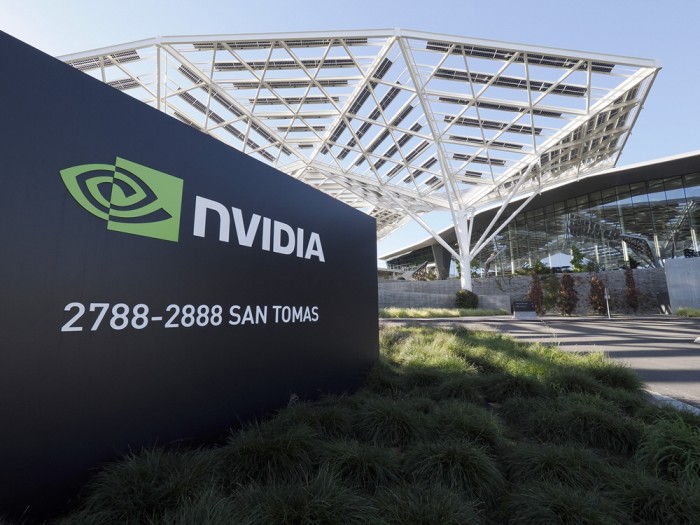 |
| A sign bearing Nvidia's logo stands at the company's headquarters in Santa Clara, California, U.S. / EPA-Yonhap |
Nvidia will provide up to $105 billion (about 148 trillion won) in financial guarantees for a new AI data center OpenAI is building in Ohio, the company disclosed on the 17th (local time) in a filing with the U.S. Securities and Exchange Commission (SEC).
According to CNBC and other outlets that day, the deal will help secure 4.25 GW of computing capacity, with an option to expand by an additional 3.75 GW. The plan will roll out in phases starting in 2028.
The data center is set to be built at the Portsmouth-Pike Technology Campus in Pike County, Ohio. Construction and operation will be handled by SB Energy, a subsidiary of Japan's SoftBank, with OpenAI leasing the facility for 20 years.
OpenAI holds an equity stake in SB Energy, and OpenAI CEO Sam Altman is an early investor in the company.
Nvidia CEO Jensen Huang said in a statement that Nvidia is securing long-term infrastructure to help OpenAI build the most productive AI factories, allowing each new generation to be upgraded to deliver greater intelligence and better economics.
The deal marks the latest in a series of financing arrangements Nvidia has pursued to support the buildout of large-scale AI data centers.
In Silicon Valley and on Wall Street, concerns have emerged over whether this amounts to "circular financing" within the AI industry.
Circular financing refers to a structure in which one company funds another through investment, guarantees, or loans, only to have that money flow back through a separate transaction, effectively funding the business through money circulating between the companies involved.
Critics worry that while such arrangements appear on the surface to generate massive investment and revenue, the underlying reality may simply involve a fixed pool of capital circulating among companies, inflating the apparent scale of activity.
In a post on Nvidia's website that day, Huang denied the circular financing allegations, stating that OpenAI will pay rent.
He argued that Nvidia is using its economies of scale and ability to forecast long-term demand to secure a foundation for Nvidia computing resources at Portsmouth-Pike, calling this the same principle applied in supply chain management.
He added that the company commits core resources when it can accurately forecast customer demand and use that to secure long-term production capacity.
Nvidia recently partnered with six major asset management firms to build a financing platform capable of channeling $500 billion (about 706 trillion won) in external capital into data center projects.
Kim Hyun-min
Most Read
-
1
Alteogen secures European patent for Keytruda SC,..

-
2
Trump shares map on social media labeling Strait o..

-
3
Celltrion seeks rheumatoid arthritis indication ex..

-
4
Kia Sportage outperforms Mazda CX-5 in German auto..

-
5
Chinese e-commerce giants AliExpress, Temu and She..

-
6
China expels No. 2 military official Zhang Youxia..

-
7
Trump rejects Iran's offer to open Strait of Hormu..

PEOPLE







-
Address : In-Young Bldg., 34, Uisadang-daero 1-gil, Yeongdeungpo-gu, Seoul
Copyright by ASIATODAY CO., LTD. All rights resereved