



Chung Ha's grandfather spotlighted as independence activist
Aug 13, 2026, 09:50 am


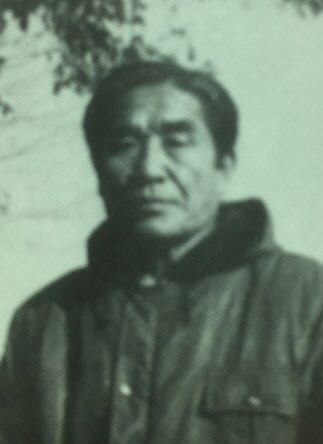 |
| Singer Chung Ha's maternal grandfather, Kim Yong-keun. / Courtesy of Seok-eun Kim Yong-keun Memorial Society |
As allegations surrounding the pro-Japanese activities of actor Hayoung's great-grandfather An Sang-ho surface, the history of singer Chung Ha's maternal grandfather, Seok-eun Kim Yong-keun, is coming back into the spotlight.
Kim Yong-keun's background has recently garnered renewed attention online. Amid the controversy over Hayoung's great-grandfather's actions during the Japanese colonial period, the historical legacies of celebrities' families have sequentially drawn public interest.
Chung Ha is receiving particular attention as her maternal grandfather was an independence activist, a decorated Korean War veteran, and a recognized merit recipient of the May 18 Democratic Uprising. Chung Ha herself revealed that she earned Level 1 certification in the Korean History Proficiency Test.
The life of Kim Yong-keun intersects with major events in modern and contemporary Korean history, spanning anti-Japanese resistance during the colonial era, service in the Korean War, educational endeavors, opposition to the Yushin regime, and participation in the May 18 Democratic Uprising.
Kim was an independence activist who refused Shinto shrine worship and carried out anti-Japanese activities during the colonial period, as well as a national merit recipient who fought in the Korean War. He later dedicated himself to the pro-democracy movement, participating in the May 18 Democratic Uprising before being arrested by the new military junta.
Born in 1917 in Jakcheon-myeon, Gangjin County, South Jeolla Province, Kim graduated from Mokpo Yeongheung Elementary School and entered Pyongyang Soongsil School. While serving as head of the religious department at Soongsil, he refused Shinto shrine worship and was detained at the Pyongyang Police Station cell for his stance. At the time, he was a schoolmate of poet Yun Dong-ju and Reverend Moon Ik-hwan.
After graduating from Soongsil School in 1937, Kim engaged in educational activities at an informal school in Yeonggwang County, South Jeolla Province, where he was sentenced to six months in prison for violating the Japanese Maintenance of Public Order Act. He subsequently worked as a teacher at Mokpo Yudal Elementary School before enrolling in the Department of History at Yeonhui Technical College in 1940.
However, he was arrested again in 1942 under the Maintenance of Public Order Act and served two years in prison. Following his release, he fled to Manchuria until Korea's liberation in 1945, after which he returned to his hometown of Gangjin to lead rural enlightenment initiatives.
Kim continued his work as an educator after liberation. He entered Yonsei University's Department of History in 1946 and was appointed as a teacher at Gyeongbok High School in 1950. In 1951, he enlisted in the Republic of Korea Army to serve in the Korean War. He later lectured at the Korea Military Academy and taught at Gyeongbok High School, Gwangju High School, Gwangju First High School, and Chonnam High School.
Kim eventually resigned from teaching in connection with student protests opposing the Yushin regime. Returning to his hometown of Gangjin in 1978, he ran a senior college, researched local culture, and gave public lectures.
In June 1980, he was arrested in connection with the May 18 Democratic Uprising. After his release, he was ordained as an elder at Jakcheon Presbyterian Church in 1983. He passed away on May 21, 1985, at the age of 69.
Posthumously, his contributions to the independence movement were recognized in 1987 with the Order of Merit for National Foundation (Patriotic Medal), and his remains were reinterred at the May 18th National Cemetery in 1997. In 2002, he was officially designated a person of merit for the May 18 Democratic Uprising. In 2017, a bust was erected in the garden of the Gwangju Education and Culture Center to commemorate the centennial of his birth.
Jeong A-reum
Most Read
-
1
Celltrion nears additional contract with major U.S..

-
2
Putin proposes trilateral U.S.-China-Russia summit..

-
3
U.S. weighs dropping MOAB, world's most powerful n..

-
4
"Aren't those foreigners on welfare?": M..

-
5
Attention centers on APEC for possible Trump-Xi-Pu..

-
6
Saudi Arabia, Iran hold first diplomatic talks to..

-
7
China tightens grip on boosting domestic demand an..

PEOPLE





-
Address : In-Young Bldg., 34, Uisadang-daero 1-gil, Yeongdeungpo-gu, Seoul
Copyright by ASIATODAY CO., LTD. All rights resereved