



Mid-sized fashion firms bet on AI, humanoid robots to survive
Aug 04, 2026, 10:23 am


 |
| This image was generated by AI. |
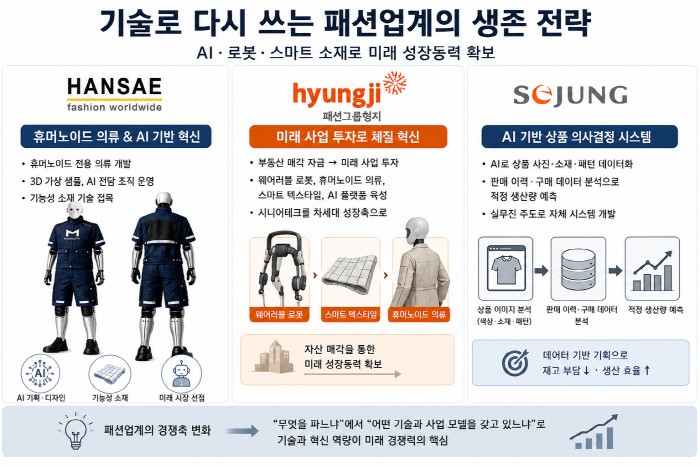
The survival playbook for the fashion industry is changing. As consumption polarizes toward luxury brands and SPA (manufacturing-retail integrated) brands, squeezing the space for mid-priced brands, mid-sized fashion companies are turning to artificial intelligence, humanoid robots, and smart materials as future growth engines, reshaping their survival strategies by strengthening their core business while cultivating new ventures for the future.
According to the industry on the 4th, Hansae, together with fashion retailer Hansae MK, recently unveiled clothing designed for humanoid robots, moving to stake an early claim in the robot apparel market. The design retains the basic form of human clothing while optimizing it for a robot's body structure. The company said the focus was on minimizing any sense of unfamiliarity for those wearing it, considering an environment where humans and robots increasingly coexist.
Industry observers expect the market for humanoid-related products to expand into various sectors such as education, care, manufacturing, and logistics as global companies including Nvidia, Tesla, and Boston Dynamics accelerate development of humanoid robots. This is seen as opening significant growth potential for robot-specific apparel as a new market as well.
Hansae has been pursuing digital transformation by building 3D virtual sample production and an AI-based apparel development system. It plans to combine this with functional material technology to secure competitiveness in the future apparel market.
Fashion Group Hyungji is investing in future businesses through a restructuring of its business portfolio. Funds secured from selling major real estate assets, including the Songdo Hyungji Global Fashion Complex Center and the Art Mall Ring in Busan, will be invested in wearable robots, physical humanoid apparel, smart textiles, global R&D, and AI-based platforms.
In particular, the company has designated senior tech, aimed at the super-aged society, as its next growth axis. The plan is to combine fashion technology with the aging market through wearable robots that assist elderly people with walking and rehabilitation, and sensor-embedded fabrics that detect temperature and activity levels.
Sejin Group is pursuing innovation in product planning by gradually introducing an AI-based product decision-making system. The strategy is to boost production efficiency and reduce inventory burden by digitizing product information and analyzing sales data to forecast demand. The system was developed in-house by the company's own staff.
A fashion industry official said, "The competitive axis of the fashion industry is shifting from 'what you sell' to 'what technology and business model you have,'" adding, "Ultimately, future competitiveness will depend on how effectively companies can commercialize technology to claim new markets."
Lee Chang-yeon
Most Read
-
1
Celltrion’s Omlyclo gains ground in major European..

-
2
Trump demands rates fall below 1% as Fed hikes for..

-
3
Trump makes $1 trillion bet ahead of midterm elect..

-
4
Iran resumes ballistic missile production, assembl..

-
5
Samsung Electronics, Mistral AI to jointly develop..

-
6
Trump warns countries not helping U.S. must pay re..

-
7
Seoul faces triple squeeze over troop deployment t..

PEOPLE






-
Address : In-Young Bldg., 34, Uisadang-daero 1-gil, Yeongdeungpo-gu, Seoul
Copyright by ASIATODAY CO., LTD. All rights resereved