



Thoracic surgeon who lost 40kg: "Obesity is decided by the brain, not willpower"
Aug 04, 2026, 10:21 am


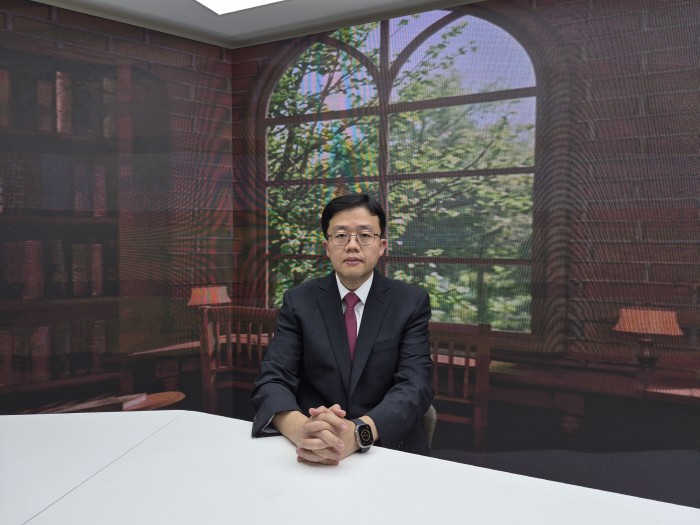 |
| Prof. Jang Hyung-woo of the Thoracic Surgery Department at Seoul National University Bundang Hospital appears on AsiaMed's "Health & Money" program, recently filmed at AsiaToday's Jeongnon Studio, where he stressed that obesity is a disease driven by physiological mechanisms rather than personal willpower, sharing various diet experiences he has personally tested. / Reporter Kang Hye-won |
"Weight loss is a lifelong disease management process."
Prof. Jang Hyung-woo of the Thoracic Surgery Department at Seoul National University Bundang Hospital made this comment when asked about the secrets to his weight management, during a recent "Health & Money" interview at AsiaToday's Jeongnon Studio in Yeouido, Seoul.
Prof. Jang overcame severe obesity, having once weighed 118kg, and successfully lost weight down to 78kg, making him a prominent figure in the medical field known for delivering a realistic message about obesity treatment. Since publishing his book "Bimallok" (A Record of Obesity), which chronicles his own grueling dieting history along with medical advice, he has become highly sought-after, appearing on major programs including tvN's "You Quiz on the Block" and drawing significant attention from the press.
Prof. Jang firmly stated that obesity is never a matter of "willpower" or "patience." He explained that a state of obesity is not simply a lack of self-restraint, but a metabolic abnormality that demands endurance beyond human physiological limits. Under standard criteria, a body mass index (BMI) of 25 or higher is classified as Stage 1 obesity, 30 or higher as Stage 2, and 35 or higher as severe obesity (Stage 3).
Prof. Jang compared it this way: "When an obesity patient tries hard to lose weight, maintains it for a while, and then can't resist their appetite and overeats again, it's just like a survival instinct — like holding your breath underwater until you reach your limit, then coming up gasping for air."
He pointed to managing the brain's "weight set point" — a physiological mechanism that undermines dieting — as the key issue. Prof. Jang explained, "The human body has homeostasis that tries to keep weight stable, just like body temperature or blood pressure," adding, "When you deviate from the set point established by the hypothalamus in the brain, your body activates a restorative force to bring you back to your original weight. Appetite is one part of that."
He added, "To lower a high weight set point of over 110kg, some external force needs to be applied to adjust it," comparing it to turning on air conditioning to avoid sweating in hot weather, or lighting a stove when it's cold. In other words, changing the brain's set point requires medical treatment intervention alongside personal effort, rather than relying on willpower alone.
He also called for a shift in how society and families view obesity patients, urging that obesity should be seen as something requiring compassionate treatment rather than blame or contempt. Prof. Jang said, "When an obesity patient reaches for a late-night snack or overeats, it's the same kind of bodily reflex as shivering when cold or sweating when hot," adding that blaming this behavior or dismissing it as a psychological problem is entirely unscientific.
He also shared candid reviews of various diets he had personally tested. Prof. Jang said that in terms of pure weight-loss effect, the "Danish diet" was the most powerful, but weight returned once he went back to a normal diet, concluding that it's impractical to sustain for life and causes too much suffering to be worthwhile. He said the low-carb, high-fat diet ran into limits around cutting sugar, while the "emperor's diet" failed to produce meaningful weight change due to the sugar contained in accompanying seasonings.
Still, he encouraged practical steps people can take, saying, "You should ask yourself whether that late-night hunger is real hunger, and make at least the minimal effort to stop habitual 'fake hunger.'"
Prof. Jang Hyung-woo's tips and advice on weight management can be found on AsiaMed's YouTube channel "Health & Money." The video is presented in two parts, with the second part covering his personal experience with metabolic treatment and clearing up common questions and misconceptions about obesity medications.
Moon Jeong-woo
Most Read
-
1
Celltrion’s Omlyclo gains ground in major European..

-
2
Trump demands rates fall below 1% as Fed hikes for..

-
3
Trump makes $1 trillion bet ahead of midterm elect..

-
4
Iran resumes ballistic missile production, assembl..

-
5
Samsung Electronics, Mistral AI to jointly develop..

-
6
Trump warns countries not helping U.S. must pay re..

-
7
Seoul faces triple squeeze over troop deployment t..

PEOPLE







-
Address : In-Young Bldg., 34, Uisadang-daero 1-gil, Yeongdeungpo-gu, Seoul
Copyright by ASIATODAY CO., LTD. All rights resereved