



Scholars urge keeping supplementary investigative power, warn against rushed reform
Jul 31, 2026, 09:40 am


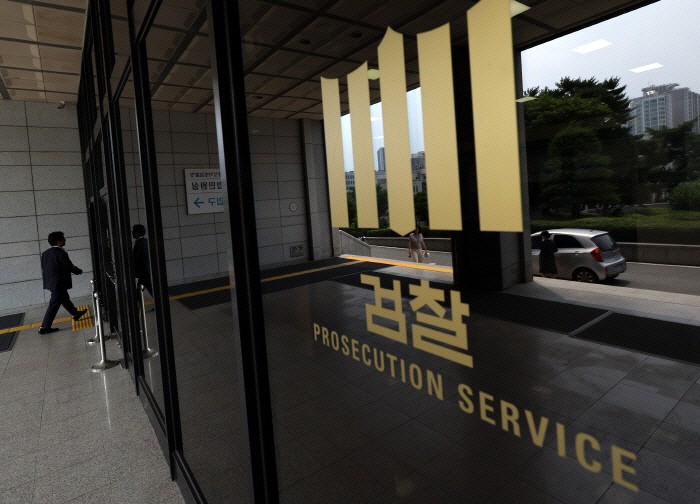 |
| View of the Seoul Central District Prosecutors' Office in Seocho-gu, Seoul. / Yonhap |
Sixty-two criminal law scholars from across the country have expressed concern over a proposed revision to the Criminal Procedure Act that would abolish prosecutors' supplementary investigative power.
The 62 scholars, including Seoul National University School of Law professor Ko Myung-soo, issued a statement titled "Opinion of Criminal Law Scholars on Prosecutorial Reform and Supplementary Investigative Power" on the 30th, stating, "We express serious concern over the manner of reform that pushes through a hasty revision of the Criminal Procedure Act, which affects all citizens, without sufficient deliberation."
The scholars said, "We agree in principle with the direction of separating the subjects of investigation and prosecution," but argued that "even if the powers of investigation and prosecution are separated, prosecutorial control over investigations must still be maintained." They added, "Prosecutors' supplementary investigative power should be maintained as a means of controlling and supplementing police investigations," and that "prosecutorial direction of investigations, supplementary investigation, and referral of all cases should be reconsidered as methods of controlling police investigations."
They explained, "Concerns that retaining prosecutors' supplementary investigative power could allow the Public Prosecution Office to revert to the prosecution service of the past cannot serve as grounds for abolishing that power," adding, "Prosecutors partially conducting supplementary investigations only into cases that police have already initiated is clearly different from the past, when prosecutors held unlimited investigative authority and abused that power through independent investigations and the initiation and termination of cases." They stressed, "While the risk of abuse of supplementary investigative power cannot be said to be entirely absent, this should be controlled through other institutional safeguards, such as limiting investigative personnel within the Public Prosecution Office," and that "a complete abolition of prosecutors' supplementary investigative power is not the only answer to curbing abuse of prosecutorial power, and the resulting side effects would be greater harm."
They also stressed that prosecutorial direction over special judicial police should continue, stating, "Abolishing the direction of prosecutors, who handle part of the 'judicial' function, could cause serious problems arising from violations of due process during the investigation process, which is part of the judicial procedure."
Finally, the scholars said, "The investigative process is the first stage of criminal procedure, which is a judicial process," and that "pending issues such as prosecutorial reform and supplementary investigative power should be decided based on the legal principles of judicial procedure, not political interests."
Son Seung-hyun
Most Read
-
1
Celltrion nears additional contract with major U.S..

-
2
Putin proposes trilateral U.S.-China-Russia summit..

-
3
U.S. weighs dropping MOAB, world's most powerful n..

-
4
"Aren't those foreigners on welfare?": M..

-
5
Attention centers on APEC for possible Trump-Xi-Pu..

-
6
Saudi Arabia, Iran hold first diplomatic talks to..

-
7
China tightens grip on boosting domestic demand an..

PEOPLE







-
Address : In-Young Bldg., 34, Uisadang-daero 1-gil, Yeongdeungpo-gu, Seoul
Copyright by ASIATODAY CO., LTD. All rights resereved