



Government eases regulations on advanced regenerative medicine
Jul 22, 2026, 10:10 am


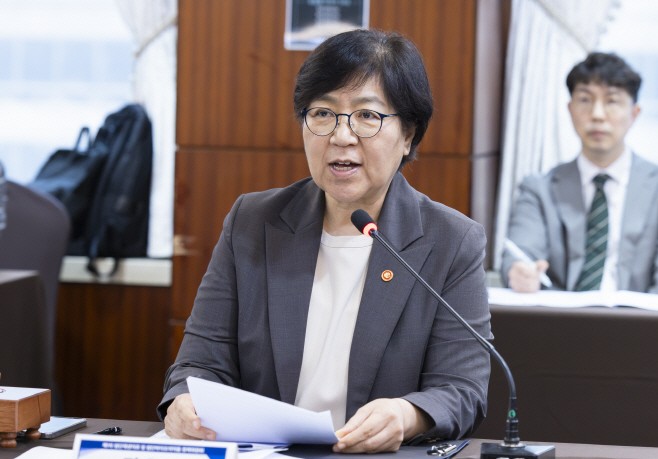 |
| Minister of Health and Welfare Jeong Eun-kyung delivers remarks during the 1st Policy Committee on Advanced Regenerative Medicine and Advanced Biopharmaceuticals held at the Koreana Hotel in Seoul. / Courtesy of the Ministry of Health and Welfare |
The government has decided to significantly ease regulations in the advanced regenerative medicine sector to expand domestic treatment opportunities for patients with rare and intractable diseases. The plan aims to drive government-led clinical research for conditions with high demand for overseas medical travel, reform the review system, and overhaul the overall framework so that research outcomes lead to actual treatment and industrial growth. However, high treatment costs and limitations in commercialization remain key challenges to resolve.
On July 21, the Ministry of Health and Welfare held the 1st Policy Committee on Advanced Regenerative Medicine and Advanced Biopharmaceuticals of 2026, deliberating and approving the 2nd Basic Plan for Advanced Regenerative Medicine and Advanced Biopharmaceuticals (2026–2030). Along with the basic plan, the committee discussed measures to strengthen follow-up management for advanced regenerative medicine institutions and promote regulatory rationalization.
The basic plan focuses on connecting advanced regenerative medicine—previously centered around research—to actual patient treatment and industrial outcomes. Centered on three main strategies (expanding patient access, rationalizing scientific regulations while strengthening safety management, and boosting technological and industrial competitiveness), the government set targets to achieve a cumulative total of at least 150 approvals for clinical research and treatment plans, as well as developing five or more domestically produced advanced biopharmaceuticals by 2030.
First, the government will pursue multi-center clinical research led by public agencies targeting four conditions: knee osteoarthritis, intractable chronic pain, blood cancer, and recurrent glioblastoma. Once safety and efficacy are established through research, patients will be able to receive treatment domestically within a safety management system following review of the treatment plans. For ultra-rare diseases, a personalized treatment development model utilizing platform technologies is also being reviewed.
Foundations to activate research will be expanded as well. Shared cell-processing facilities will support researchers with clinical sample production and process development, while the establishment of a K-Cell Bank and the utilization of the National Stem Cell Bank will strengthen the supply system for clinical-grade raw cells. Standardizing clinical research and treatment data to build a usable database for researchers is also planned.
Regulations will be updated to align with the research and treatment environment. Cultured autologous immune cell technology with proven safety will be reclassified from medium risk to low risk, allowing institutions to apply for treatment plans without separate preliminary clinical studies. In addition, cell-processing facilities will be permitted to receive raw cells stored in other institutions, such as cord blood banks, to utilize them for research and treatment.
Regenerative medicine institutions will be required to submit clinical research or treatment plans within one year of designation, and a three-year designation renewal system will be introduced. Guidelines for advertising advanced regenerative medicine will be established alongside continuous monitoring for false or exaggerated claims, while on-site inspections of cell-processing facilities and treatment processes will be expanded. Adverse reaction reporting systems and long-term follow-up tracking will also be upgraded by integrating them with public databases such as national health insurance records.
Efforts to secure next-generation technologies and foster the industry will accelerate as well. The government plans to expand R&D for future technologies, including bioprinting, organoids, gene editing, AI-based drug discovery, artificial blood, and xenotransplantation, while supporting automated manufacturing processes utilizing AI and robotics alongside the development of domestic materials, parts, and equipment. The vision aims to boost global competitiveness through commercialization support for ventures, training of specialized personnel, and the establishment of industry standards.
However, the limited availability of advanced regenerative treatments and domestic therapies currently accessible to Korean patients, combined with few research outcomes advancing to product licensing and commercialization, remains a major hurdle. High treatment costs resulting from customized manufacturing processes also pose significant barriers to patient access.
A medical expert, speaking on condition of anonymity, welcomed the move to bring treatments domestically that previously required travel abroad, advising, "Multi-center clinical research capable of thoroughly verifying safety and efficacy must be sustained, and the capacity of medical institutions must be expanded simultaneously so that treatment does not become concentrated in only a few hospitals."
Minister Jeong Eun-kyeong stated, "Through the 2nd Basic Plan for Advanced Regenerative Medicine and Advanced Biopharmaceuticals, we expect to expand opportunities for patients to receive safe treatment domestically and produce tangible achievements that contribute to overcoming severe, rare, and intractable diseases." She added, "We will continue regulatory rationalization based on scientific evidence to stimulate clinical research and treatment in advanced regenerative medicine, while strengthening full-lifecycle safety management so patients can receive treatment with confidence."
Lee Se-mi
Most Read
-
1
U.S. Treasury Secretary Bessent publicly warns ove..

-
2
China overhauls National Defense Mobilization Law..

-
3
U.S. strikes Iran after a month, hits IRGC rocket..

-
4
Hyundai Motor Group breaks ground on integrated st..

-
5
Russia faces warning signs over prolonged war econ..

-
6
CIA director visits Russia, warns Moscow not to at..

-
7
Anti-Western solidarity strengthens amid Trump's e..

PEOPLE







-
Address : In-Young Bldg., 34, Uisadang-daero 1-gil, Yeongdeungpo-gu, Seoul
Copyright by ASIATODAY CO., LTD. All rights resereved