



China emphasizes it does not seek great power rivalry
Sep 08, 2026, 09:57 am


In response to claims by the Philippine defense minister that scaling back joint South Korea-U.S. military exercises could provide an opportunity for China to expand its regional influence, Beijing took a rather ambiguous stance, stating indirectly that it does not seek great power rivalry.
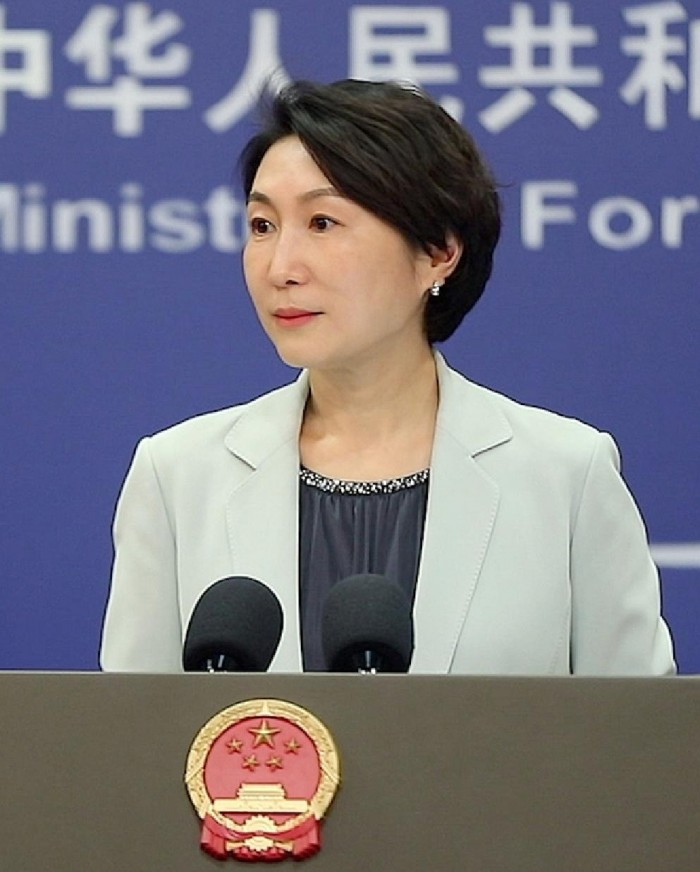 |
| Chinese Foreign Ministry Spokesperson Mao Ning. At a regular press briefing held on the 7th, she expressed the position that China does not seek great power rivalry. / Chinese Foreign Ministry Website |
Chinese Foreign Ministry Spokesperson Mao Ning made the remarks in response to a related question during a regular press briefing on the 7th, stating, "China has consistently been committed to safeguarding peace and stability in the Asia-Pacific region." She added, "We hope that relevant countries will also play a positive role in regional peace and stability."
Earlier that day, Philippine Defense Secretary Gilberto Teodoro argued in an interview with Reuters that scaling back joint South Korea-U.S. military drills could give China an opening to expand its influence across the Indo-Pacific region.
According to Beijing diplomatic sources on the 7th, Teodoro is currently visiting South Korea to attend the Seoul Defense Dialogue (SDD). Drawing on his immediate situational perspective on the ground, he appeared to assess that Beijing could swiftly capitalize on any regional vacuum created by a reduction in joint South Korea-U.S. exercises, emphasizing that the situation should be viewed through the lens of the broader Indo-Pacific rather than confined to the Korean Peninsula.
Currently, China and the Philippines remain locked in severe tensions over South China Sea territorial disputes, with no signs of near-term resolution. Throughout this friction, Teodoro has consistently maintained a hardline anti-China stance and rhetoric. Observers note that Beijing's move in June to impose entry bans and transaction restrictions against Teodoro and his family did not occur without context.
Hong Soon-do
Most Read
-
1
Celltrion nears additional contract with major U.S..

-
2
Putin proposes trilateral U.S.-China-Russia summit..

-
3
U.S. weighs dropping MOAB, world's most powerful n..

-
4
"Aren't those foreigners on welfare?": M..

-
5
Attention centers on APEC for possible Trump-Xi-Pu..

-
6
U.S., Israel plan to resume strikes on Iran after..

-
7
Saudi Arabia, Iran hold first diplomatic talks to..

PEOPLE







-
Address : In-Young Bldg., 34, Uisadang-daero 1-gil, Yeongdeungpo-gu, Seoul
Copyright by ASIATODAY CO., LTD. All rights resereved