



U.S.-China AI race heats up with both sides nearly equal
Jul 20, 2026, 10:44 am


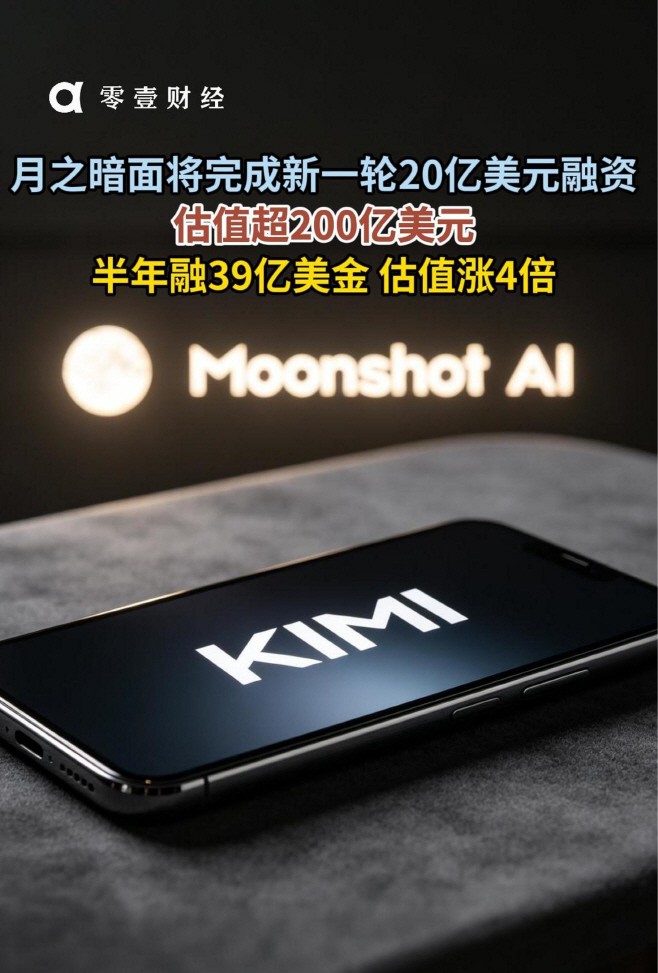 |
| A Chinese internet media outlet reports that Moonshot AI has recently launched Kimi K3. This demonstrates that China's AI technology level is on par with that of the United States. / Courtesy of Economic Daily (Jingji Ribao) |
The competition between the United States and China to seize dominance in artificial intelligence (AI) technology is growing increasingly fierce—a situation that can accurately be described as escalating by the day.
According to Beijing sources well-versed in the information and communication technology (ICT) industries of both nations on July 20, the reality that this description is by no means an exaggeration is clearly evident in how "Kimi K3"—a large language model (LLM) developed by Moonshot AI (Yuezhimian), a Chinese AI startup—has completely shaken up the global AI industry. This is undoubtedly true, given evaluations that the model has delivered performance on par with leading U.S. models just days after its release, effectively bypassing Washington's export controls on advanced semiconductors to China.
Kimi K3 is widely known as an ultra-large open-weight model boasting 2.8 trillion parameters. While its capabilities rank below top-tier U.S. models like OpenAI's GPT-5.6 Sol or Anthropic's Claude Fable 5, it is evaluated to match or even surpass preceding versions like GPT-5.5 or Claude Opus 4.8.
Currently, China faces significant hurdles in acquiring the latest AI chips due to U.S. sanctions. Nevertheless, Chinese companies are actively forging ahead with AI model development by enhancing algorithms and data processing efficiency. They are successfully building ultra-large AI models, a field previously considered the exclusive playground of U.S. Big Tech. For instance, Beijing-based Z.AI (Zhipu Huazhang) unveiled "GLM-5.2" last month, earning reviews that it outpaced top-tier U.S. models and seamlessly joining the race for low-cost, high-efficiency AI.
The actions of President Xi Jinping also clearly underscore the intensity of this bilateral AI rivalry. His declaration of the launch of the World Artificial Intelligence Cooperation Organization (WAICO) during a keynote speech at the 2026 World Artificial Intelligence Conference (WAIC) in Shanghai on July 17 is something that cannot be taken lightly. The same goes for the fact that this marked his first-ever personal attendance at the event since its inception in 2018.
Furthermore, he stressed that "WAICO will serve as a major milestone in the history of artificial intelligence development," implicitly signaling his resolve to actively counter the United States. This explains why analysts interpret WAICO as an AI version of the Belt and Road Initiative, designed to strengthen diplomatic ties with ASEAN, BRICS, Africa, and Latin America, centered around infrastructure.
The United States is not sitting idly by. Washington is reportedly finalizing the establishment of a regulatory watchdog to prevent AI from spiraling out of control—a move heavily seen as an attempt to counter China. This is precisely why foreign media analyze this plan as a potential move to erect a barrier of "safety" against the rapid pursuit of Chinese AI. With White House Chief of Staff Susie Wiles reportedly involved in the initiative, further explanation is redundant.
The U.S. remains unwavering in its stance that it will absolutely not tolerate China surpassing its own AI capabilities. Consequently, Washington is highly likely to draft even more containment policies against Beijing. The head-on collision between the two nations' AI technologies, which have now reached near-parity, has become an undeniable reality.
Hong Soon-do
Most Read
-
1
Celltrion nears additional contract with major U.S..

-
2
Putin proposes trilateral U.S.-China-Russia summit..

-
3
U.S. weighs dropping MOAB, world's most powerful n..

-
4
"Aren't those foreigners on welfare?": M..

-
5
Attention centers on APEC for possible Trump-Xi-Pu..

-
6
Saudi Arabia, Iran hold first diplomatic talks to..

-
7
China tightens grip on boosting domestic demand an..

PEOPLE







-
Address : In-Young Bldg., 34, Uisadang-daero 1-gil, Yeongdeungpo-gu, Seoul
Copyright by ASIATODAY CO., LTD. All rights resereved