



Israel's upcoming election set for Oct. 27, posing high-stakes test for Netanyahu's reelection bid
Jul 14, 2026, 10:20 am


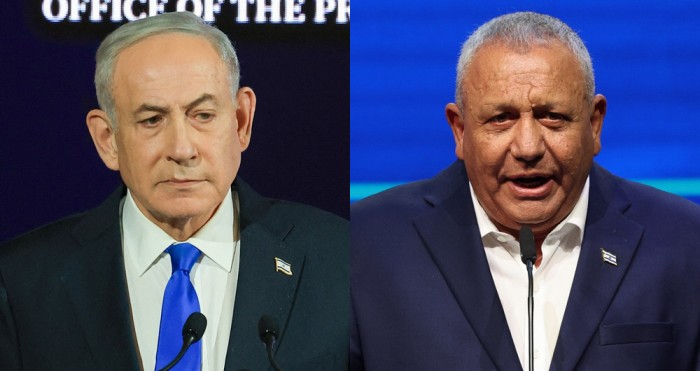 |
| Israeli Prime Minister Benjamin Netanyahu (left) and Gadi Eisenkot, leader of the Asher Party and former Chief of Staff of the Israel Defense Forces. / Photo courtesy of Reuters, EPA, Yonhap News |
The Israeli general election will be held on October 27 (local time) this year. This marks the first nationwide election since the outbreak of the war in the Gaza Strip, and observers note that it will effectively serve as a referendum evaluating the leadership of Prime Minister Benjamin Netanyahu.
According to Reuters, Ofir Katz, the coalition whip of the ruling Likud party, announced during a Knesset (parliament) committee meeting on July 12 that the general election date would remain October 27, as originally dictated by law.
With the parliament scheduled to conclude its session on July 17, the ruling coalition is poised to complete its full four-year term for the first time in decades.
"The current Knesset is expected to complete its full term," the parliament said in a statement carried by AFP. "As there is no intention to cut the legislative term short, there is no need to enact a law to dissolve the Knesset in the conventional sense."
Prime Minister Netanyahu, the longest-serving leader in Israeli history, has declared his intention to run in this year's election. Stating that he will "surely win the election," he emphasized that this vote could become the defining battle of his political career.
In recent days, the coalition has been rushing a series of bills to solidify its unity and foster a favorable environment ahead of the general election. Seeking cross-factional cooperation, Netanyahu has stated his intent to establish a broad national unity government spanning across both the left and right wings.
Netanyahu has led the most right-wing government in Israel's history since winning the 2022 general election, but he has faced mounting accountability for his security and state administration following consecutive conflicts involving the Gaza war, Lebanon, and Iran.
Local opinion polls indicate that a larger portion of the public favors Netanyahu's departure over his continuation in office. In a recent survey conducted by the Hebrew University of Jerusalem, over 92% of Israelis reportedly believed that Iran emerged victorious in the Middle East war. Netanyahu's job approval rating also plummeted from 40.5% in early March to 29.4% last month.
Public outrage over the security failures exposed during the October 7, 2023 assault by the Palestinian militant group Hamas on southern Israel—which catalyzed the Gaza war—continues to weigh heavily on Netanyahu's political standing.
Gadi Eisenkot, a centrist figure and former Chief of Staff of the Israel Defense Forces, is emerging as his prominent rival. In a recent local poll assessing suitability for the next prime minister, Eisenkot led Netanyahu within the margin of error.
While it is rare for a prime minister to complete a full four-year term in Israel, Netanyahu has long been evaluated as a figure who has proven extraordinary political survival skills.
Kim Hyun-min
Most Read
-
1
Celltrion’s Omlyclo gains ground in major European..

-
2
Trump demands rates fall below 1% as Fed hikes for..

-
3
Trump makes $1 trillion bet ahead of midterm elect..

-
4
Iran resumes ballistic missile production, assembl..

-
5
Samsung Electronics, Mistral AI to jointly develop..

-
6
Trump warns countries not helping U.S. must pay re..

-
7
Apple launches first foldable, 1 million won prici..

PEOPLE






HEADLINE NEWS
- Trump to roll out ‘unprecedented welcome’ for Xi with B-2 bombers, F-22 fighters
- S. Korea, U.S., and Japan form united front on Taiwan and economic coercion..
- Trump administration moves to impose sweeping sanctions on International Cr..
- Xi to make state visit to U.S. Sept. 23-25, dispelling rumors over his heal..

-
Address : In-Young Bldg., 34, Uisadang-daero 1-gil, Yeongdeungpo-gu, Seoul
Copyright by ASIATODAY CO., LTD. All rights resereved