



Hyundai Motor pushes for overhaul of its wage system—but will full monthly salary pay off?
Jul 14, 2026, 09:52 am


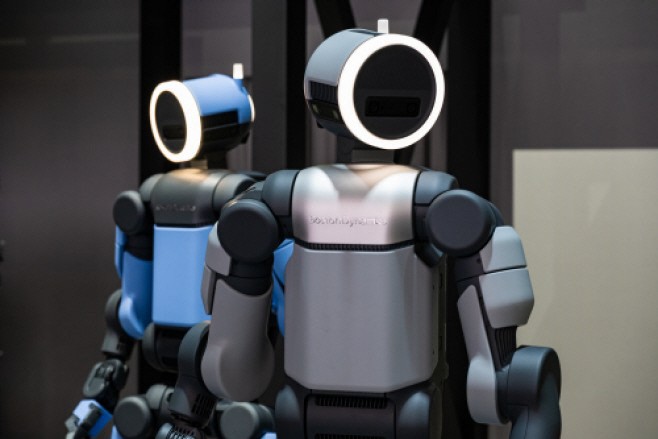 |
| Boston Dynamics' humanoid robot 'Atlas'. / Photo courtesy of Hyundai Motor Group |
Management and the labor union at Hyundai Motor Company have launched formal discussions on introducing a "full monthly salary system." This move significantly increases the likelihood of a major overhaul in the shop floor's wage structure for the first time in decades. The core of the issue lies in how to overhaul the current structure where wages fluctuate based on changes in working hours, such as overtime and special weekend shifts.
Under the new system, workers would be guaranteed a stable income even if working hours decrease due to automation. On the employer's side, expectations are rising that this shift could accelerate the establishment of production systems powered by artificial intelligence (AI) and robotics. Conversely, concerns are being raised that the company's fixed cost burden could surge, as it would be required to pay a set level of wages even when production volume drops.
According to industry sources on July 14, Hyundai Motor management and the union agreed during their 2026 wage negotiations held on July 8 to jointly study "measures to improve toward a future-oriented, advanced wage system," which includes the full monthly salary system demanded by the union. The two sides plan to discuss the direction of institutional improvements and application methods through an existing joint task force (TF).
A full monthly salary system is a mechanism that pays a fixed wage every month regardless of fluctuations in working hours. Hyundai Motor's production wage structure previously transitioned from an hourly rate system to a monthly system in 2012. The current discussions are strongly characterized by reviewing additional improvements to weaken the link between wages and variable working hours, such as overtime and weekend shifts.
Industry observers view that these talks began as Hyundai Motor Group expands AI-based smart factories and automated production systems, prompting a review of whether the existing wage structure is suitable for the changing production environment.
From the workers' perspective, the biggest advantage is income stability. Even if overtime or weekend shifts decrease, they can receive a certain level of pay, which alleviates concerns over wage reductions triggered by expanding automation.
In fact, a 2022 report titled "Measures to Reform Wage Payment Methods in Shift-Work Workplaces: Focusing on the Transition from Hourly Rates to Monthly Salaries" published by the Federation of Korean Trade Unions (FKTU) Research Center analyzed that a monthly salary system could serve as an alternative to enhance wage stability during shift-system reorganizations in the automotive, machinery, and metal industries.
While the report itself serves as data showing workers' preference for wage stability during shift changes, it cited a survey of Hyundai Motor union members showing that 56.9% of respondents would accept a higher labor intensity resulting from the transition to a continuous daytime two-shift system, provided that a fixed monthly salary was guaranteed.
There are also expected benefits for the company. It can reduce labor-management conflicts that might arise during the expansion of automation and operate production systems with greater flexibility. Analysts suggest that if wages are guaranteed at a certain level despite a drop in overtime and weekend shifts due to robot implementation, resistance to automation on the shop floor could be mitigated.
Although Hyundai Motor Group has not officially announced plans to introduce Boston Dynamics' humanoid robot "Atlas" to its domestic plants, it is reportedly planning to deploy it sequentially at its U.S. production hubs starting in 2028. Industry insiders believe that if automation begins in earnest at domestic plants, discussions on restructuring the wage system will gain further traction.
However, the financial burden the company must bear is substantial. Because a certain level of wages must be paid even if production volume or facility utilization rates decline, the proportion of fixed labor costs could rise. If this is not backed by productivity gains, the possibility of deteriorating profitability cannot be ruled out.
"If a full monthly salary system is implemented, companies must pay fixed wages regardless of working hours, which could heighten management burdens," said Professor Iho Keun of the Department of Future Automotive at Daekyeung University.
Some point out that if job insecurity escalates during the automation process, labor-management conflict could actually intensify. A study titled "Skills and Wage Systems" published in the Korea Citation Index (KCI) analyzed that if a sense of employment anxiety spreads across a work site, confrontation between labor and management persists, ultimately leading to a drop in productivity.
Nevertheless, experts generally agree that as manufacturing innovation centered on AI and robotics diffuses, discussions on fixed-pay-centered wage structures are highly likely to expand beyond Hyundai Motor to the broader domestic manufacturing sector. The analysis suggests that rather than the adoption of the system itself, how the company designs the methods for linking wage levels, performance bonuses, and productivity will be the critical challenge determining success.
"If Hyundai Motor introduces a full monthly salary system, it is highly probable that the unions of its parts suppliers will raise the same demand," said Lee Hang-koo, a senior research fellow at the Korea Automotive Technology Institute. "This could pose a significant burden on small and medium-sized suppliers that lack the financial leeway to invest in automation, potentially widening the gap between large corporations and their suppliers."
Kim Jung-gyu
Kim A-yoon
Most Read
-
1
Celltrion nears additional contract with major U.S..

-
2
Putin proposes trilateral U.S.-China-Russia summit..

-
3
U.S. weighs dropping MOAB, world's most powerful n..

-
4
"Aren't those foreigners on welfare?": M..

-
5
Attention centers on APEC for possible Trump-Xi-Pu..

-
6
Saudi Arabia, Iran hold first diplomatic talks to..

-
7
China tightens grip on boosting domestic demand an..

PEOPLE







-
Address : In-Young Bldg., 34, Uisadang-daero 1-gil, Yeongdeungpo-gu, Seoul
Copyright by ASIATODAY CO., LTD. All rights resereved