



From raw materials to distribution: K-pharma and biotech compete for internalization
Jul 14, 2026, 09:42 am


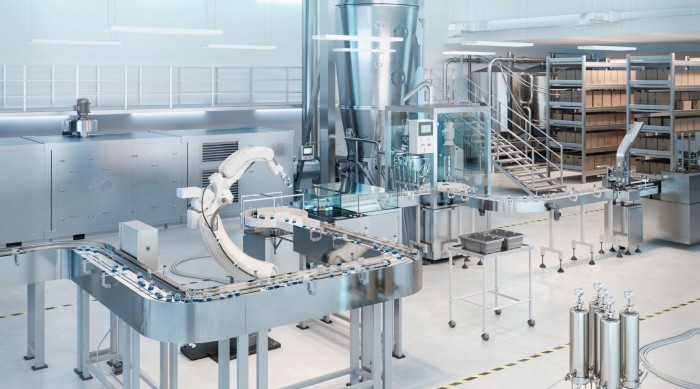 |
| One-stop pharmaceutical production line. |
The axis of competition in the domestic pharmaceutical and biotech industry is expanding beyond new drug development to encompass production and distribution efficiency. Through an "in-house" internalization strategy—which involves directly executing everything from raw material production to finished product manufacturing and sales—companies are moving to reduce reliance on external partners, simultaneously mitigating supply chain uncertainties and cost burdens.
According to industry sources on July 13, major domestic pharmaceutical and biotech firms are accelerating efforts to secure their entire production processes and sales networks. This shift comes as production efficiency and cost management capabilities have emerged as critical factors determining corporate competitiveness, driven by the potential passage of the U.S. Biosecure Act and intensifying price competition in the biosimilar market. In particular, following the expiration of Humira's U.S. patent, biosimilar prices have plummeted by up to 85%, making strategies that protect profitability more vital than simply expanding sales volume.
"Recent internalization efforts are closer to a strategy aimed at securing both supply chain stability and profitability, rather than merely expanding production capacity," said Oh Ki-hwan, director of the Bio-economy Research Center at the Korea Biotechnology Industry Organization. "Enhancing production efficiency will help secure stable operating profits." The recent case where HLB faced disruptions in its U.S. Food and Drug Administration (FDA) approval schedule due to manufacturing facility issues at a partner company is also cited as an example demonstrating the necessity of directly securing production and quality control capabilities.
Celltrion is internalizing both its production and distribution systems. Through the expansion of its Songdo plant, the company aims to achieve a 100% self-production rate for drug substances (DS) and a 90% self-production rate for drug products (DP) by 2031. It is also expanding its Branchburg plant in the U.S. and establishing a new production base in the Chungcheong region. In Europe, it has transitioned to a direct sales model to cut intermediate distribution costs. "As the product portfolio expands, the utilization of the existing sales network increases, which will further boost the profitability of the self-production and direct sales system," predicted Jung I-soo, a researcher at IBK Investment & Securities. SK Biopharm, which established a direct sales network in the U.S., successfully turned a profit in 2024 driven by its epilepsy treatment Xcopri, proving the effectiveness of the direct sales strategy.
Samsung Biologics is focusing on vertical integration by clustering its production processes in one location. By linking DS production, DP formulation, and next-generation antibody-drug conjugate (ADC) production within a single site in Songdo, the structure reduces transport costs between processes and minimizes quality risks. "Executing processes in a single location shortens production timelines and enables efficient quality control," an industry insider said. After acquiring a facility in Rockville, Maryland, early this year, the company plans to open a Netherlands office in the third quarter to expand its overseas production and sales foundations.
Cases of securing production capabilities through affiliate utilization and mergers and acquisitions (M&A) are also on the rise. Hanmi Pharm is establishing a production system for next-generation obesity and metabolic disease treatments based at its Pyeongtaek Bio Plant, while SK Bioscience secured a global production hub by acquiring the German CDMO company IDT Biologika. This move is evaluated as having reduced the time and cost required to build new local plants while enhancing responsiveness to the overseas supply chain. "IDT Biologika will be capable of sustainable growth through stable orders from its existing customer base and the acquisition of new clients," analyzed Lee Ji-won, a researcher at Hungkuk Securities.
Some companies are expanding internalization into the distribution and R&D stages. Hugel is pursuing a hybrid strategy in the U.S., combining direct sales with local partner sales to reduce distribution margins. GC Cell has formed the "CGT Value Chain Alliance" with domestic biotechs, establishing a system that links early-stage research through to GMP manufacturing.
However, the industry views that internalization may not be the same solution for every company. The consensus is that production and distribution should be expanded gradually depending on each country's healthcare system and product characteristics, and that a concurrent strategy of diversifying suppliers for raw materials and components is necessary.
"For distribution, it is desirable to expand gradually while accumulating experience, as healthcare environments differ by country," Director Oh noted. "For raw materials and components, rather than relying on a specific country or company, a strategy of diversifying the supply chain must be implemented together to secure long-term competitiveness."
Moon Jeong-woo
Most Read
-
1
Kia Sportage outperforms Mazda CX-5 in German auto..

-
2
Houthis launch successive attacks on Saudi airport..

-
3
Saudi Arabia, Iran hold first diplomatic talks to..

-
4
U.S. deploys carrier, 10,000 more troops to Middle..

-
5
Saudi airport in Riyadh struck again, leaving at l..

-
6
Japan tracks Ukraine fiber-optic drones, bolsters..

-
7
Putin's ally visits China on the 8th ahead of APEC..

PEOPLE






HEADLINE NEWS

-
Address : In-Young Bldg., 34, Uisadang-daero 1-gil, Yeongdeungpo-gu, Seoul
Copyright by ASIATODAY CO., LTD. All rights resereved