



Asian airlines' windfall on European routes diminishes as Middle East stabilizes
Jul 02, 2026, 10:18 am


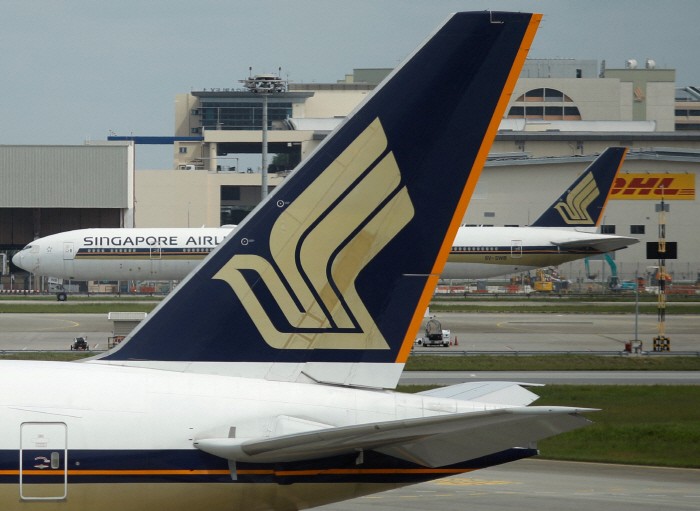 |
| Singapore Airlines aircraft are parked on the runway at Singapore Changi Airport on December 8, 2020. /Reuters, Yonhap |
Major Asian airlines, which had benefited from supply chain disruptions on European routes by Middle Eastern carriers following the outbreak of the war in Iran, are seeing a slowdown in their earnings growth. As Middle Eastern airlines normalize operations and resume their offensive with price competitiveness, the market structure is adjusting once again.
Reuters reported on July 1 (local time) that the industry is closely watching whether Asian carriers, including Singapore Airlines, Cathay Pacific, Korean Air, and ANA, can maintain the market share they secured during the war between the US and Iran.
Nathan Gee, an analyst at Bank of America (BofA) Global Research, analyzed, "The growth in load factors for Asian airlines appears to have already peaked." However, he added, "Since long-haul bookings are typically made six months in advance, the effect of bookings accumulated during the war translating into actual revenue will persist for the next few quarters."
According to aviation data analytics firm Cirium, before the war, the three major Gulf carriers—Emirates, Qatar Airways, and Etihad Airways—handled approximately 33% of travelers from Asia to Europe and more than 50% of travelers from Oceania (Australia and New Zealand) to Europe.
Immediately after the outbreak of the war in Iran on February 28, the hub airports of these carriers were temporarily closed due to concerns over drone and missile attacks. According to Flightradar24 data, the number of flights operated by these airlines had recovered to about 90% as of mid-June.
Data from the International Air Transport Association (IATA) also confirms this trend. The rate of decline in passengers for Middle Eastern airlines reached around 60% year-on-year in March but eased to the 28% level in May. Conversely, the growth rate of direct flights from Asia to Europe shrank from 30% in March to 15% in May.
Experts believe that passengers who booked refundable tickets with Asian airlines during the early stages of the war are moving back to Gulf carriers as Middle Eastern routes stabilize.
Reuters reported that seat saturation and rising airfaires among Asian airlines have also driven passengers to choose Middle Eastern carriers once again.
An industry insider noted that while passengers with imminent travel dates are avoiding routes transiting through the Middle East, demand for Middle Eastern airlines is gradually recovering for advance bookings for next year.
Lee Jeong-eun
Most Read
-
1
Trump shares map on social media labeling Strait o..

-
2
Kia Sportage outperforms Mazda CX-5 in German auto..

-
3
Houthis launch successive attacks on Saudi airport..

-
4
U.S. deploys carrier, 10,000 more troops to Middle..

-
5
Trump rejects Iran's offer to open Strait of Hormu..

-
6
N. Korea conducts first swarm attack drill with dr..

-
7
U.S.-China summit falls short on substance as Trum..

PEOPLE






HEADLINE NEWS
- Seoul dismisses Ukraine's claim of 'S. Korean support for Russia' as "inaccurate and inappropriate"
- S. Korea, Japan race to develop nuclear-powered submarines
- Henri Kagan, Kenso Soai win Nobel Prize in Chemistry for uncovering how mol..
- Vance says Alaska LNG cooperation will move forward with Seoul's current or..

-
Address : In-Young Bldg., 34, Uisadang-daero 1-gil, Yeongdeungpo-gu, Seoul
Copyright by ASIATODAY CO., LTD. All rights resereved