



Japan seeks economic security declaration with India to counter China's rare earth restrictions
Jul 01, 2026, 10:18 am


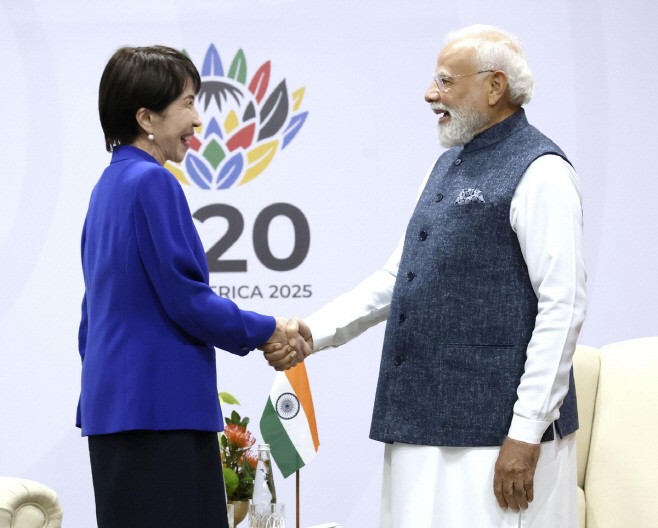 |
| Japanese Prime Minister Sanae Takaichi (left) and Indian Prime Minister Narendra Modi / Yonhap News |
Japan is stepping up economic security cooperation with India to counter China’s rare earth export restrictions and economic pressure. This move to bring India into its alternative supply chain framework comes immediately after Chinese authorities detained two Japanese corporate officials for allegedly circumventing export controls on rare earth magnets.
The Yomiuri Shimbun reported on the 30th that Japanese Prime Minister Sanae Takaichi and Indian Prime Minister Narendra Modi are finalizing details to issue a joint declaration on economic security cooperation during their summit in New Delhi on July 2. The draft declaration outlines five priority sectors for cooperation: semiconductors, critical minerals, clean energy, information and communication technology, and pharmaceuticals.
The most notable sector is critical minerals, including rare earths. The Japan Organization for Metals and Energy Security (JOGMEC) and the Geological Survey of India are pushing to sign a memorandum of understanding (MOU) to facilitate dialogue and technical cooperation in mineral exploration. The two governments also plan to sign a separate MOU to reinforce battery supply chains.
In the semiconductor sector, the nations will deepen talent cultivation, research and development, and technical cooperation, while supporting the participation of Japanese enterprises in semiconductor projects led by the Indian government. For clean energy, cooperation will center on next-generation energy sources like ammonia, and the information and communication technology sector will focus on digital infrastructure such as undersea cables.
The draft joint declaration reportedly includes expressions of concern over economic coercion, non-market policies and practices, and export restrictions. While avoiding naming any specific country, the phrasing clearly targets China. Tokyo views Beijing as weaponizing its dominance over rare earth and critical mineral supply chains to exert leverage in diplomatic and security disputes.
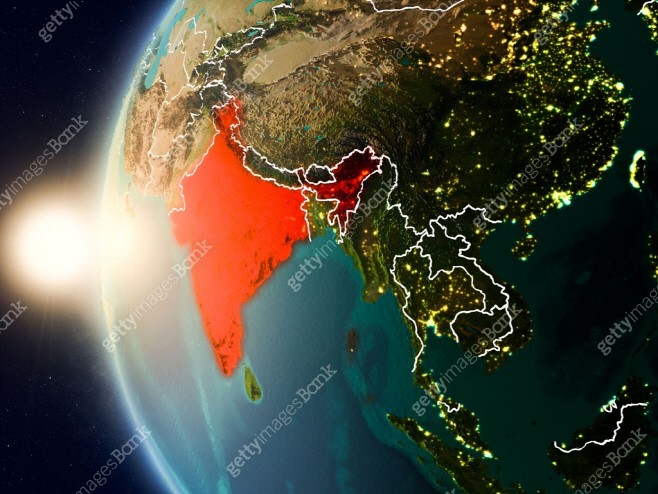 |
| Japan and India are stepping up resources cooperation as they align against a common competitor, China / Getty Images Bank |
Japan steps up ties with India amid tightening china's controls
Japan’s push to strengthen ties with India comes a China intensifies its crackdown on rare earths. Chinese authorities recently detained two Japanese nationals, including an official from Fuji Electric, on charges of attempting to smuggle rare earth magnets by concealing them inside components for export to Japan, where they were to be extracted. This is reportedly the first time a criminal case has been brought against Japanese corporate officials in China over rare earth smuggling.
Following Prime Minister Takaichi's remarks last year regarding a potential Taiwan contingency, China tightened its export screening for dual-use items, including rare earths, destined for Japan. As a result, China's exports of rare earth magnets to Japan have declined. Starting in July, Beijing will enforce new regulations requiring mandatory reporting for any attempts to bypass export licensing through modification, disassembly, or reassembly, as well as transshipment via third countries.
For Japan, leaving its supply chains for rare earths, battery materials, and semiconductors heavily dependent on China poses a direct risk, as diplomatic friction could immediately trigger industrial disruptions. India is emerging not merely as an alternative supplier, but as a strategic partner capable of diversifying supply chains over the long term through comprehensive cooperation spanning mineral exploration, processing, manufacturing, and talent development.
During this visit to India, Prime Minister Takaichi aims to advance an evolved version of the "Free and Open Indo-Pacific" initiative. Since Prime Minister Modi has also consistently championed an Indo-Pacific cooperation framework, both nations are looking to align their economic security with broader foreign policy and defense strategies.
This shift holds significant implications for South Korea as well. Rare earth magnets and critical minerals are essential components for electric vehicles, batteries, high-efficiency motors, robotics, and defense equipment. South Korean enterprises also rely heavily on Chinese materials and processing networks, meaning any expansion of China's export restrictions and stricter customs clearance procedures will have a direct impact.
As cooperation between Japan and India expands into semiconductor and battery supply chains, South Korean companies will face a dual challenge of competition and cooperation. To mitigate China risks, South Korea needs to broaden its own mineral, battery, and semiconductor cooperation axis with India, while closely monitoring the supply chain restructuring and Indian projects being prioritized by Japanese firms.
Choi Young-jae
Most Read
-
1
Trump shares map on social media labeling Strait o..

-
2
Kia Sportage outperforms Mazda CX-5 in German auto..

-
3
Houthis launch successive attacks on Saudi airport..

-
4
U.S. deploys carrier, 10,000 more troops to Middle..

-
5
Trump rejects Iran's offer to open Strait of Hormu..

-
6
N. Korea conducts first swarm attack drill with dr..

-
7
U.S.-China summit falls short on substance as Trum..

PEOPLE






HEADLINE NEWS
- Seoul dismisses Ukraine's claim of 'S. Korean support for Russia' as "inaccurate and inappropriate"
- S. Korea, Japan race to develop nuclear-powered submarines
- Henri Kagan, Kenso Soai win Nobel Prize in Chemistry for uncovering how mol..
- Vance says Alaska LNG cooperation will move forward with Seoul's current or..

-
Address : In-Young Bldg., 34, Uisadang-daero 1-gil, Yeongdeungpo-gu, Seoul
Copyright by ASIATODAY CO., LTD. All rights resereved